Endurance Energy, a Seattle-based startup, recently conducted the world’s first demonstration of a subsea geothermal power plant. The test took place at the Axial Seamount in the northeast Pacific Ocean, nearly a mile below the ocean surface. The goal of the three-week deployment was to prove the technical feasibility of tapping underwater geothermal energy—a potential alternative to expensive fossil fuel imports for Pacific island nations and other coastal regions.
The operation involved deploying a subsea lander drill to create two holes in the seafloor at a depth of approximately 5,000 feet. These holes began venting hydrothermal fluid at temperatures reaching 500°F (260°C). The team then installed a 100-kilowatt prototype power plant named Adélie, which is designed to vaporize this hot fluid to spin a turbine and drive an electric generator. While the initial drilled well was too shallow and narrow to provide sufficient fluid for a full run, the team successfully redeployed the Adélie to a natural hydrothermal vent. During this test, the plant achieved a net-positive state—producing more electricity than it required to operate—for approximately 8.7 seconds, peaking at 16.5 kilowatts of net power.
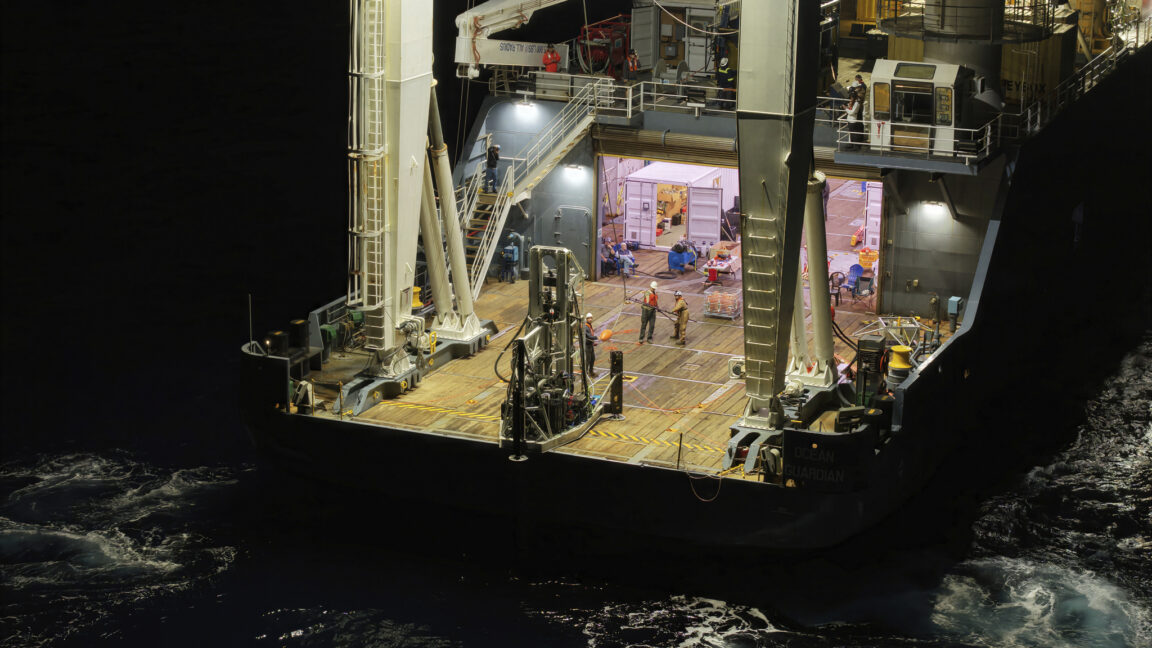
This image illustrates the specialized drilling equipment used to create the initial seafloor wells at the Axial Seamount.
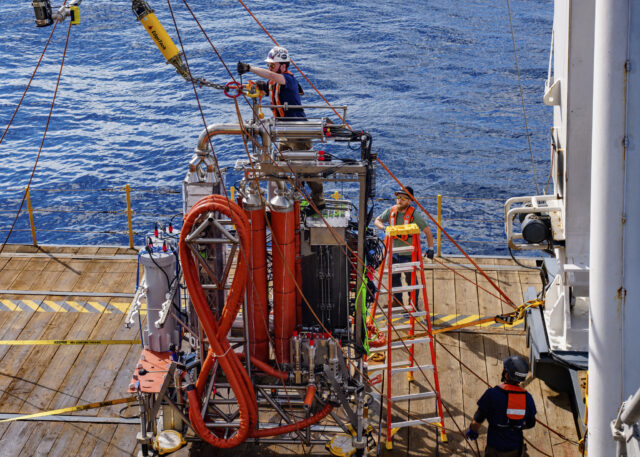
The Adélie prototype is the core technology described in the article's second paragraph, which achieved the net-positive power state.
Despite the successful proof of concept, the test highlighted significant engineering hurdles. A software safety shutdown occurred after a battery module reported a current spike, and a power cable for a refrigerant pump failed due to seawater seepage. Furthermore, experts note that while subsea geothermal power offers advantages like natural seawater cooling and high-pressure environments for compact systems, it faces much higher installation and operational costs than land-based geothermal projects. Endurance Energy plans to address these challenges by drilling deeper wells—up to 260 feet—and refining subsea cable durability. The company aims to deploy a 2-megawatt commercial generator to the Kingdom of Tonga by 2027 to provide a stable, weather-independent power source."