Sanity's Edge was a unique telephonic Bulletin Board System (BBS) that operated from 1994 to 1997 in Tampa, Florida. Unlike standard BBS platforms of the era, which required modems and computer screens, Sanity's Edge was entirely voice-driven. Users dialed a dedicated phone line and navigated menus by pressing keys on their telephone handsets. The system, which ran on a 286 PC equipped with a Talking Technology Powerline I ISA telephony card, used the BigMouth voice BBS platform to turn the computer into an interactive phone system. The experience was themed as an 'asylum,' where callers were admitted as patients and left voice messages in various 'therapy rooms.'
The project was a collaborative effort between a father and his son. The father, a radio-station automation programmer, acted as the system operator (sysop) and wrote the database backend. The son, who was ten years old at the time, designed the menu structures, coded the 'asylum' maze, and handled the marketing, including designing business cards and flyers. Over three years, the line handled more than 26,000 calls and collected over 46,000 voice messages from a community of local callers. The system's unique identity was defined by its audio prompts, which were re-recorded over the years to reflect different seasons and holidays.
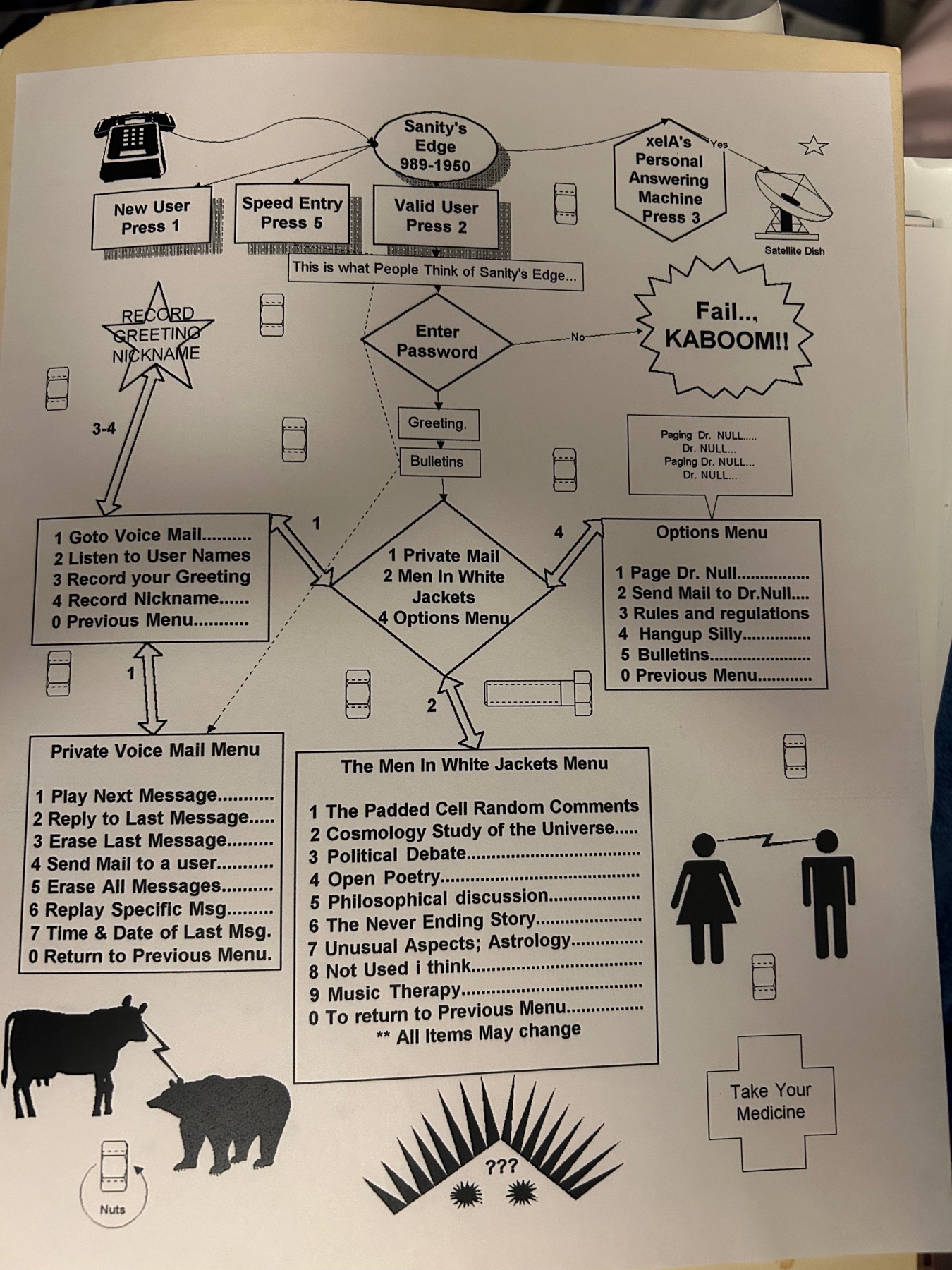
The map visualizes the 'asylum' maze and menu structures designed by the project's young creator.
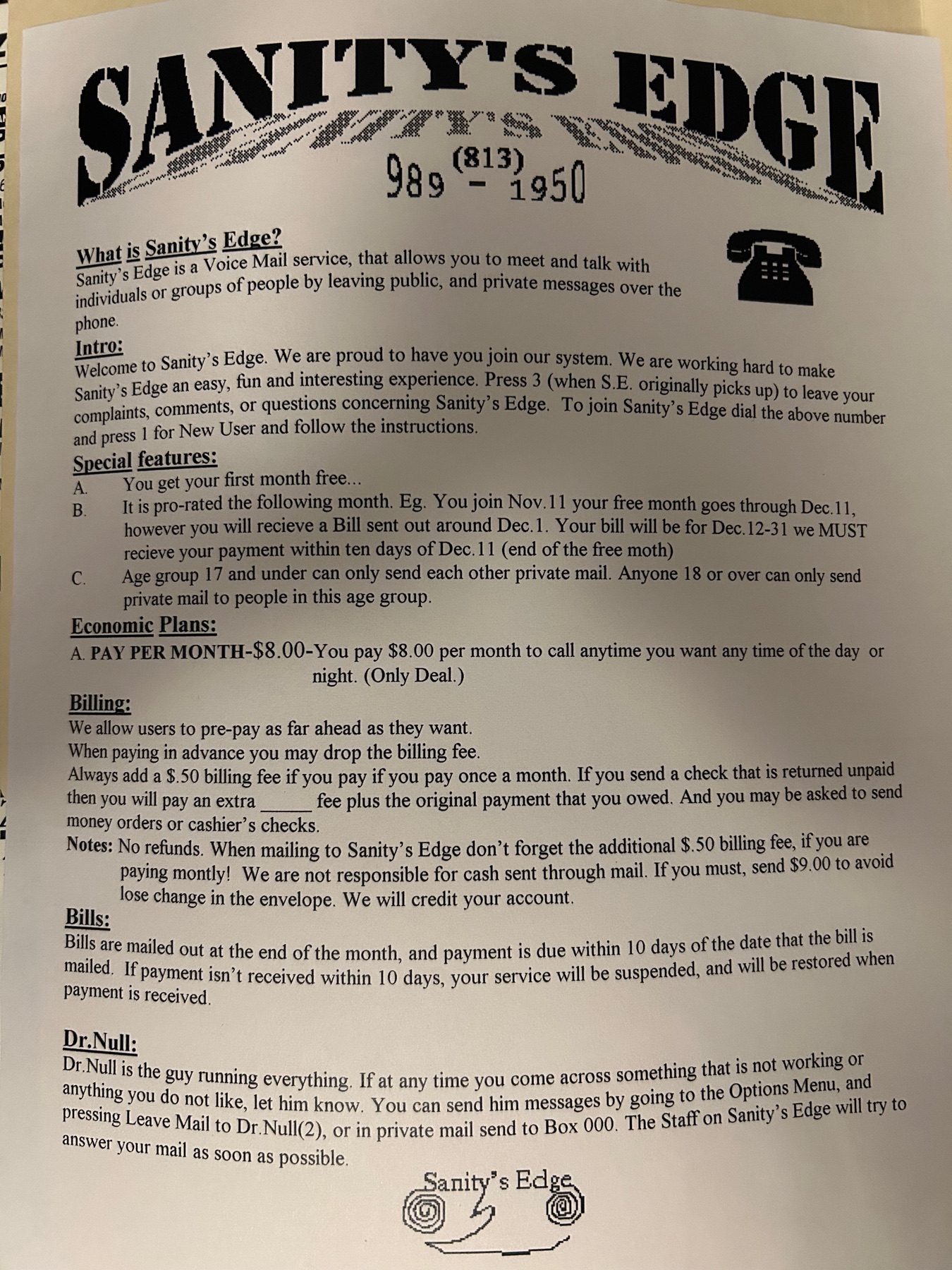
This flyer represents the marketing efforts and 'asylum' theme established by the father and son.
After the system went offline in 1997, the data remained dormant until it was recovered from a series of legacy storage devices, including a CD-ROM. Because the audio was stored in a proprietary format, it remained inaccessible for decades. In early 2026, the archive was successfully cracked using a combination of the Reverse Engineer Anything (REA) project and Claude Sonnet 5.5. This process allowed the team to decode the proprietary files into standard WAV format and rebuild the missing C source code from the original machine code. The project now hosts a 'Museum Edition' that recreates the 1994 experience and a '2026 Remake' that allows users to play the original trivia games using the preserved voice prompts.
While the archive provides a window into 1990s telephonic computing, it presents some navigational challenges for modern users. The 'Museum Edition' maintains the original logic of the board, including the requirement for passcodes to access specific mailboxes. Additionally, the project includes a vast audio archive of recordings that were never played on the original phone line, such as community clips and sound libraries. By combining legacy hardware engineering with modern AI-assisted reverse engineering, the creators have ensured that the voices and fiction of Sanity's Edge remain accessible to a new generation of listeners.
Evidence: - The system's technical specifications, including the 286 PC and Powerline I card, are established by the primary source (primary). - The role of the father and son in developing the software and marketing is documented in the primary source (primary). - The use of Claude Sonnet 5.5 and the REA project to decode the proprietary audio and rebuild the C source code is detailed in the primary source (primary). - The specific number of calls (26,188) and messages (46,610) is provided by the primary source (primary).