Neato robot vacuums, particularly older generations, often become unusable as manufacturer support wanes or proprietary cloud services are discontinued. Vacuula addresses this by providing a custom server and a suite of tools to 'revive' these devices. The project functions as an all-in-one solution to repair and control broken Neato robots, specifically targeting several generations of the hardware. It provides the necessary infrastructure to bypass original manufacturer limitations, allowing users to regain control over their devices.
The project functions as an all-in-one solution to repair and control broken Neato robots.
The system architecture requires a dedicated, always-on server to manage the robots. Vacuula supports multiple deployment methods, including a Home Assistant app, Docker Compose, and standalone LXC installations. The server handles different robot generations with specific requirements: Gen3 models (D3-D7) connect via port 443, while Gen4 models (D8-D10) use port 3443. The software also includes a web application and API, which can be accessed via a customizable port. To facilitate setup, the project provides a dedicated installer for various operating systems, including Windows, Linux, and macOS, to configure the robot's internal settings.
Vacuula supports multiple deployment methods, including a Home Assistant app, Docker Compose, and standalone LXC installations.
While Vacuula offers significant functionality, such as maps, schedules, and zone management, it has specific technical limitations. For example, Gen3 robots currently rely on nip.io to establish a connection to the user's server, creating a permanent cloud dependency that the developers have not yet bypassed. Additionally, while the server is currently verified on ARM 64-bit and x86 64-bit architectures, the team is working toward broader support for 32-bit platforms to allow the software to run on older single-board computers (SBCs). The project is released under the AGPL-3.0 license, ensuring that the source code remains accessible for community contributions and modifications.
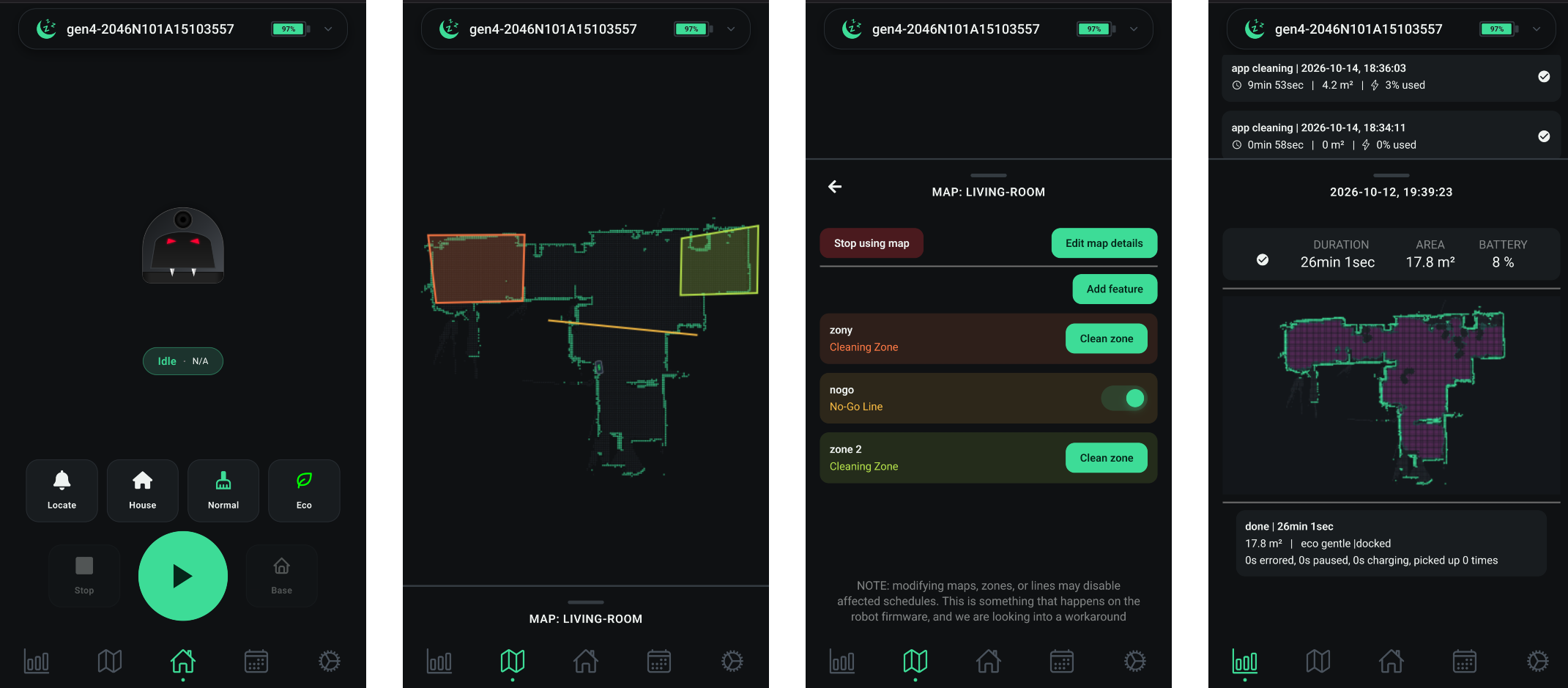
While Vacuula offers significant functionality, such as maps, schedules, and zone management, it has specific technical limitations.