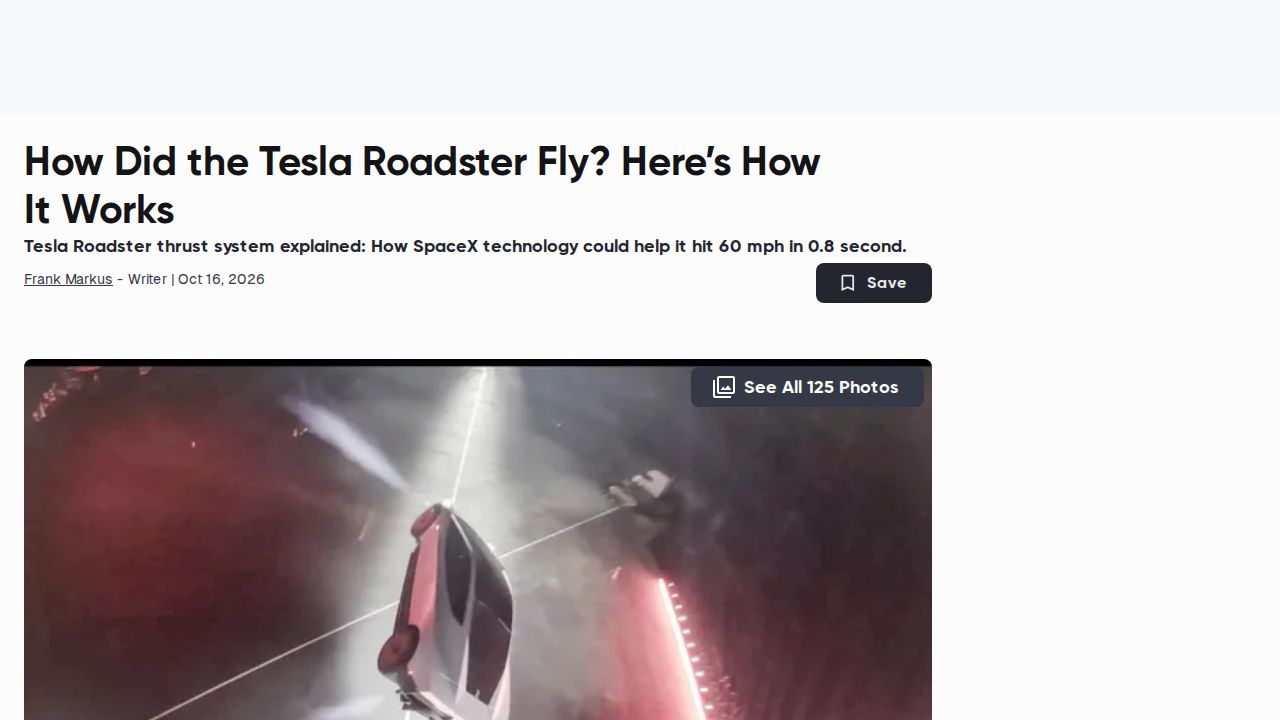
The latest iteration of the Tesla Roadster incorporates a propulsion system directly adapted from SpaceX's aerospace technology. Unlike traditional supercars that rely solely on tire traction for acceleration, the Roadster utilizes a cold gas thruster (CGT) system. This setup consists of four metal nozzles at the rear of the vehicle that vent high-pressure nitrogen. The gas is stored in a large, black spherical tank known as a composite-overwrapped pressure vessel (COPV). This vessel, roughly the size of a large exercise ball, is wrapped in a carbon-fiber composite to withstand internal pressures of up to 10,000 psi, a pressure level comparable to those found in modern hydrogen fuel-cell vehicles.
The mechanism relies on a series of valves, actuators, and pipes to regulate the flow of nitrogen at supersonic speeds. To ensure stability during forward thrust, Tesla's engineering team designed the tubes and valves to be of equal length; any discrepancy in length could cause uneven gas distribution, potentially inducing unintended yaw (side-to-side movement). The hardware for this system includes titanium nozzles and Inconel splitter pipes to minimize mass while maintaining structural integrity under high pressure. These components are powered by actuators reportedly derived from the Tesla Optimus robot, which control the precise release of gas from the COPV.
While the primary goal of the CGT system is to help the Roadster achieve a sub-one-second 0–60 mph time, the technology also enables the vehicle to perform aerial maneuvers. During demonstrations, the Roadster was shown to hover, spin, and perform barrel rolls using an additional, larger-capacity COPV that provides up to 600 liters of gas. This configuration requires six additional nozzles: four pointing downward for vertical lift and two on the nose for sideways yaw control. However, the practical application of such a system in a consumer vehicle remains a subject of debate. The high-pressure tanks and the short duration of thrust—likely lasting only a few seconds before requiring a recharge—present significant engineering and safety challenges for standard road use, positioning the vehicle as much of a technical demonstration as a production car.
The Roadster's drive unit remains a high-performance electric system, utilizing two motors capable of producing 1 MW of power. This is supported by a ducted sucker fan arrangement that presses the car to the pavement with over 2 g of force. By combining this massive electrical output with the supplemental thrust from the rocket-derived nozzles, Tesla aims to overcome the physical limits of tire traction, allowing the vehicle to achieve acceleration figures that would otherwise be impossible for a 3,750-pound car.