Valve has released a performance update for the Steam client, specifically aimed at improving startup speeds. The update follows the recent preview launch of the Epic Games Launcher V2, which was marketed as a faster alternative to Steam's legacy infrastructure. According to benchmarks provided by RespawnFirst, the Steam client's cold boot time dropped to approximately 5.23 seconds following the patch, narrowly beating the Epic Games Launcher V2's reported startup time of roughly 5.47 seconds.
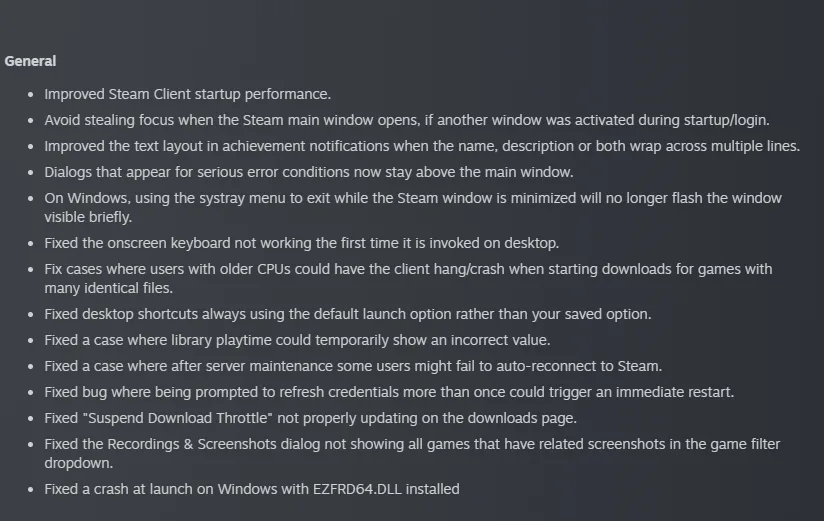
The image illustrates the Steam client interface mentioned in the context of the performance update.
The technical distinction between the two platforms lies in their architectural approaches. Epic Games utilized what the publisher describes as a "vibe-coded" approach—a term often associated with AI-assisted development—to achieve its speed gains. In contrast, Valve's update focused on optimizing its existing modular CEF (Chromium Embedded Framework) architecture. This suggests that targeted manual optimization on a mature, decades-old ecosystem can achieve competitive performance against newer, AI-assisted builds. While the Epic launcher represents a significant improvement over its previous version, the rapid response from Valve highlights the competitive pressure on digital distribution performance.
Beyond raw boot speeds, the comparison highlights a significant disparity in feature sets. The primary source notes that while Epic's new launcher addresses speed, it still lacks numerous community-centric features integrated into Steam. These include user-written text reviews, community-created guides, integrated artwork sharing, and a platform-wide mod hub (Steam Workshop). Furthermore, Steam maintains features like digital trading cards, points shops, and remote play capabilities that remain absent from the Epic ecosystem. These omissions suggest that while the speed war is a primary marketing focus, the functional depth of the platform remains a major differentiator for users regardless of startup times.
There is also an ongoing debate regarding the role of AI in these optimizations. While the marketing emphasizes "vibe coding," some observers suggest that AI-assisted optimization is a relatively trivial task for modern software engineering teams. The core challenge remains the balance between a lightweight, fast-booting interface and the heavy infrastructure required to support a massive social and marketplace ecosystem. For now, Valve's ability to iterate quickly on its established codebase has successfully neutralized Epic's primary performance claim in the immediate wake of its new launcher's release.
The data indicates that while the Epic Games Launcher V2 is a major step forward for its own platform, the Steam client remains the faster option for cold boots on basic test systems. The trade-off for Steam's speed is its massive, integrated suite of social and community tools, whereas Epic's launcher currently functions primarily as a streamlined tool for purchasing and launching games without the same level of community integration.
Uncertainties remain regarding how these performance figures will scale across different hardware configurations and whether the "vibe-coded" launcher will receive further iterative updates to reclaim its performance lead. Additionally, it is unclear if Valve's optimizations will be a one-time patch or a permanent shift in how they manage the Steam client's modular architecture.