The global telecommunications network is anchored by an estimated 1.5 million kilometers of subsea communications cables. These cables, which power 607 in-service submarine systems, are the primary conduits for the world's data. Unlike satellite systems, which can serve as a fallback, the sheer volume of traffic handled by these cables means that a catastrophic failure or widespread disruption could isolate entire communities, leading to severe logistical and economic consequences. The vulnerability of these systems is not theoretical; specific regions have experienced high frequencies of outages. For example, cables connecting Taiwan to the Matsu Islands were cut 27 times between 2018 and 2022, while the Baltic Sea has seen 11 disruptions to submarine communications and energy systems since 2023.
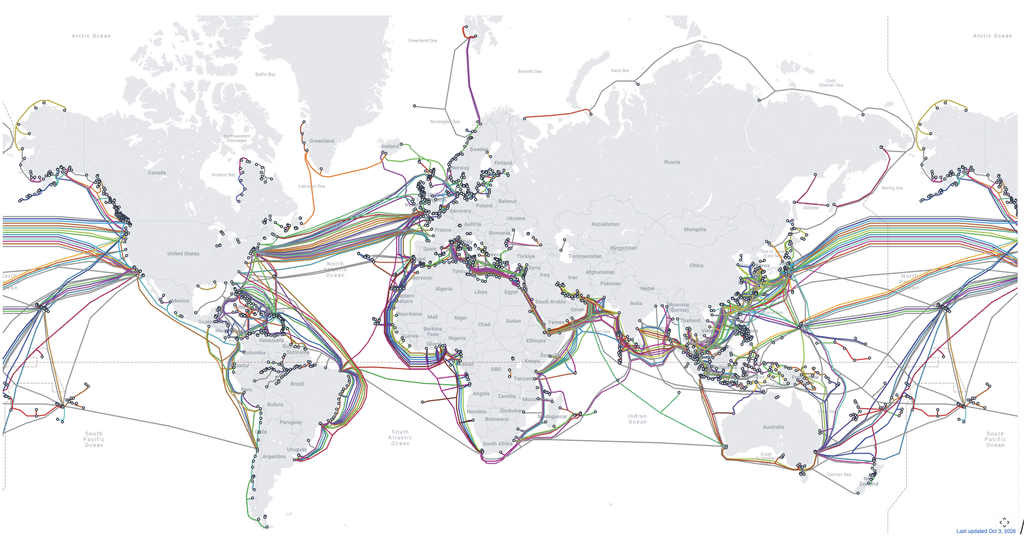
This map visualizes the 1.5 million kilometers of subsea communications cables mentioned as the primary conduits for global data.
Submarine cables are susceptible to a variety of risks, ranging from accidental to deliberate. Most faults—roughly 86%—are caused by maritime activity, specifically fishing equipment and ship anchors. Geological events like submarine landslides and earthquakes account for about 7% of faults, while component failures in repeaters (devices that boost signals along the cable) account for only 4%. To mitigate these risks, cables are designed with varying levels of protection. While deep-sea segments are relatively thin (around 20mm in diameter) and lack heavy armor to reduce weight and cost, cables near the surface and at landing stations are often wrapped in steel cable jacketing to protect against shipping accidents. Furthermore, many jurisdictions establish 'Cable Protection Zones' to warn vessels to avoid anchoring or fishing in areas where cables are laid.
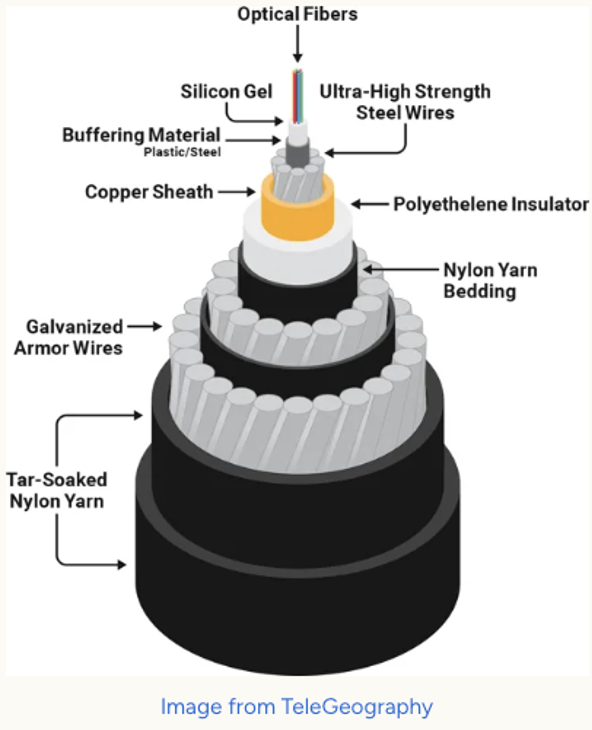
This diagram explains the cable design mentioned in the second paragraph, including the use of steel cable jacketing for protection.
Resilience is also a matter of geography and geopolitics. Certain 'choke points' like the Bab al-Mandab Strait and the Singapore Strait host dozens of cable systems, making them high-value targets for both accidental damage and deliberate disruption. In the Bab al-Mandab Strait, several cables were severed in September 2025, disrupting 25% of the capacity between Asia, Europe, and the Middle East. Beyond physical damage, geopolitical constraints influence where cables can land; for instance, the FCC may block cable landings in the U.S. if the cable also connects to territories deemed foreign adversaries. Repairing these faults is a complex logistical hurdle. Because 98% of outages occur in territorial waters or exclusive economic zones, repair vessels must obtain government permission before beginning work. This has led to increased response times, with some repairs taking over 900 days to complete due to bureaucratic delays. Additionally, the industry faces a looming maintenance crisis: nearly two-thirds of the global fleet of cable maintenance vessels are expected to reach the end of their service lives by 2040, creating a significant funding gap for the expanding global network.
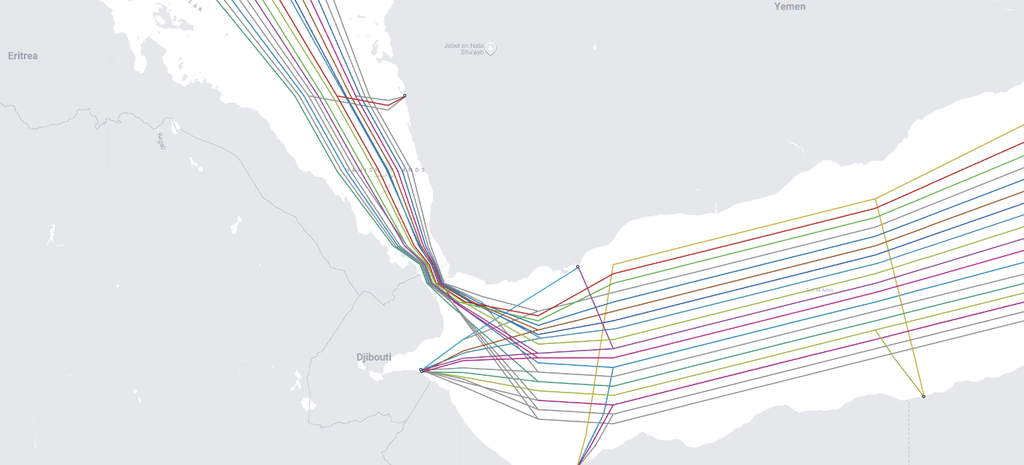
This map illustrates the 'choke points' discussed in the third paragraph, specifically the Bab al-Mandab Strait.
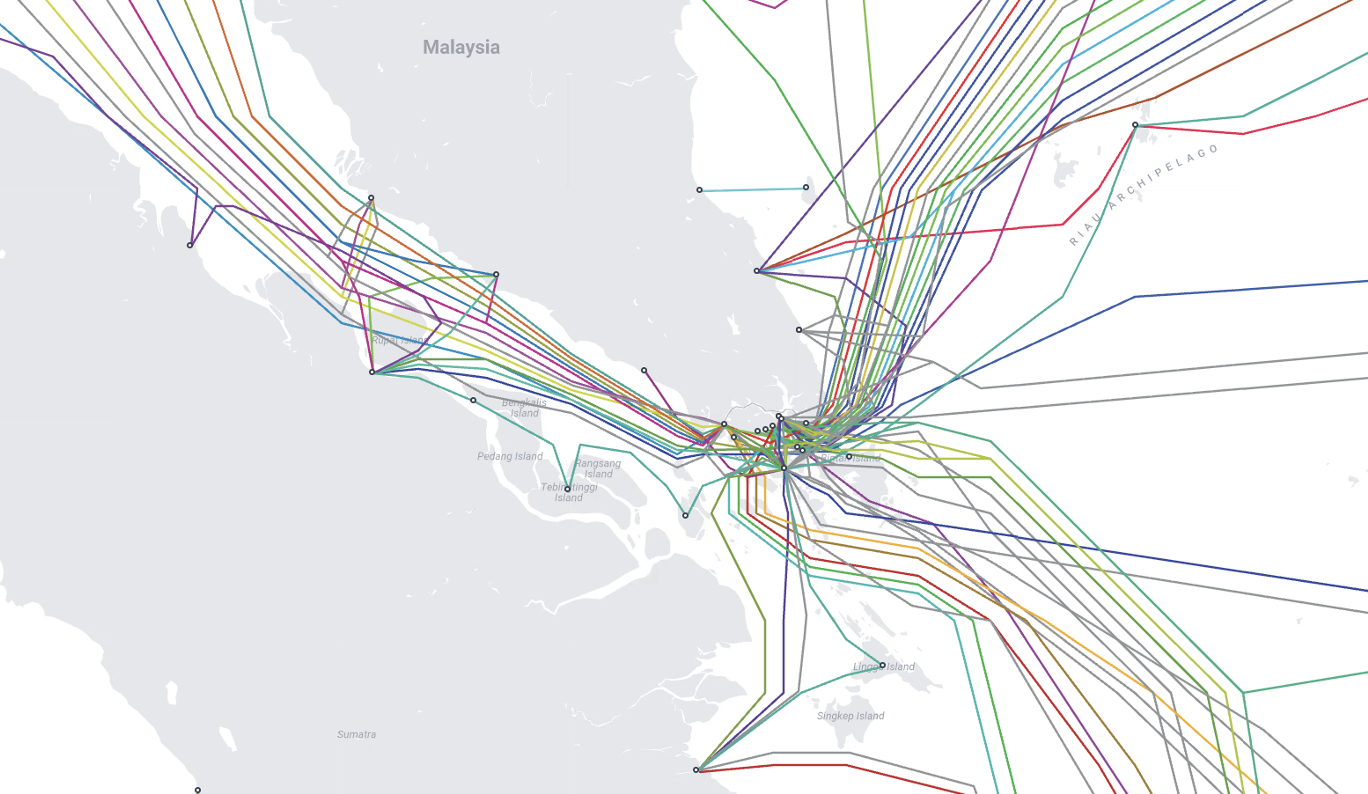
This map provides a visual example of the Singapore Strait choke point mentioned in the third paragraph.