The global seafood supply chain relies heavily on fishmeal—a powder made from dried and pulverized fish—which is used as a primary feed for aquaculture. However, fishmeal is chemically unstable; as it decays and oxidizes, it is prone to spontaneous combustion. This hazard led to a series of significant maritime and industrial fires between the 1950s and 1970s, including a notable 1966 fire on the SS South America in Rotterdam. To mitigate these risks, the industry turned to ethoxyquin, a synthetic antioxidant originally used as a preservative for fruits and a fire retardant for rubber tires.
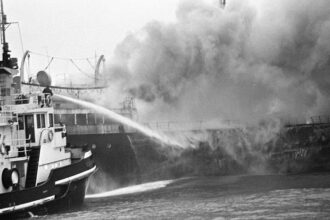
The image illustrates the historical risk of spontaneous combustion in fishmeal cargo that led to the adoption of ethoxyquin.
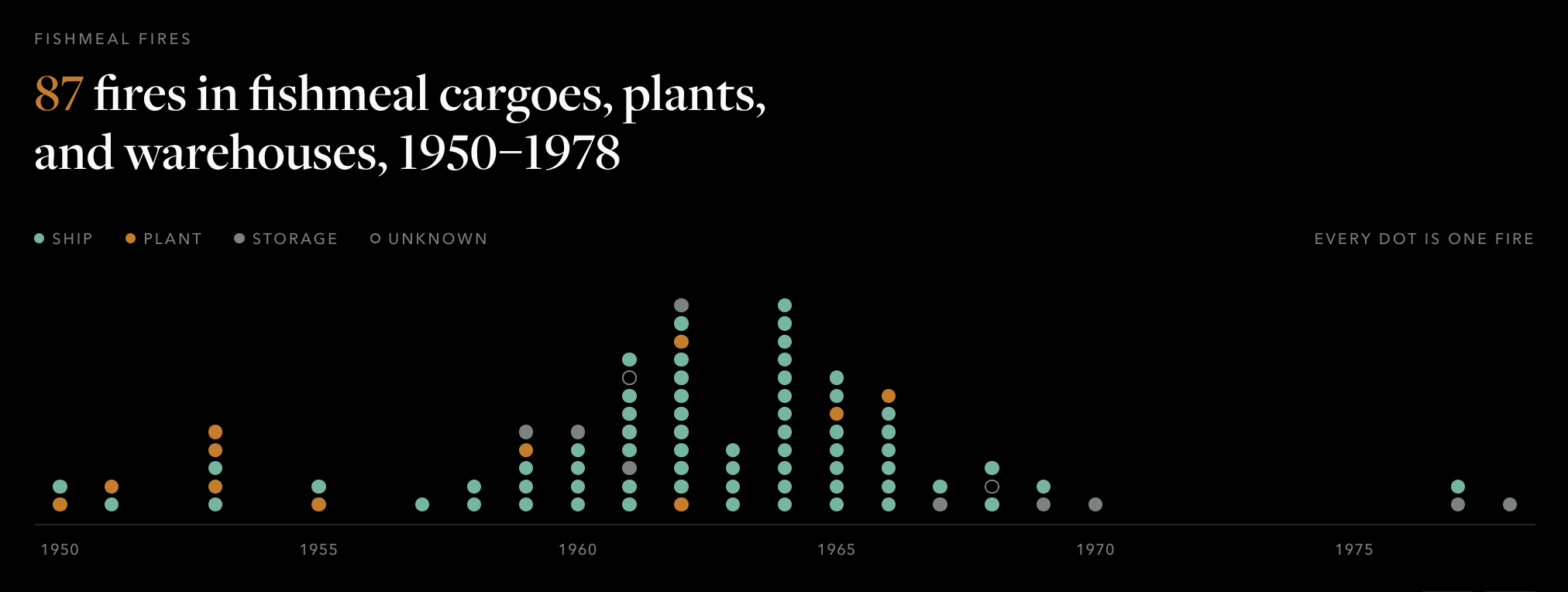
This chart provides quantitative evidence for the historical hazards mentioned in the first paragraph.
By the late 1970s, ethoxyquin became a standard requirement for maritime safety, with the U.S. Coast Guard and the United Nations recommending its use to prevent cargo fires. While highly effective at stabilizing fishmeal, the chemical has faced increasing regulatory pressure due to safety concerns. Research has linked ethoxyquin to toxic effects in laboratory animals, and a 2015 review by the European Food Safety Authority (EFSA) identified impurities in the chemical, such as p-phenetidine, as potentially mutagenic. Consequently, the European Union suspended the authorization of ethoxyquin as a feed additive in 2017, leading to a ban in the U.K. and other European Economic Area countries.
Despite these restrictions, ethoxyquin remains permitted in several major markets, including the United States, Australia, Japan, and South Korea, though it is subject to specific regulatory limits. The industry is currently in a period of transition; while some producers, such as Cargill, have shifted to alternatives like rosemary extract or vitamin E, others continue to use ethoxyquin or its common substitute, butylated hydroxyanisole (BHA). BHA is favored for its lower cost and strong antioxidant properties, yet it has also been identified by the U.S. National Toxicology Program as a reasonably anticipated human carcinogen. This creates a complex regulatory and safety landscape as the aquaculture industry balances the immediate need for fire-safe feed with long-term concerns regarding chemical additives in the food chain.