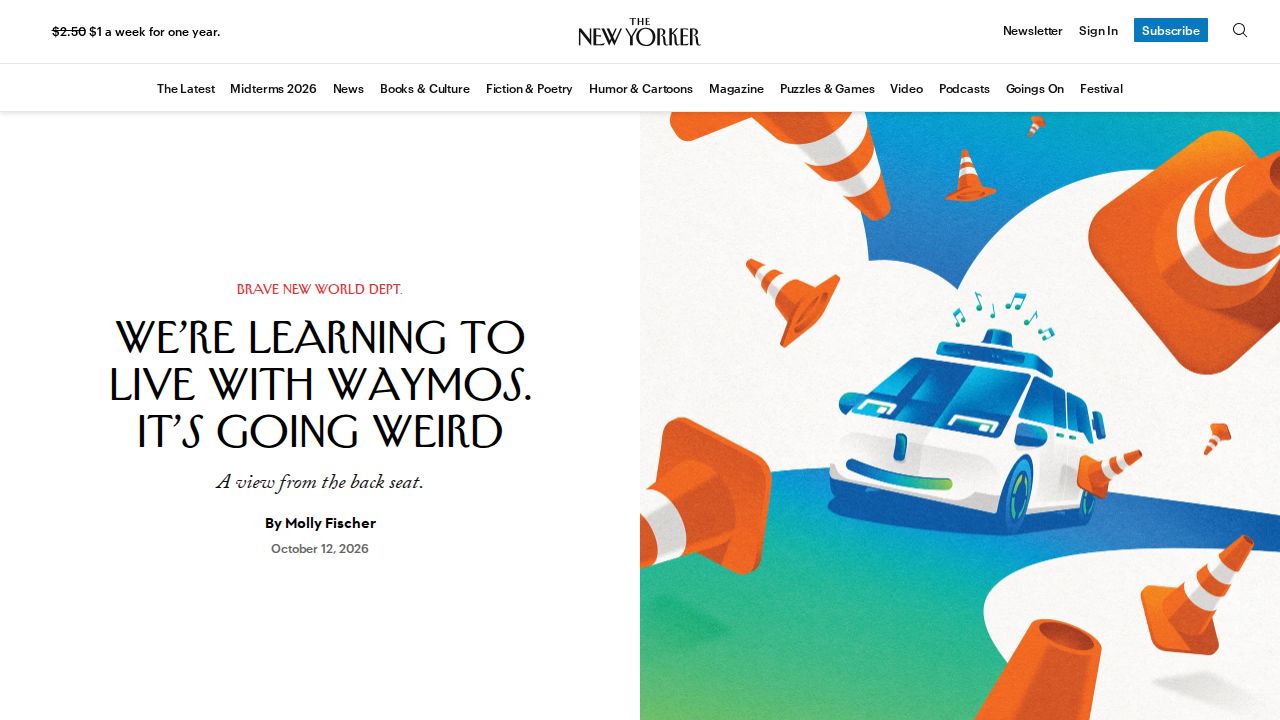
Waymo, a subsidiary of Alphabet, operates a fleet of over 4,000 autonomous vehicles across 15 U.S. cities. The company's technology, known as the Waymo Driver, utilizes a combination of lidar sensors, cameras, custom maps, and machine learning to navigate urban environments without a human operator. In cities like San Francisco, Waymo has already secured a significant market share, positioning itself as a primary competitor in the ride-hailing space. The company's expansion strategy targets major hubs including Washington D.C., New York, London, and Tokyo, signaling a push toward global ubiquity.
One of the most notable aspects of the Waymo experience is the preservation of traditional car features, such as the steering wheel. While the vehicle is fully autonomous, the steering wheel still moves as the car maneuvers. Waymo's Head of Insights, Megan Neese, noted that while a moving wheel might seem 'spooky' to some, many passengers find it reassuring because it makes the car's actions feel recognizable and relatable. This design choice serves a dual purpose: it fulfills legal mandates that require vehicles to maintain standard safety features, and it provides a psychological bridge for passengers transitioning from human-driven to machine-driven transport. Waymo markets its safety record by claiming its vehicles are 'ten times safer' than human-driven cars, a figure based on a 92% reduction in crashes causing serious injury or worse.
Despite these safety gains, the integration of autonomous vehicles into public life reveals unique technical and social friction points. For example, Waymo vehicles have encountered unpredictable environmental factors, such as driving over fireworks in San Francisco or stalling in floodwaters in Atlanta. A specific incident involving a vehicle entering a construction zone and accelerating through cones led to a software recall and a pause in freeway services. These moments highlight the limitations of current machine learning models when faced with 'edge cases'—scenarios that fall outside of standard training data. Furthermore, the experience of users varies; while some praise the vehicles for being more considerate to pedestrians and cyclists than human drivers, others have reported frustrations with the software's routing logic, such as being directed to pick-up points in distant parking lots due to perceived street congestion. These incidents underscore that while autonomous driving can mitigate human-centric risks like fatigue, it introduces new types of 'robot mistakes' that require ongoing refinement and public adaptation.