Nanolathe presents itself as an independent, open-source 2.5D real-time strategy engine that reimplements Total Annihilation through clean-room research. The project emphasizes that it is MIT-licensed and has no affiliation with or endorsement from the original game's owners. To access the full game, users must supply their own Total Annihilation game files from sources such as GOG, Steam, or original CDs, while a browser-based demo provides the original three-mission campaign without requiring any installation or game files.
The article introduces Nanolathe as an MIT-licensed, clean-room reimplementation of Total Annihilation; the logo identifies the project.
The engine offers two rendering paths: a modern GPU renderer that adds light, glow, and richer detail to the classic isometric view, and an option to switch to the original CPU-based renderer for those who prefer the authentic classic look. This dual-renderer approach allows players to experience the game with enhanced visual fidelity or in its original presentation, depending on their preference, as demonstrated in side-by-side comparisons of explosions and terrain on the project's website.
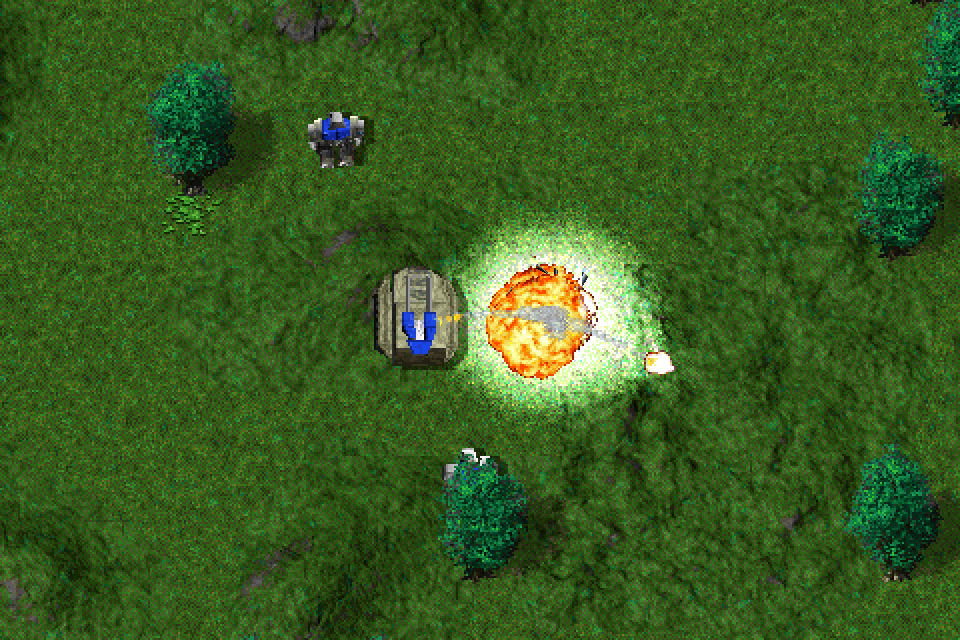
The article describes the dual-renderer approach offering a classic CPU-based renderer for authentic look; this image shows the classic renderer's explosion effect.
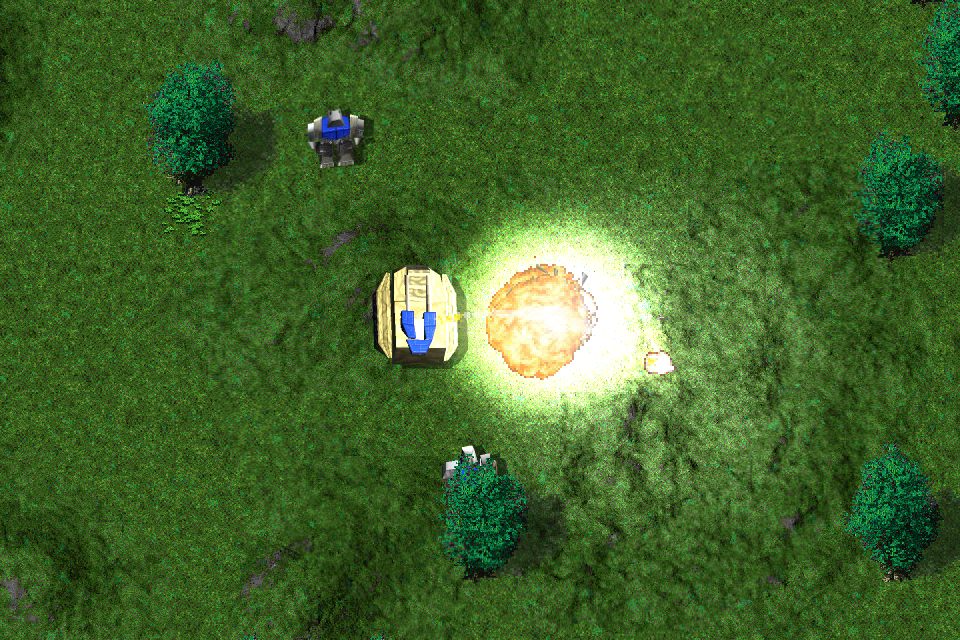
The article notes the modern GPU renderer adds light, glow, and richer detail to the classic isometric view; this image illustrates that enhancement.
Nanolathe supports single-player skirmish, Survival, and campaign modes, and enables online play for skirmish (2-10 players) and Survival (2-3 players) when each participant provides their own game files, with replays saved for every match. Although the project provides comprehensive documentation of game formats and contribution guidelines, the beta version still contains bugs and missing features, with compatibility varying by mission or content pack and save compatibility currently under refinement, reflecting its status as an actively developed open-source initiative.