John Berger opens Chapter 1 of Ways of Seeing by asserting that seeing precedes language, both developmentally and epistemologically. He notes that a child sees and recognizes before it can speak, and that seeing establishes our place in the world—a world we then attempt to explain with words, though words can never fully capture the immediacy of perception. Furthermore, Berger emphasizes that seeing is an active choice: we only see what we look at, and the act of looking brings things within our reach. This vision is reciprocal; as soon as we can see, we become aware that we can be seen, and the mutual acknowledgment between seer and seen is more fundamental than spoken dialogue, which often merely attempts to verbalize this exchange. (Source: primary).
Berger then turns to the nature of images, defining them as man-made sights that have been recreated or reproduced, detached from their original time and place. Every image, he argues, embodies the way of seeing of its maker—whether photographer, painter, or other artist—reflected in the selection of subject or the marks made on canvas. Images were initially created to conjure absent presences, but over time they came to outlive what they represented, thus serving as records of how something or somebody once looked and, by extension, how they were seen by others. Later in history, the specific vision of the image-maker became part of the record itself, making an image a testament not just to what was seen but to how the seer saw it, a development tied to the growing European consciousness of individuality and history since the Renaissance. (Source: primary).
However, Berger warns that when images are presented as works of art, they are often viewed through learned assumptions about beauty, truth, genius, civilization, form, status, and taste. Many of these assumptions no longer align with the world as it is—which includes consciousness—and consequently they mystify rather than clarify the past, obscuring what is actually there. He illustrates this mystification with Frans Hals’ portraits of the Governors and Governesses of the Old Men’s Alms House in Haarlem. While Hals was an elderly, destitute painter relying on public charity, the authoritative art historian describes the regentesses in formalist terms—harmonious fusion, unforgettable contrast, and a peak of breadth and strength—thereby transferring the emotion of the images into disinterested art-appreciation language and leaving the viewer with an unchanging 'human condition' rather than the social confrontation between pauper painter and wealthy sitters that Berger contends is the true drama of the paintings. (Source: primary).
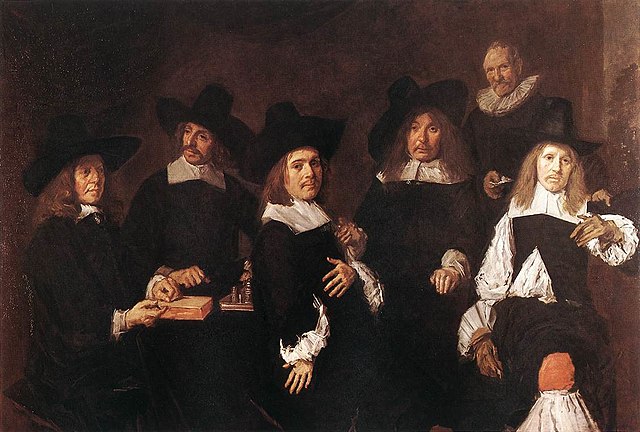
This image shows the governors discussed by Berger as an example of how formalist art analysis can obscure the social reality of the portraits.
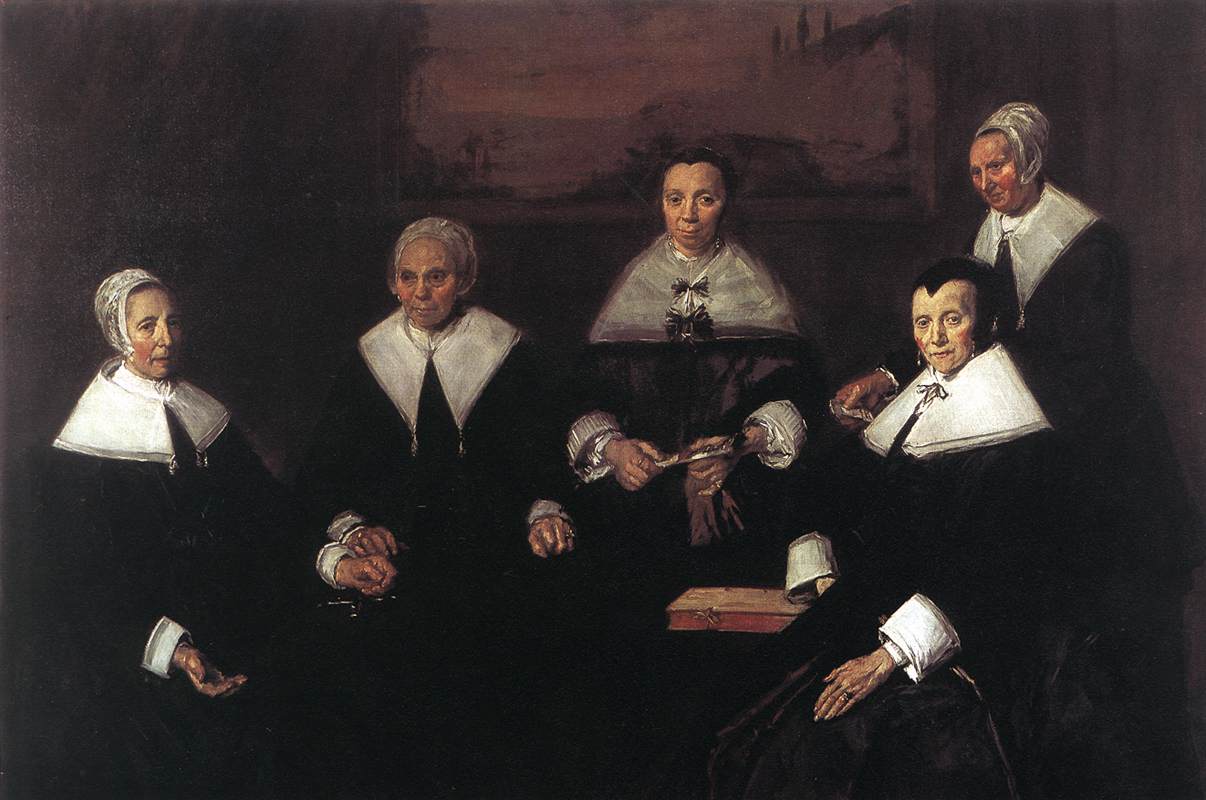
This image shows the governesses discussed by Berger as an example of how formalist art analysis can obscure the social reality of the portraits.