The Soaking Springs website hosts a geothermal heat map plotting 1,596 hot springs across the United States according to measurements of heat rising from deep within the Earth. Researched and maintained by Armen Suny, the map uses color coding to show where subsurface warmth reaches the surface most readily, with warmer colors indicating higher heat flow. This visualization allows users to explore hot spring locations alongside quantitative data about the geothermal energy driving them.
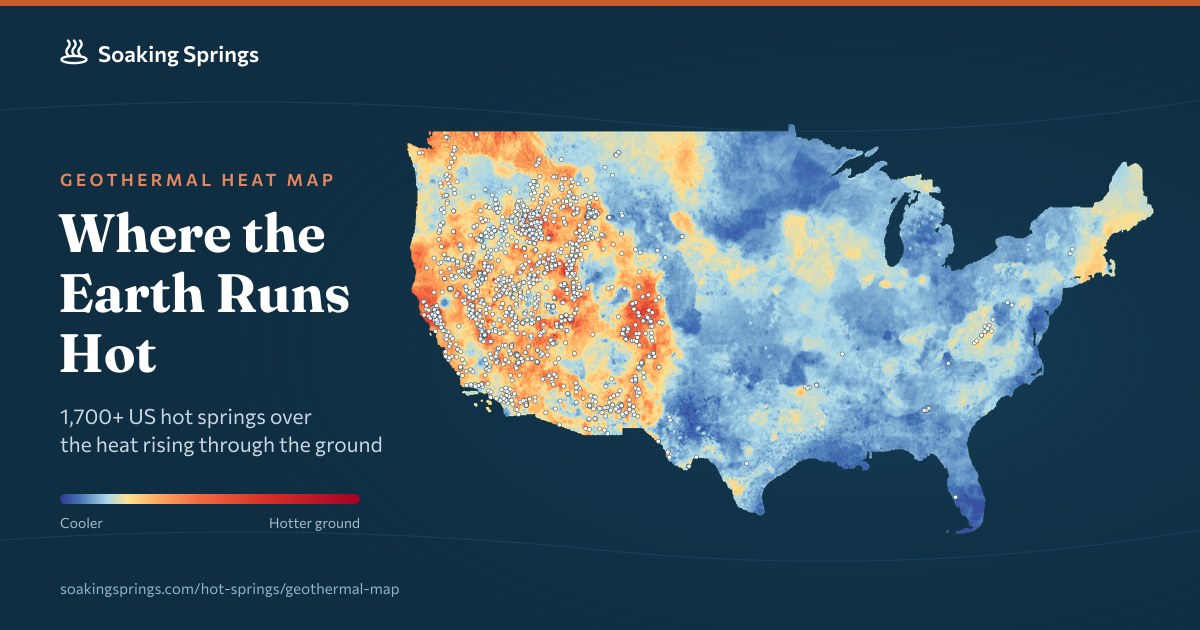
This image illustrates the map described in the article that plots 1,596 hot springs and shows heat flow distribution, particularly highlighting western US dominance.
The median heat flow across these springs is 102 milliwatts per square meter (mW/m²), which is 1.6 times the national average of 65 mW/m². The map explains that hot springs are not evenly distributed because heat flow varies significantly based on geological conditions. In the western United States, the Earth's crust has been stretched thin and fractured by fault lines, allowing hot rock from deeper underground to lie closer to the surface. When rain and snowmelt seep downward through these cracks, they are heated by this nearby hot rock and return to the surface as hot springs. The heat flow measurements come from the Stanford Thermal Earth Model (Aljubran & Horne, 2024), which covers the lower 48 states.
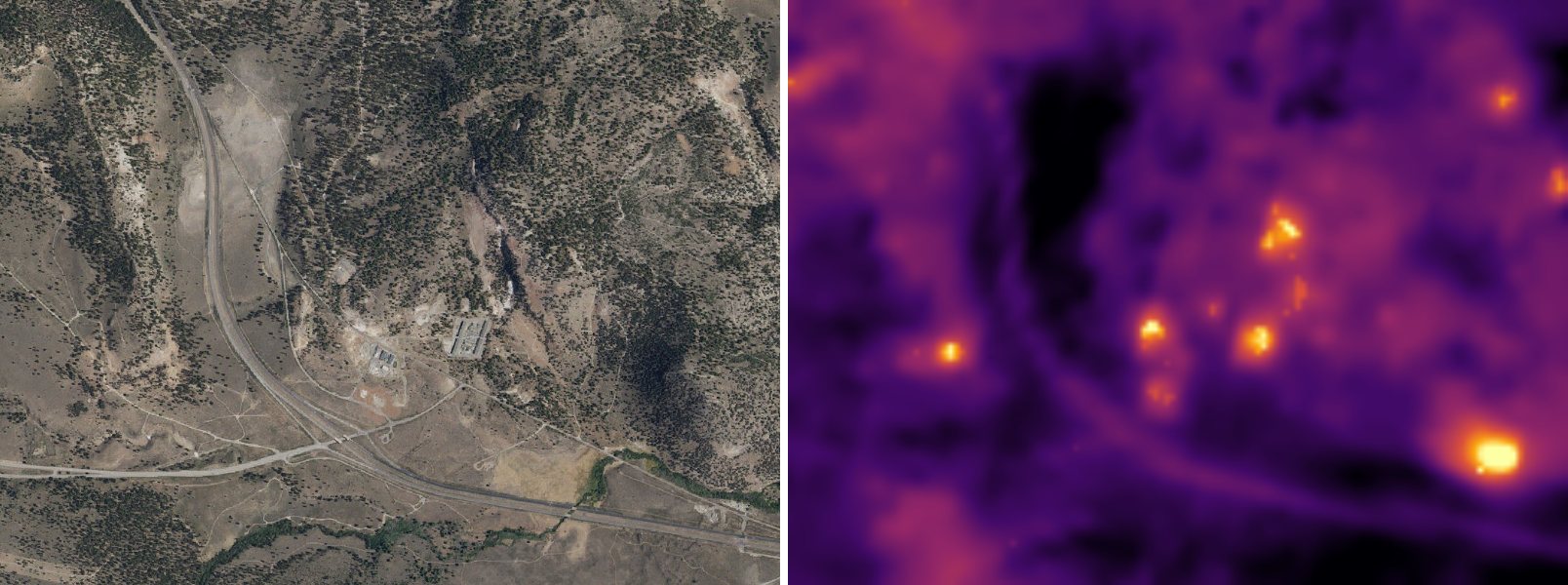
This image shows a specific western hot spring where fault lines allow heated groundwater to surface, supporting the article's explanation of geological controls on hot spring distribution.
While the map provides comprehensive data, it distinguishes between geothermal features suitable for soaking and those that are not. The primary source notes that many of the highest temperature locations are geysers and boiling pools unsuitable for soaking. For example, the support source for Travertine Hot Springs in California shows a heat flow of 129 mW/m² and source water at 180°F—hot enough to cause burns—requiring visitors to find cooled downstream areas for safe use. This highlights an important limitation: high heat flow does not necessarily translate to usable or safe soaking temperatures without natural cooling mechanisms.
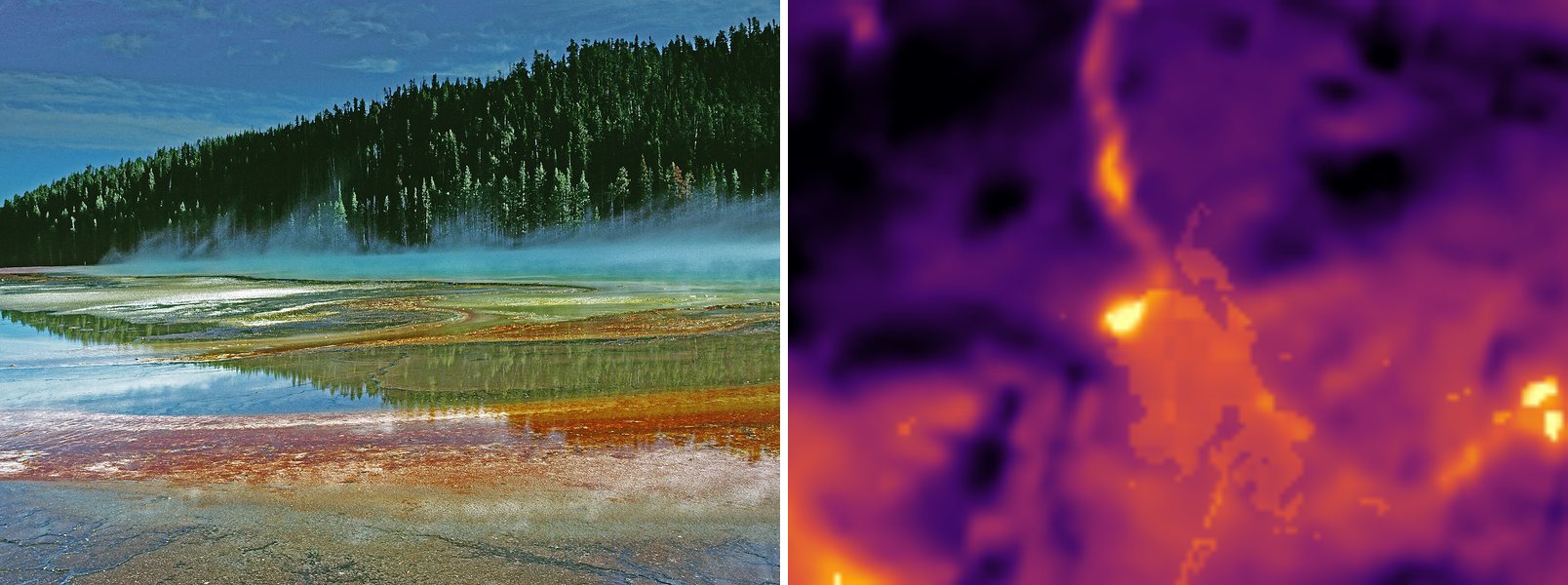
The article notes that many high heat flow locations are geysers and boiling pools too hot for safe use without cooling, exemplified by sites like Midway Geyser Basin.