Researchers at the Hebrew University of Jerusalem have developed a high-performance composite material dubbed 'BioPykrete.' This 'super ice' is engineered to be 10 times stronger than standard ice and capable of absorbing 70 times more energy before breaking. The project builds on the concept of Pykrete—a material famously experimented with by the British Royal Navy during World War II, which combined wood pulp and ice to create a substance as strong as concrete. While the original Pykrete was abandoned due to cost and the availability of other materials, the new BioPykrete utilizes modern biotechnology to achieve similar structural goals with a focus on sustainability.
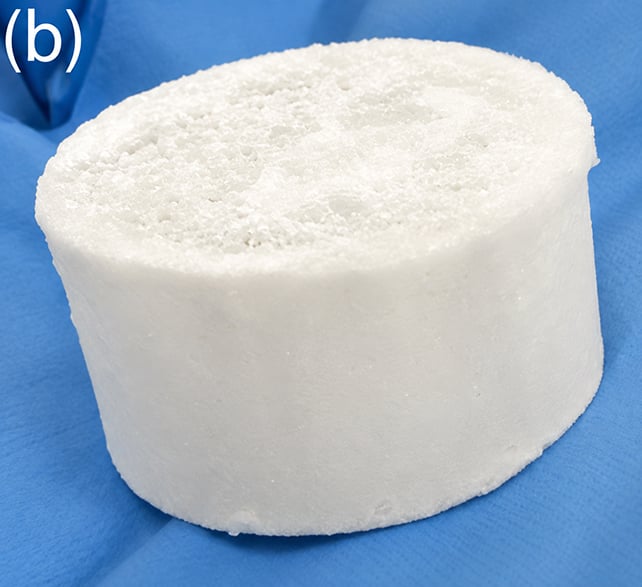
This image illustrates the physical form of the 'super ice' material described in the first paragraph of the article.
The mechanism behind BioPykrete involves a sophisticated molecular approach rather than a simple mixture of fibers. The researchers used cellulose nanocrystals, which are the primary structural components of plants, to act as microscopic strengthening agents that prevent cracks from spreading through the ice. To ensure these crystals bonded effectively with the ice, the team utilized a bespoke protein called CBM3a-AFPIII. This protein combines an antifreeze protein (AFP) with a carbohydrate-binding module (CBM), acting as a molecular 'glue' to keep the cellulose and ice bonded together. This specific engineering allows the material to deform gradually under stress instead of shattering suddenly, a critical property for structural integrity.
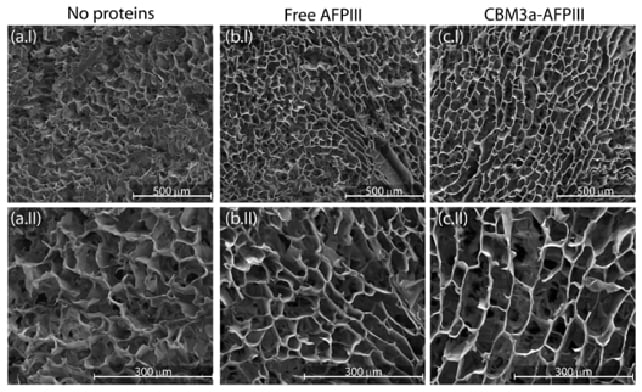
This visual represents the bespoke protein used to bond the cellulose and ice, as explained in the second paragraph.
While the study was a small-scale proof-of-concept, the researchers envision BioPykrete as a sustainable building material for extreme environments like the Arctic and Antarctic. Because the primary ingredients are ice and plant-based cellulose, the material could offer a low carbon footprint and be biodegradable, potentially replacing carbon-intensive materials like steel or concrete in remote regions. However, the material's long-term durability under varying environmental conditions remains an area for future study. Beyond construction, the researchers suggest this method of using custom proteins to bridge unlikely compounds could eventually be applied to fields such as sustainable packaging and other structural engineering challenges.