Anthony Sistilli, a software engineer and YouTuber living in Brampton, Ontario, constructed an automatic license plate recognition (ALPR) camera modeled after the Flock systems used by police. He designed the device specifically to monitor the movements of police vehicles and posted videos on TikTok and YouTube showing the camera in action, describing it as “a personal Flock surveillance camera to Flock the Flockers.”
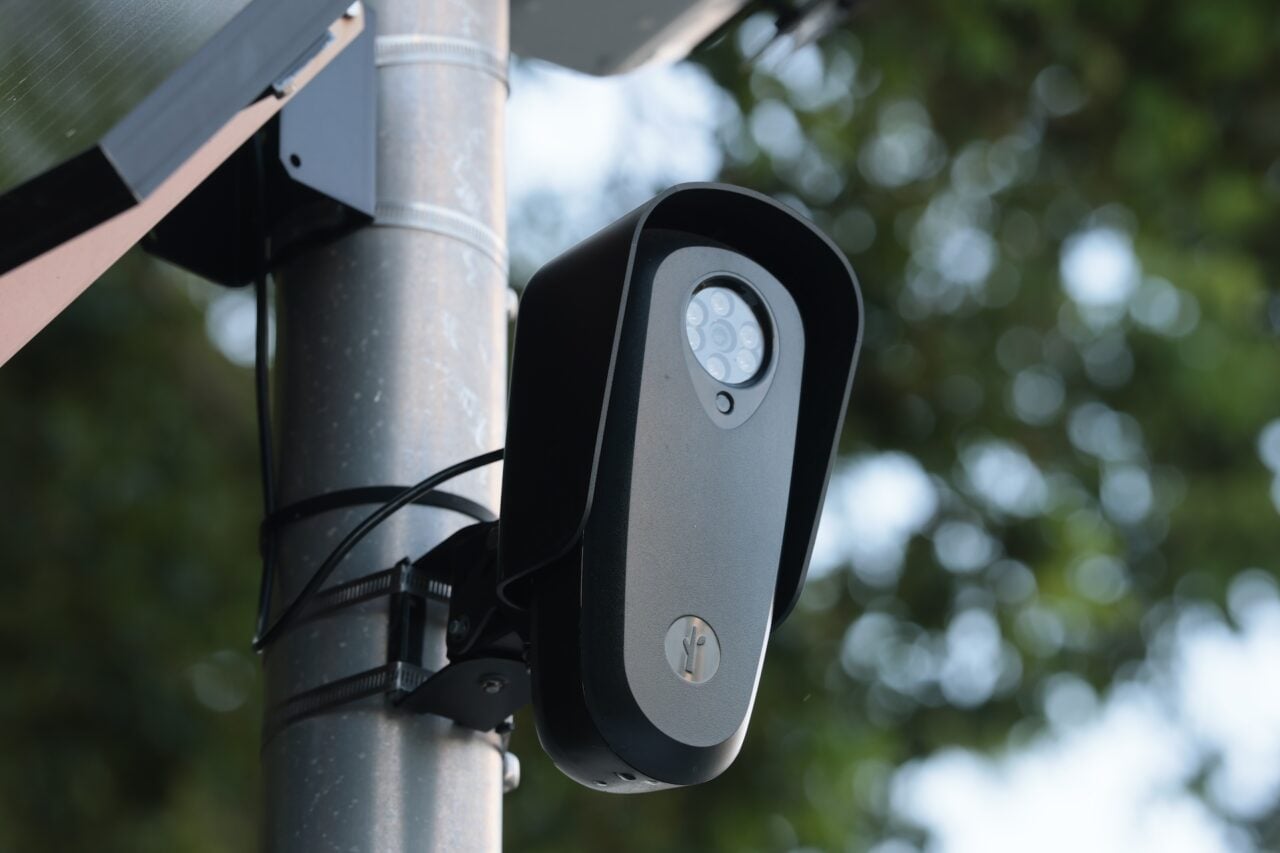
This image shows a Flock Safety automatic license plate recognition camera deployed in Miami, Florida, representing the type of commercial surveillance system that Anthony Sistilli modeled his DIY ALPR camera after when he built it to monitor police vehicles in Brampton, Ontario.
After the videos gained attention, two officers from Peel Regional Police arrived at Sistilli’s front door to ask what his intentions were for the data collected by the camera. In his account of the encounter, Sistilli pointed out the irony, noting that the same surveillance capabilities police use to track citizens could reveal officers’ shift patterns, home addresses, and daily routines if turned outward.
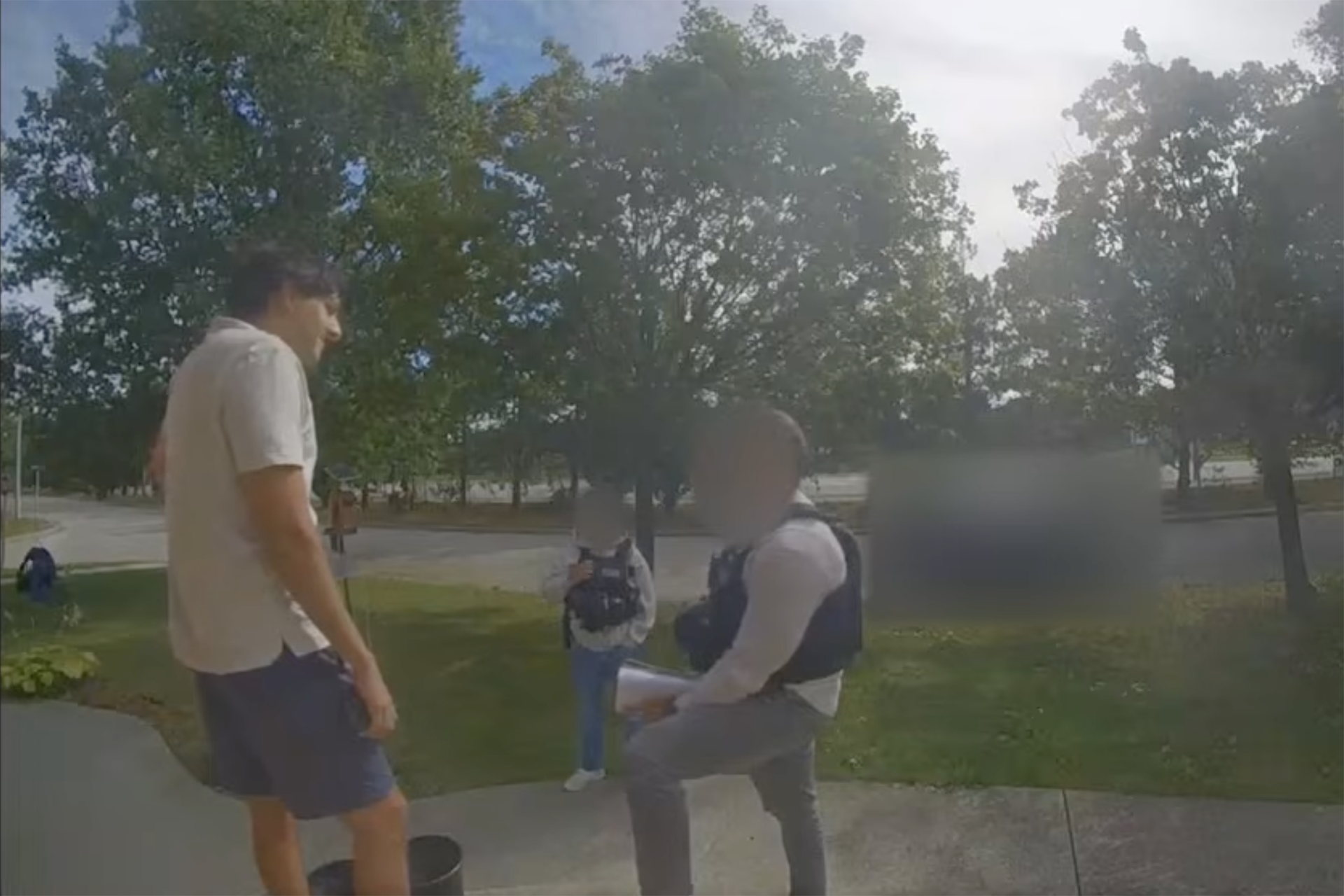
This image shows the YouTuber Anthony Sistilli with the two police officers who visited his home to inquire about his DIY automatic license plate recognition system built to monitor police vehicle movements.
Sistilli used the police visit as a jumping‑off point for a longer YouTube video in which he examined how companies like Flock market ALPR technology to municipalities, questioned whether the systems actually reduce crime, and highlighted the lack of transparency about what data is collected, how long it is retained, and who can access it.