Mistral Large 4, released as a public preview in October 2026, is an open-weight AI model with 1 trillion total parameters and tens of billions of active parameters, trained from scratch on 3 800 NVIDIA Grace Blackwell GPUs in Mistral’s own European datacenters【support-2】. The model emphasizes European AI sovereignty by being developed and operated within Europe, aiming to provide customers with control over their AI while complying with regional regulations.
In Plotly’s specialized data‑analytics benchmark, Mistral Large 4 demonstrated a generational leap over its predecessor Mistral Medium 3.5【primary】. The cost per full exam run dropped from $20.51 to just $1.94—a 10× reduction—while the share of correct answers rose from 58 % (an F grade) to 74 % (a C grade). The exam uses a realistic mock wind‑turbine dataset with 20 M rows across 44 tables, testing multi‑step analyses such as streak detection, point‑in‑time joins, and identifying data‑quality issues.
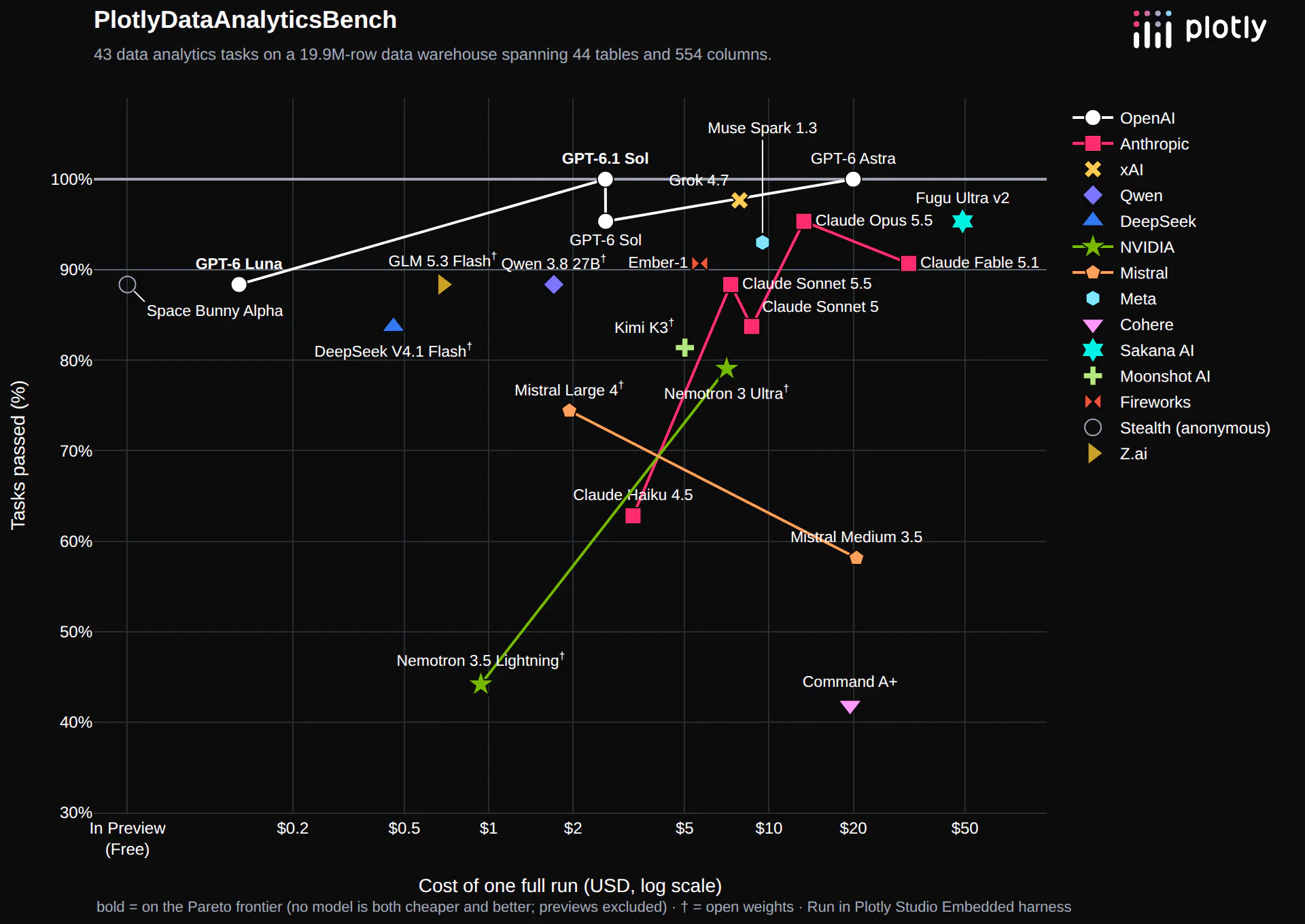
This visual supports the article's claim that Mistral Large 4 offers a cost‑effective alternative, placing it in the same range as models like GPT‑6.1 Sol and Qwen 3.8 27B.
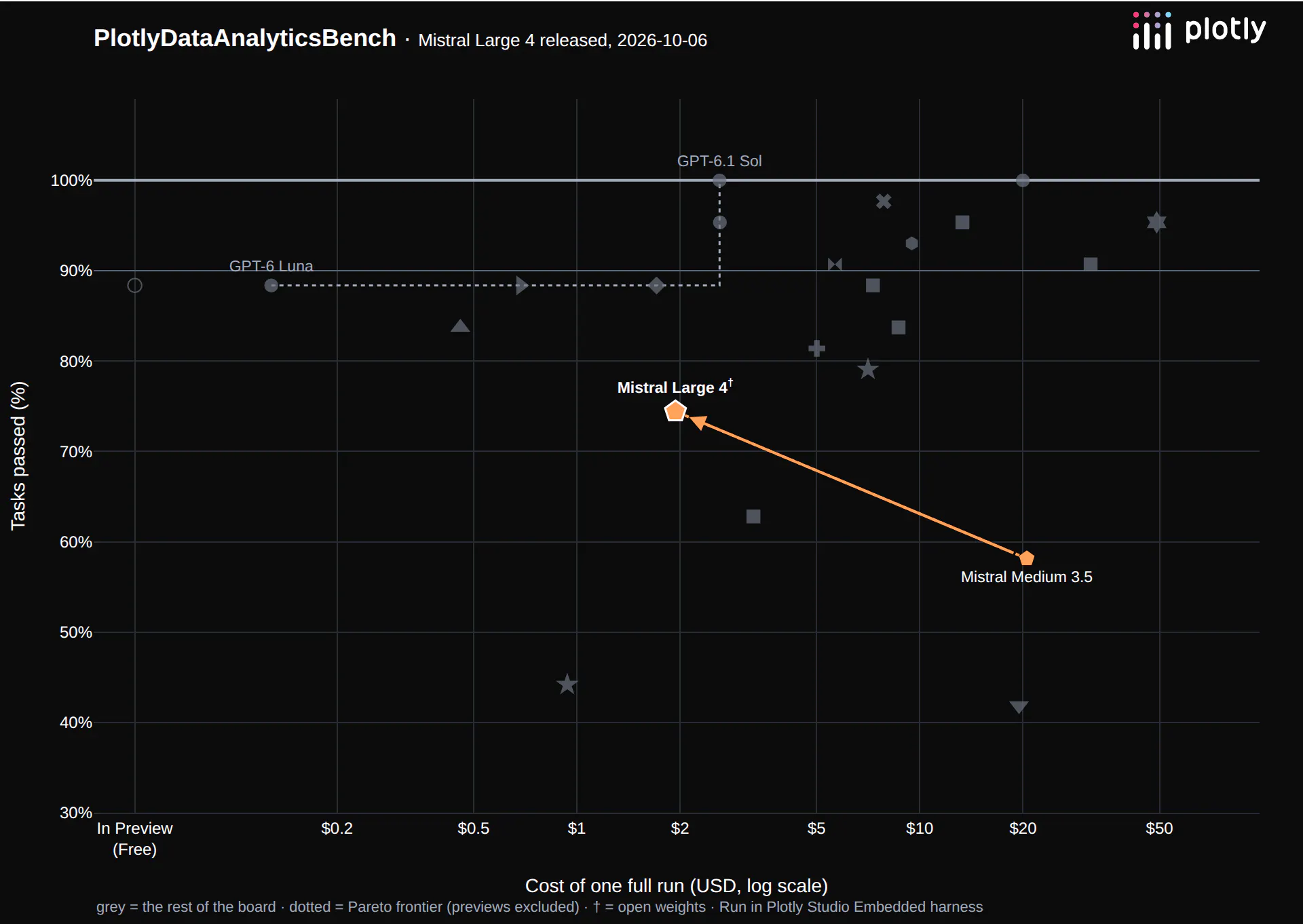
This image illustrates the generational leap in performance and cost efficiency described in the article's second paragraph, where Mistral Large 4's exam score rose from 58% to 74% while cost dropped tenfold.
Despite these gains, Mistral Large 4 still shows notable weaknesses in the same benchmark【primary】. It occasionally reports sums as averages, trusts row counts without spotting duplicated data, and claims full coverage when significant gaps exist—errors that could lead to mistaken business conclusions. Its performance on ambiguous questions actually slipped slightly from 4/5 to 3/5 correct, and while it trails the top‑scoring models in absolute accuracy, its cost‑efficiency places it in the same range as models like OpenAI GPT‑6.1 Sol ($2.61 per run) and Qwen 3.8 27B ($1.71 per run).