Victorian Britain’s ruling class presents a puzzle to modern eyes. While contemporary success stories celebrate early‑morning routines, cold baths, and a laser focus on STEM subjects, the elites of nineteenth‑century Britain rose late, drank liters of port, and spent much of their waking hours feasting, dancing, and playing sports. Yet they presided over the largest empire the world has ever seen, governed the richest country on Earth, and commanded a navy that ruled the oceans. The Works in Progress article argues that this apparent paradox is resolved by looking at what the Victorians themselves valued: a relentless focus on soft skills, team building, and intra‑elite networking rather than on hard‑technical training alone.
Their education system deliberately de‑emphasized the subjects that dominate modern reform debates. In preparatory and public schools, Latin and Greek occupied up to 80 percent of teaching time, while science and mathematics were relegated to the margins because they were deemed irrelevant to the moral and cultural formation of a future gentleman. Classroom hours were modest—often far shorter than those in today’s elite institutions—leaving large swaths of the week for organized sports such as cricket in summer and various forms of football (including the early rugby played at Rugby School) in winter. Headmasters like Thomas Arnold of Rugby and Hely Hutchinson Almond of Loretto explicitly ranked character and physique above intellect, believing that sports instilled team spirit, endurance, mutual loyalty, and the ability to win and lose graciously.
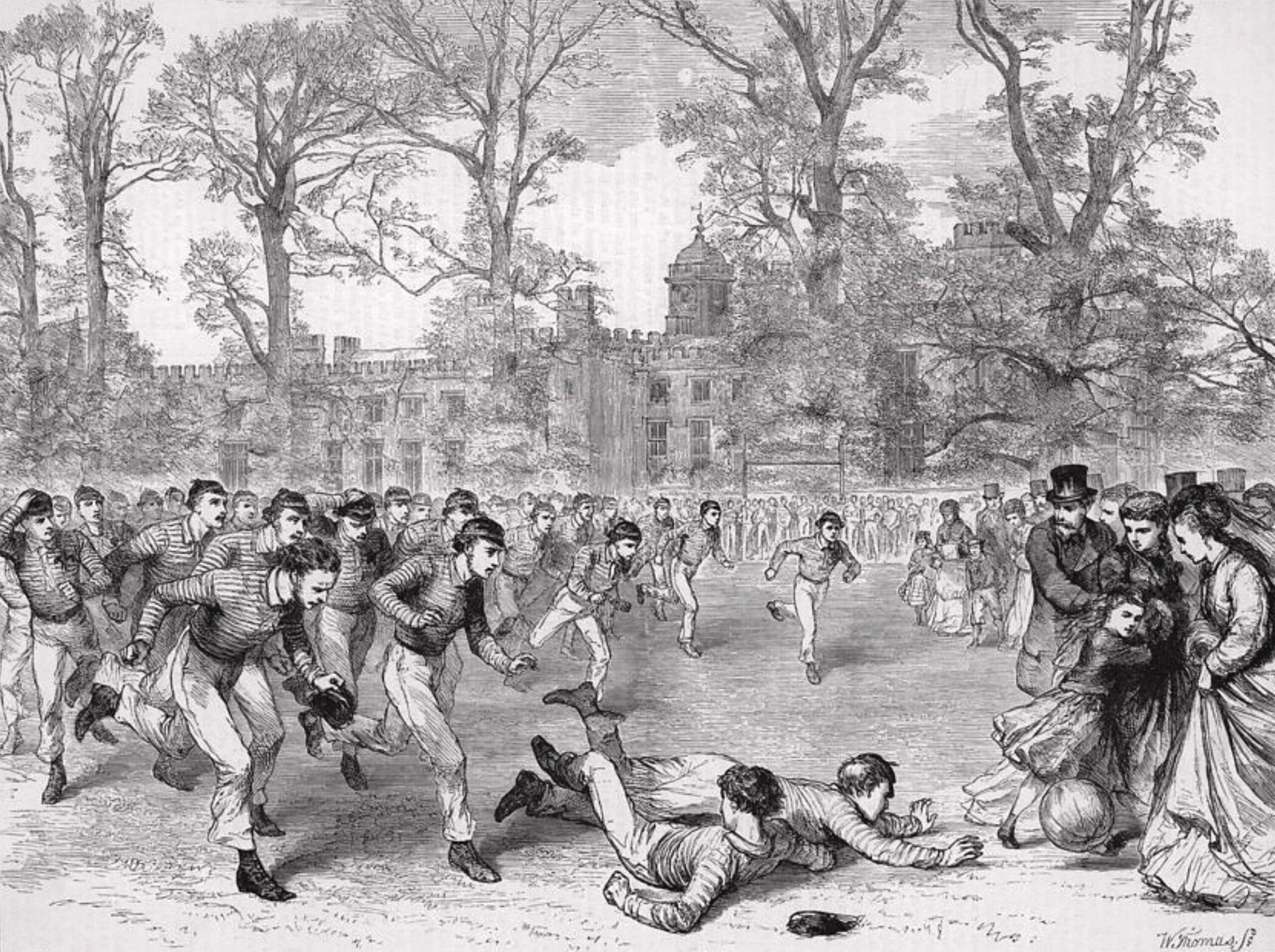
The image supports the article’s point that Victorian public schools prioritized sports like rugby to build character, team spirit, and leadership among future elites.
Beyond the playing field, the public schools pioneered a system of student self‑government: senior boys were appointed as prefects with pastoral and disciplinary authority over their peers, complete with jury‑style checks and balances intended to prevent abuse while fostering a sense that authority emanated from the peer group rather than being imposed by alien masters. This arrangement aimed to cultivate what one headmaster called “the great glory of an English public school – its free development of character, its social expansiveness, in short its liberty,” turning the school into a miniature oligarchy where boys learned to lead, to judge, and to be judged by equals. The article connects these formative experiences to the broader achievements of Victorian Britain. Although the colonial office was tiny—just fourteen clerks in 1816 growing to about twenty‑five by 1850—and the entire colonial service numbered roughly a thousand by 1900 ruling over an empire of 450 million subjects, the empire’s administration functioned effectively enough to sustain global trade, naval dominance, and a gradual democratic transition free of the revolutions that convulsed continental Europe. The source acknowledges that exploitation and extraction contributed to British wealth, but it also proposes that the elite’s cultivated networks, shared ethos, and experience in peer‑governance facilitated coherent decision‑making and resilience.