The pipeline, dubbed MOLT Sinai, structures work like a teaching hospital: GitHub issues are patients, merging is discharge, and specialized agents play roles such as Triage Nurses, Fellows, Review Attendings, and Discharge Nurses, overseen by Chiefs of Medicine. Each stage is a GitHub Actions workflow that waits for a “label in” on an issue, runs a role‑specific prompt, and then writes a “label out” to move the issue to the next stage. Agents must first produce a treatment plan, have it reviewed by a Review Attending, and only then begin work; they are forbidden from improvising, skipping tests, or flailing when stuck, instead using structured I‑PASS handoffs and escalating to attendings. A Discharge Nurse later audits that the review happened properly before allowing a merge, and a precedent log reduces repetitive escalations to human Chiefs of Medicine.
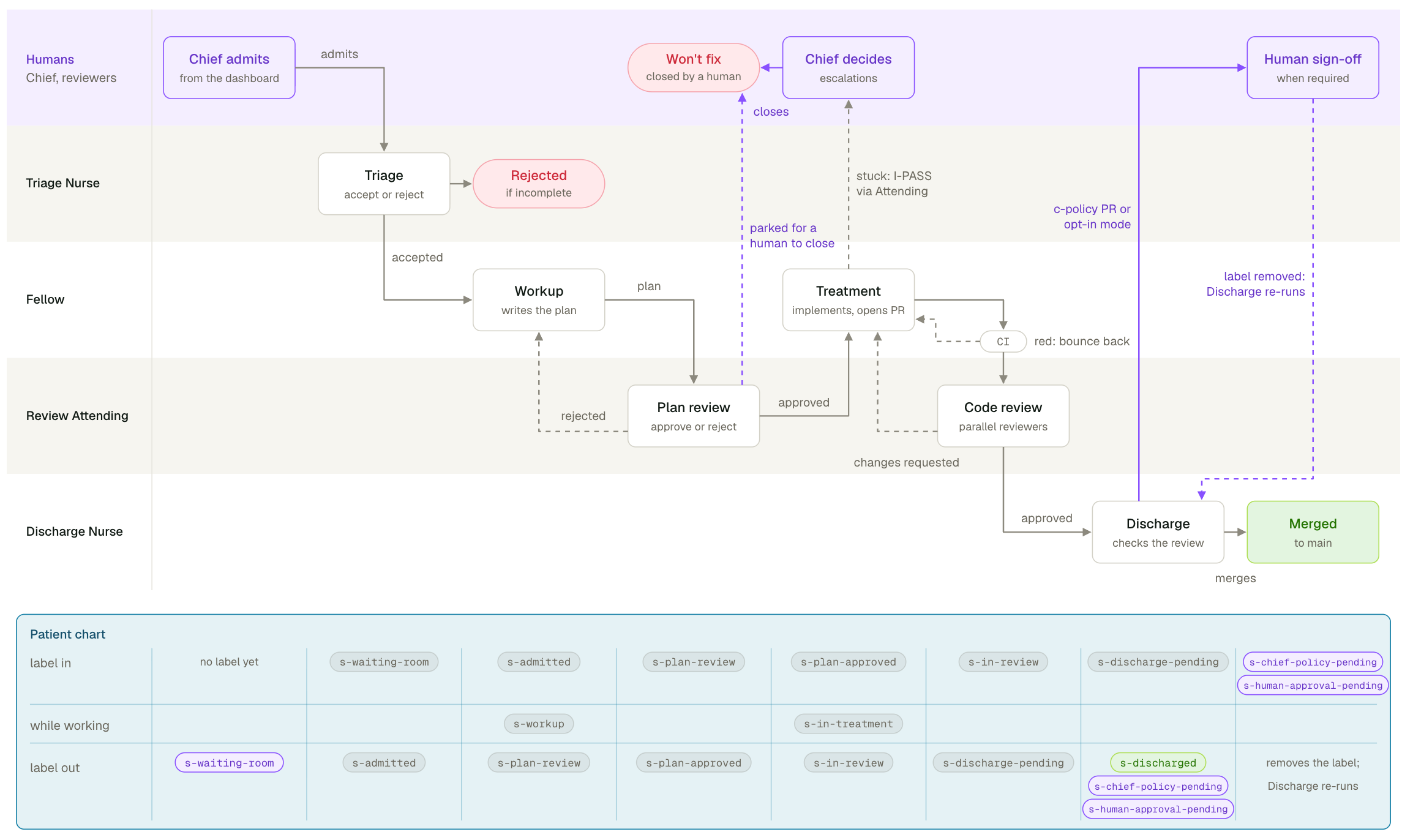
Illustrates the pipeline structure described in the first paragraph where GitHub issues are patients, merging is discharge, and agents progress through stages with label-based transitions and feedback mechanisms.

Shows the hospital metaphor introduced in the article, depicting bugs as patients and agents as medical staff supporting the analogy used throughout the piece.
Over a five‑month period the hospital processed well over a million lines of code with only seven total reverts, showing that the model can safely handle large‑scale database migration work. When the team added support for IBM Db2 to the MOLT migration tool, the effort took less than two days, required no human‑written code, and incurred a token bill of $4,172—164 times faster and 38 times cheaper than the nine‑month, $160,000 effort previously needed for Oracle support. Test coverage against PostgreSQL remained equivalent, confirming that quality was not sacrificed for speed.
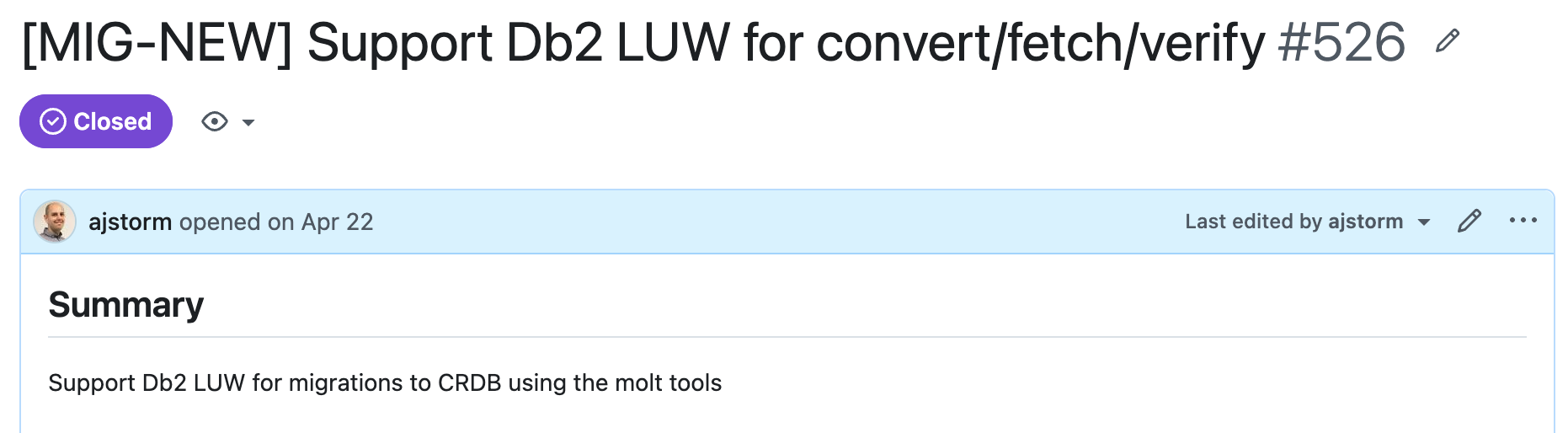
Represents the Db2 support work mentioned in the second paragraph, which was completed in under two days with minimal human-written code.
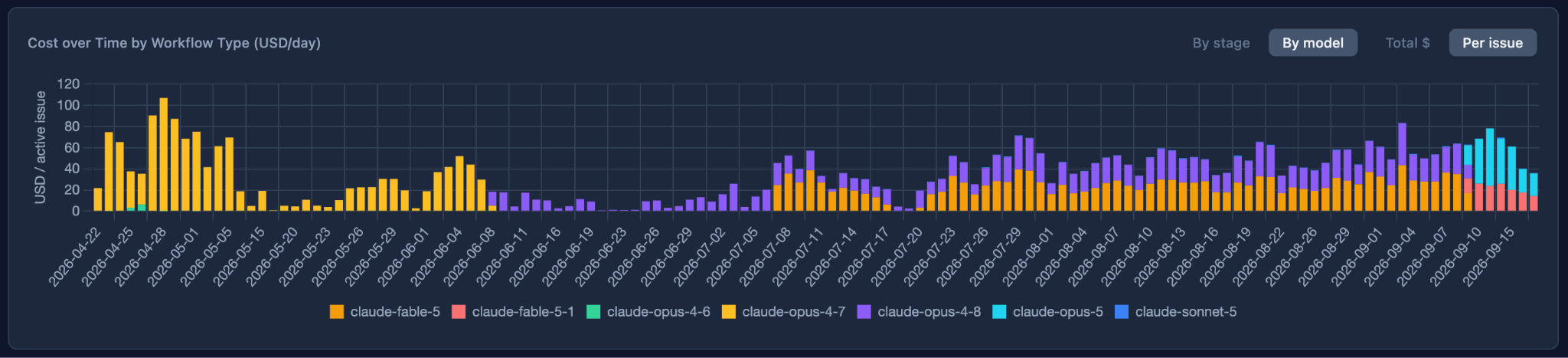
Visualizes the cost metrics discussed in the second paragraph, where the Db2 experiment incurred a token bill of $4,172, demonstrating efficiency gains.
The pipeline’s own activity generated roughly half of the repository’s issues as decomposition children, follow‑ups, research proposals, and safety corrective actions. After the Db2 experiment’s first week, the team switched to “human approval mode,” requiring a human review on every merge to guarantee customer‑grade quality. The system has consumed just over $135,000 in Claude tokens, averaging about $84 per issue, and has evolved from using Opus models everywhere to letting Fable‑generated plans select the appropriate model, falling back to more capable Opus or Sonnet versions when needed. While the hospital metaphor introduces some bureaucracy, wait times, and token cost, the authors judge these trade‑offs worthwhile for the reliability required in a distributed‑SQL database migration toolset.