After William Golding submitted his manuscript 'Strangers from Within' to Jonathan Cape in early 1953, he faced repeated rejection from publishers who dismissed it as 'an absurd & uninteresting fantasy … Rubbish and dull. Pointless.' His approach to Faber & Faber in September 1953 brought the typescript to Charles Monteith, a 31-year-old barrister recently hired on probation, who described it as 'visibly well-thumbed' and 'bound in rather depressing hairy cardboard.' Despite initially considering putting it down after an overwrought nuclear war opening, Monteith became 'not merely interested but totally gripped' by the stranded children's narrative and advocated for the project at Faber's book committee, overcoming skepticism from colleagues including the sales director who deemed it unpublishable.
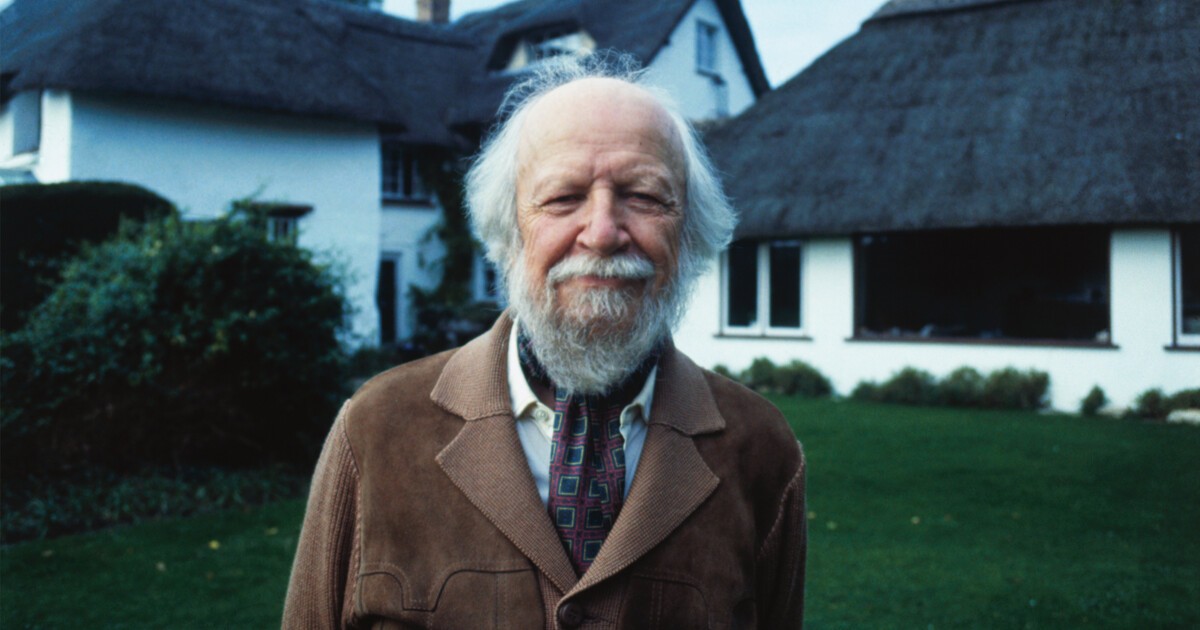
This image shows William Golding, the author whose early manuscript 'Strangers from Within' was transformed by editor Charles Monteith into the literary classic Lord of the Flies through substantial revisions to structure, tone, and allegorical elements.
Monteith then collaborated with Golding to reshape the manuscript through three specific editorial interventions. He revised the lengthy nuclear war prologue and addressed two other sections where the story pivoted away from the island to improve structural coherence. Regarding tone, he countered Golding's tendency 'to overemphasise; to make points rather too directly when they could be made more effectively by implication,' refining the book's moral messaging. Most significantly, Monteith felt the character of Simon was 'too obviously a Christ figure' and worked with Golding to develop subtler allegorical dimensions. These changes, which Monteith believed created the novel's 'susceptibility to tabloid invocation and classroom explication,' accompanied a title evolution from Golding's initial 'Strangers from Within' through considerations like 'Island Impact' and 'Hunt the Island' before Monteith's colleague Alan Pringle suggested 'Lord of the Flies,' which Monteith accepted for publication on February 11, 1954—over a year after Golding's initial submission.
The collaboration's aftermath revealed divergent artistic paths following Lord of the Flies' phenomenal success. While the novel became required reading for British and American schoolchildren, Golding's subsequent works pursued increasingly complex themes that contrasted with Monteith's hopes for accessible follow-ups. In The Inheritors (1955), written 'at a tremendous lick' after Lord of the Flies' publication, Golding explored the encounter between Neanderthals and early Homo sapiens—a project that prompted his frustrated exclamation: '“O God,” I said to myself, “first it was schoolboys, now it’s cavemen. Bloody cavemen.”' This moment highlighted Golding's resistance to being typecast as a writer of schoolboy allegories despite his artistic impulse to explore deeper aspects of human nature. His next novel, Pincher Martin (1956), which charts 'the nightmarish progress of a soul after death' with 'unfashionable earnestness,' further distanced him from postwar British literary currents exemplified by figures like Kingsley Amis and Iris Murdoch, establishing a pattern where Golding's later works, though critically championed, never matched the extraordinary commercial success of his edited debut.