Waites constructed an AI‑assisted research pipeline that combined the GLOBALISE transcriptions of the Dutch East India Company archive (4.35 million pages), digitized newspapers from the Dutch national library, two centuries of American newspapers, and several ship logbooks. Each passage was transformed into a semantic embedding, allowing searches by meaning rather than exact wording. A low‑cost, fast “System One” model named Jev performed an initial screening, flagging only those passages that mentioned candidate animals or events; the flagged sections were then read in detail by a larger Claude Haiku model, which extracted dates, places and other facts before a Claude Code agent verified the information against the original handwritten scans. To ensure reliability, Waites first ran the pipeline on known historical benchmarks—such as Benjamin Breen’s AI‑assisted rediscovery of a 1615 dodo eyewitness account, the 1783 Laki eruption and the 1815 Tambora eruption—confirming that the method could detect true positives before trusting its novel finds.
One of the first discoveries came from a December 19, 1812 issue of the Java Government Gazette, which reprinted a letter from the Bombay Gazette dated August 26, 1812. An officer identified only as Captain M‑ described a stone that fell from a thunder‑cloud near the village of Cokurrgaum, weighing about four pounds, unusually heavy for its size, rich in iron, and coated with a thin black crust. The stone had buried itself a foot deep in open ground, and the local headman initially treated it as a heavenly object. Waites checked six meteorite catalogues—from Chladni’s 1819 list through the 1933 List of Indian Meteorites to the modern Meteoritical Bulletin—and found no record of the fall, making it the earliest documented meteorite in Maharashtra, predating the current earliest known example by 26 years.
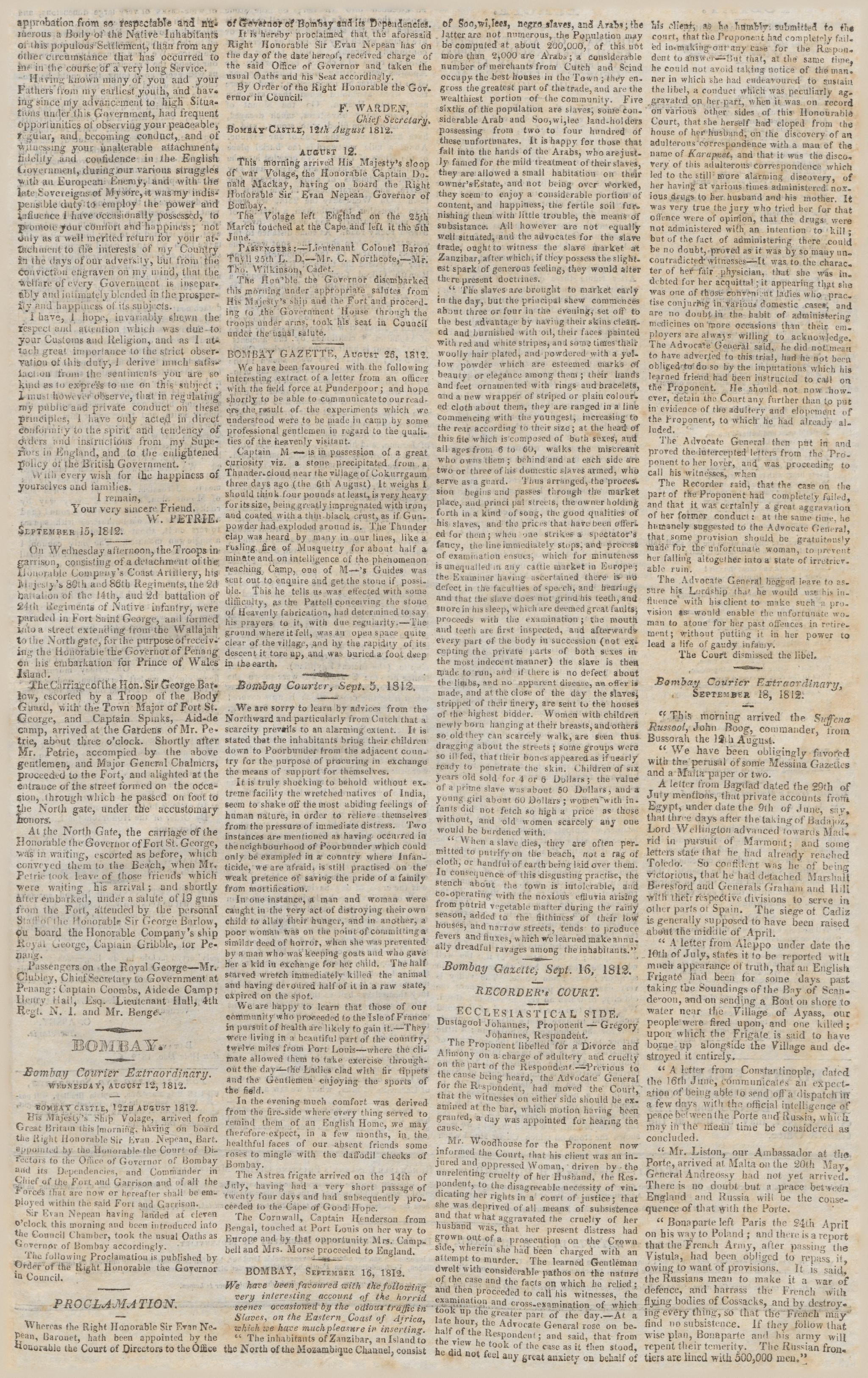
This image presents the primary source document that Waites' AI pipeline identified as evidence of the earliest recorded meteorite fall in Maharashtra.
The pipeline also surfaced three separate references to live Javan rhinoceroses destined for the King of Kandy. In 1738 the Dutch East India Company noted the capture of a rhinoceros for gift‑giving; by 1740 its accounts recorded “1 rhinoceros short, died in the horse stable in the year 1738.” A governor’s letter from March 1739 reported the animal’s sudden death, and a sworn statement from the crew of the ship Loverendaal in July 1740 confirmed that both a male and a female rhinoceros had died during the voyage to Ceylon. These documents provide dates, a named vessel, and eyewitness testimony for three captive Javan rhinos, adding to a historically sparse record of the species in captivity; Waites found no record of these shipments in the specialist literature he consulted.
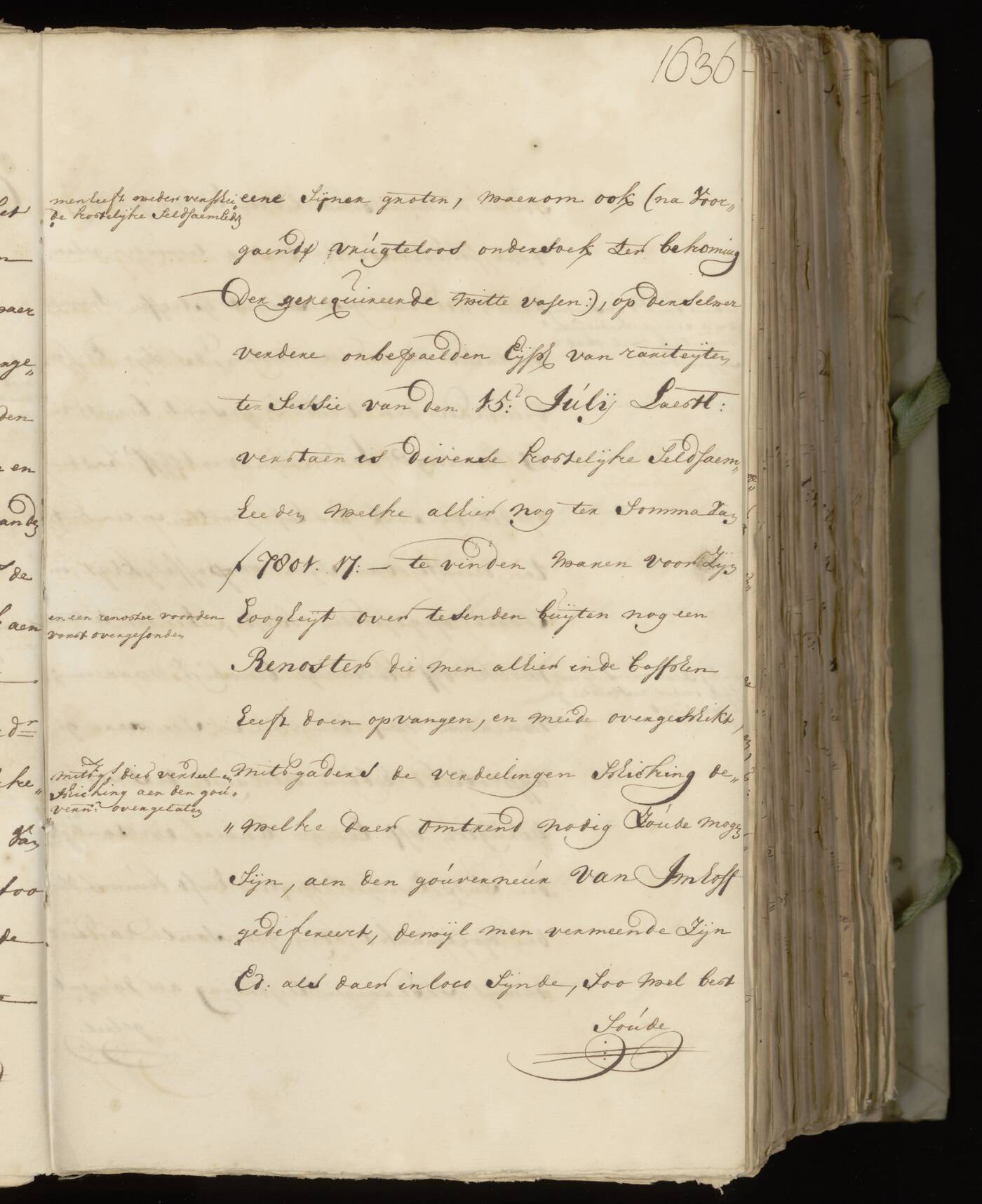
This image shows the archival record that helped Waites confirm the capture and subsequent death of a Javan rhinoceros destined for Kandyan royalty.