Margaret Hamilton, the computer scientist who directed the software engineering team for NASA's Apollo program at MIT's Instrumentation Laboratory, died on September 30, 2026, at the age of 90, according to MIT News. Her work spanned over two decades at MIT from 1959 through the mid-1970s, where she became a foundational figure in the development of software for spaceflight. As the first programmer hired for the Apollo project and later the leader of teams responsible for the Command and Service Module and Lunar Module flight software, she oversaw the work of more than 400 engineers during the program's peak.
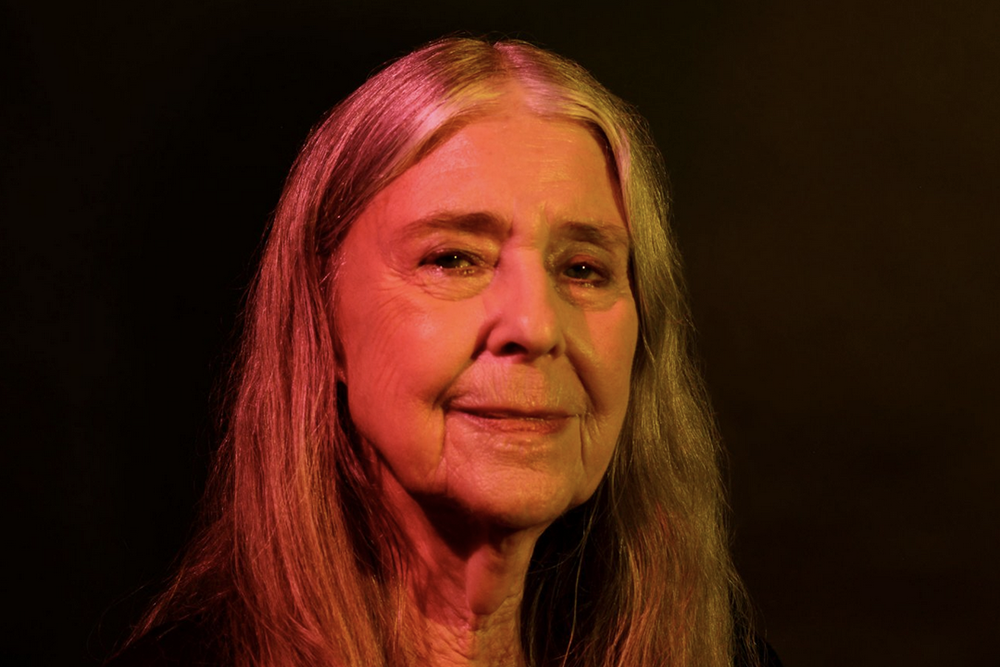
This portrait shows Margaret Hamilton, whose leadership in Apollo software engineering was pivotal to the moon landings.
Hamilton's most significant technical contribution was the creation of priority-driven software architecture that could recognize and respond to computer overloads by automatically prioritizing critical tasks. This innovation proved essential during the Apollo 11 lunar landing when the onboard computer triggered 1202 alarms due to radar data overflow; her system suppressed non-essential processes to allow the landing sequence to continue. The concept originated from what became known as the 'Lauren error,' when her young daughter accidentally activated a pre-launch program during a simulator test, causing a crash. After a similar incident occurred during Apollo 8 when astronaut Jim Lovell inadvertently triggered the same error in flight, Hamilton's team implemented safeguards that prevented navigation data loss, establishing an early framework for defensive programming in mission-critical systems.
Beyond her Apollo achievements, Hamilton spent decades advocating for the recognition of software engineering as a legitimate engineering discipline distinct from hardware engineering. She articulated this view in interviews, stating she used the term 'software engineering' to demand proper respect for the field while maintaining its role within broader systems engineering. This advocacy led her to found Higher Order Software in 1976 and later Hamilton Technologies, where she developed the Universal Systems Language (USL) focused on error prevention and fault tolerance in complex systems. Her contributions were honored with the Presidential Medal of Freedom in 2016, inclusion of the Apollo software on GitHub in 2015, and her immortalization as a LEGO Minifigure in the Women of NASA set in 2017. She is survived by her daughter Lauren Hamilton, son-in-law Richard Selesnick, two grandsons, four great-grandchildren, and siblings John, David, and Kathryn.

This headshot captures Hamilton in her later years, reflecting her enduring legacy in software engineering and spaceflight.