Thirty years ago, on October 7, 1996, the Orchid Righteous 3D graphics card featuring 3dfx's Voodoo Graphics chipset was released, marking a pivotal moment in PC gaming history. According to Smith, this launch 'changed forever' the landscape of PC gaming, introducing capabilities that made contemporary consoles like the PlayStation and Nintendo 64 look 'positively stone age' by comparison. The card represented a fundamental shift in what was possible for PC gaming, delivering graphics quality that exceeded what users had previously experienced on home systems.
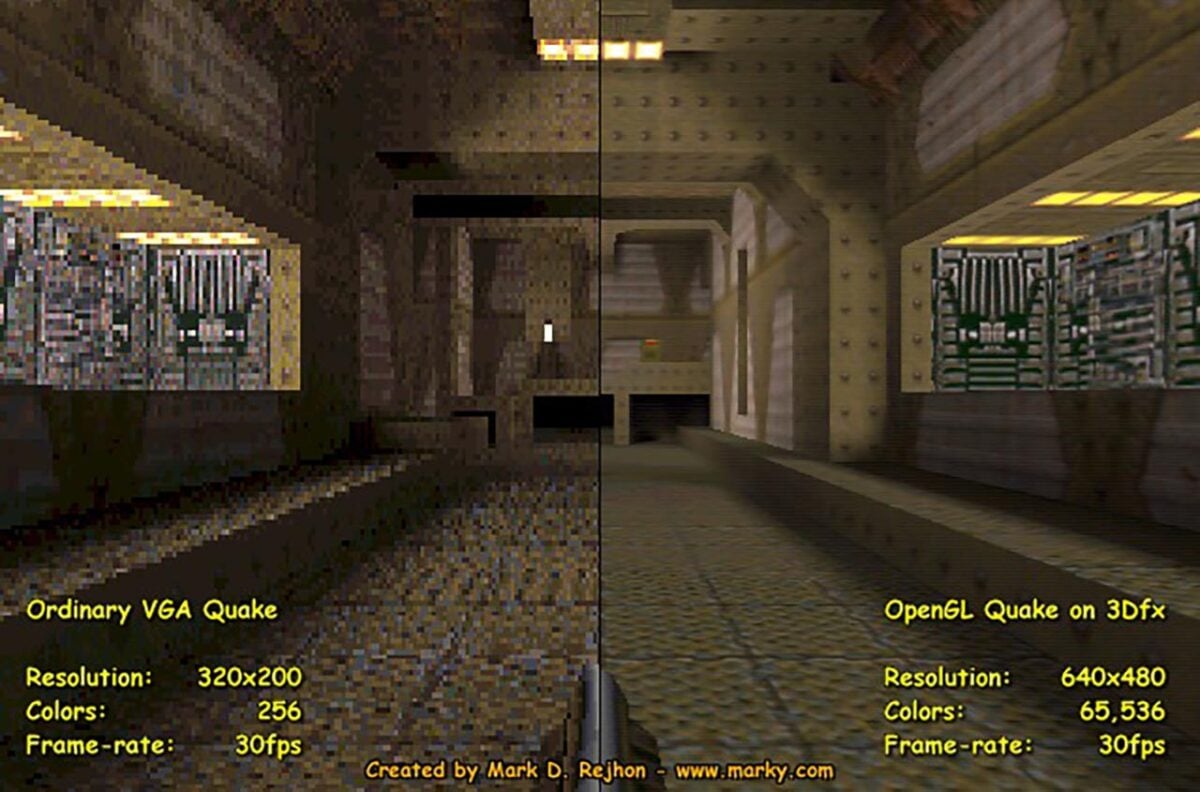
This split-screen comparison illustrates the transformative gaming performance improvement that the 3dfx Voodoo Graphics card delivered over contemporary software rendering solutions
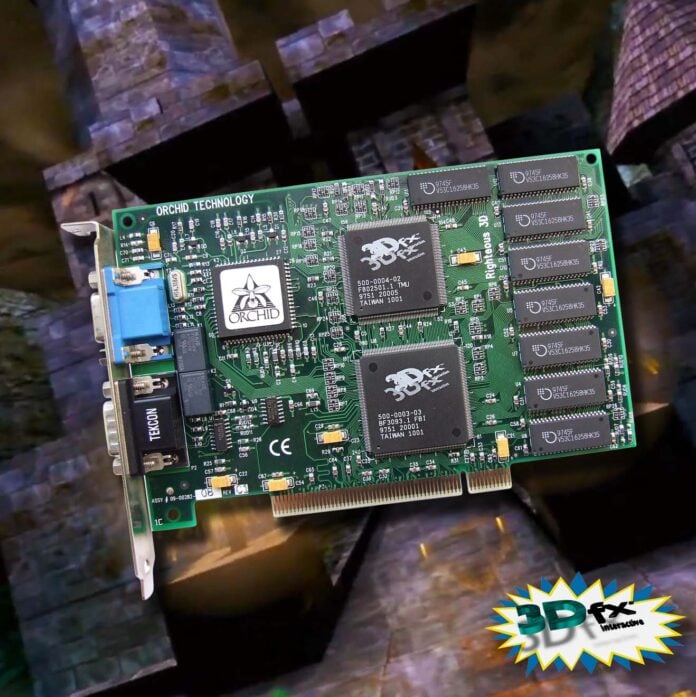
This image shows the actual product launched on October 7, 1996, highlighting its real-world gaming capabilities through a popular title of the era
The Voodoo Graphics hardware featured an innovative dual-chip design: a Frame Buffer Interface (FBI) handling rasterization and basic color filling, and a Texture Mapping Unit (TMU) adding textures, alpha blending, mipmapping, and trilinear filtering. Each chip had access to 2MB of EDO memory, giving a total of 4MB onboard. Notably, the card drew all its power (15W) directly from the PCI slot, requiring no additional power connector. Smith credits the falling cost of memory as crucial to the product's accessibility - while initial forecasts suggested a $1,000 price point due to expensive memory, declining memory costs allowed the final retail price to land between $249 and $279.
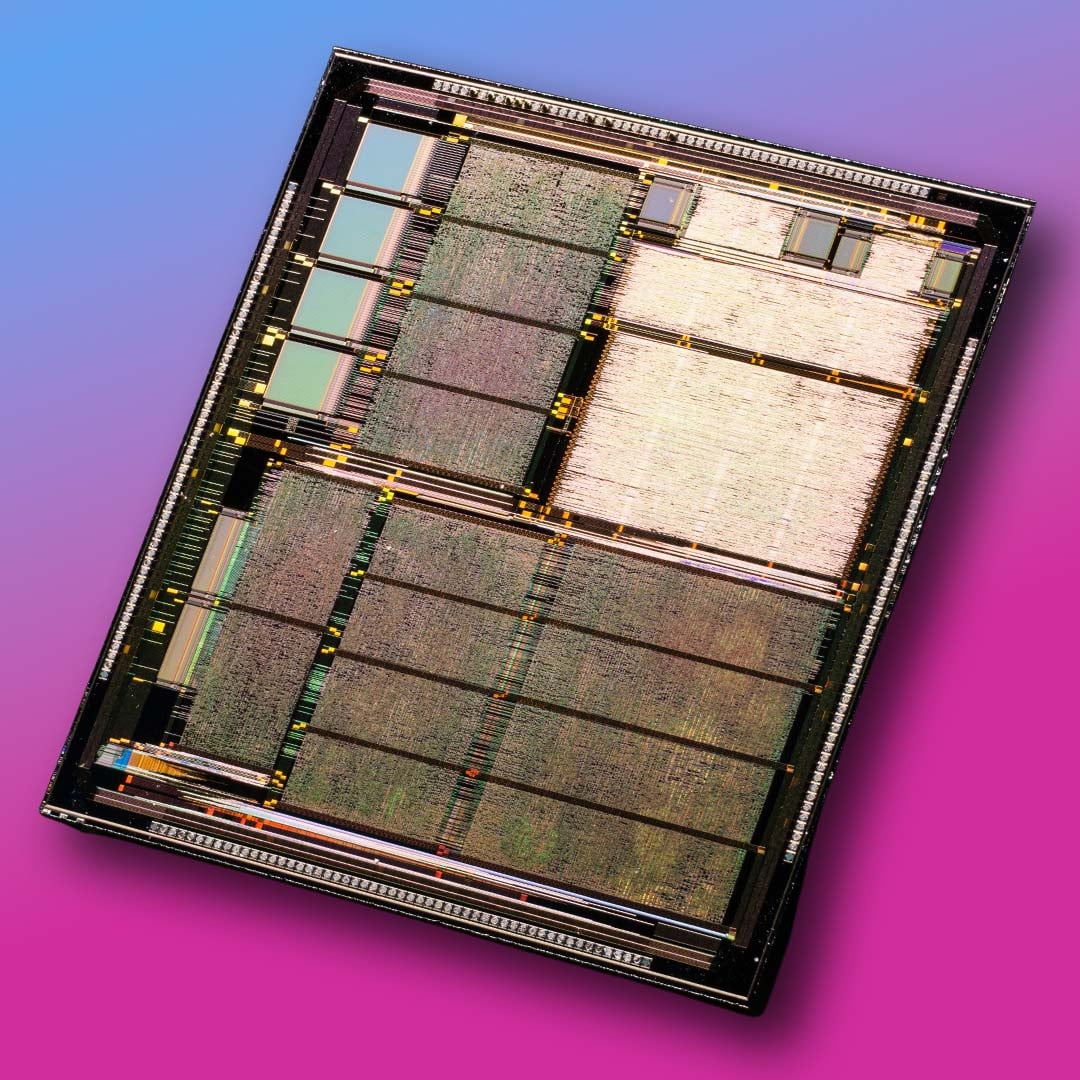
This internal view of the TMU component illustrates the specialized hardware that handled texture mapping and related graphical effects in the dual-chip Voodoo Graphics architecture
The company's approach was deliberately unconventional, maintaining strict focus on gaming applications exclusively rather than attempting to create a general-purpose graphics solution. Smith recalls that competitors like Diamond Multimedia initially doubted their approach, asking 'Are you crazy? This thing doesn't have a VGA – no one's going to put this in a PC.' This skepticism stemmed from the fact that early Voodoo cards required users to also install a separate 2D VGA card, with the two connected via an analog VGA pass-through cable. When launching a game, users could actually hear an audible click as the monitor switched from the 2D card to the Voodoo Graphics board for gameplay. This design choice reflected both technical limitations and strategic business decisions, as Smith admits the team 'didn't know how to do VGA' and would have needed to purchase and integrate the technology, which would have added significant costs. More importantly, supporting VGA would have required compatibility with numerous Windows business applications like WordPerfect and Excel - compatibility that users expected but weren't willing to pay extra for.