Zotero, the free research tool used by over 20 million people to collect, organize, annotate, cite, and share research, represents a stark contrast to today's instant software creation paradigms. As described in Dan Cohen's October 2026 account, Zotero's initial prototype required five years to develop, followed by additional years of refinement and expansion. This extended timeline stands in opposition to contemporary approaches where AI tools promise to generate functional software almost immediately from simple prompts, highlighting a fundamental difference in development philosophy between then and now.
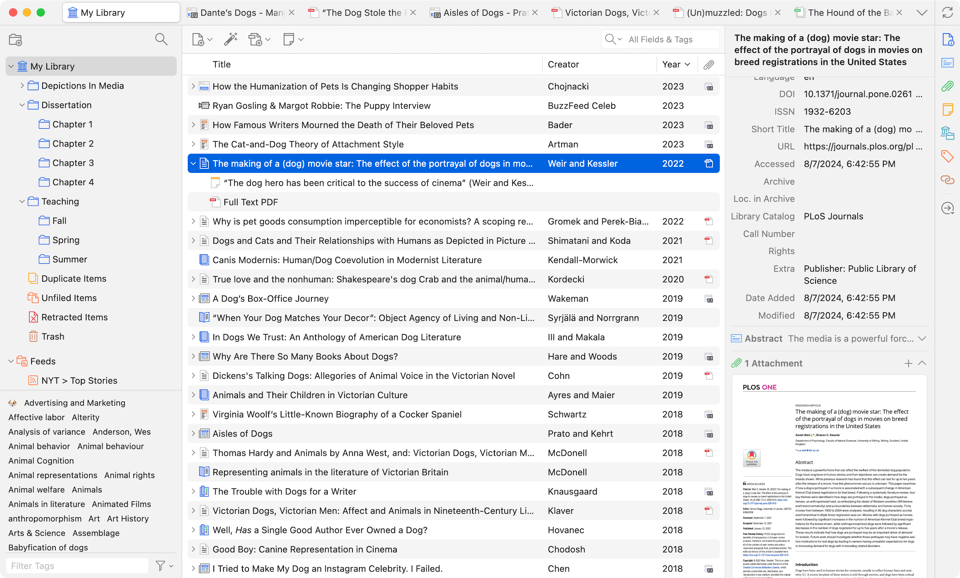
This image shows the user interface of Zotero, the reference management software whose development history is described in the article.
The source establishes that this lengthy gestation period was not due to technical limitations alone but reflected a deliberate process of vision-building among the creators. The development team consisted primarily of historians at George Mason University's Center for History and New Media (now the Roy Rosenzweig Center for History and New Media), who possessed deep subject expertise but viewed coding as a secondary skill rather than their primary profession. Rather than jumping straight into implementation, these historians spent considerable time engaged in discussion and collaboration, with Cohen describing how they 'spent a lot of time, some of it wasted time, at a big table chatting' until their ideas about the future of scholarly research coalesced into a shared vision for what Zotero should become. This foundation-building phase preceded significant coding work and was considered essential to the project's eventual direction.
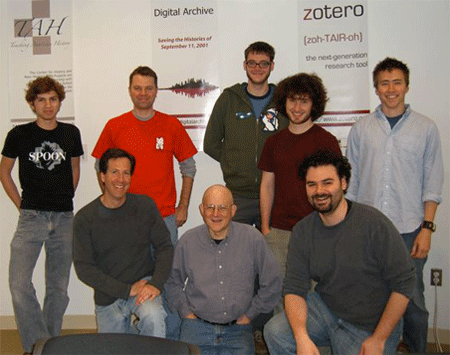
This photograph depicts the team of historians at George Mason University's Center for History and New Media who built Zotero through extended discussion and collaboration.
The source further establishes that the team sought to create a tool that combined the best aspects of standalone applications (like Elena Razlogova's FileMaker-based Scribe citation manager) and web applications (like Cohen's own PHP-based Web Scrapbook for capturing online resources). Their goal, as articulated in Elena's December 2003 proposal for improving Scribe, was to develop software that could 'exist independently of the web, but be fully cognizant of what was going on in the web browser'—a dual capability requiring sophisticated integration of desktop and web technologies. While the source does not independently corroborate whether this slow, collaborative approach definitively produces more durable software than rapid development methods, it does establish that Zotero's creators believed their measured pace and emphasis on communal thinking contributed to creating software with 'a strong foundation that could be built upon,' presenting this as a potential lesson for contemporary development practices accelerated by AI tools.
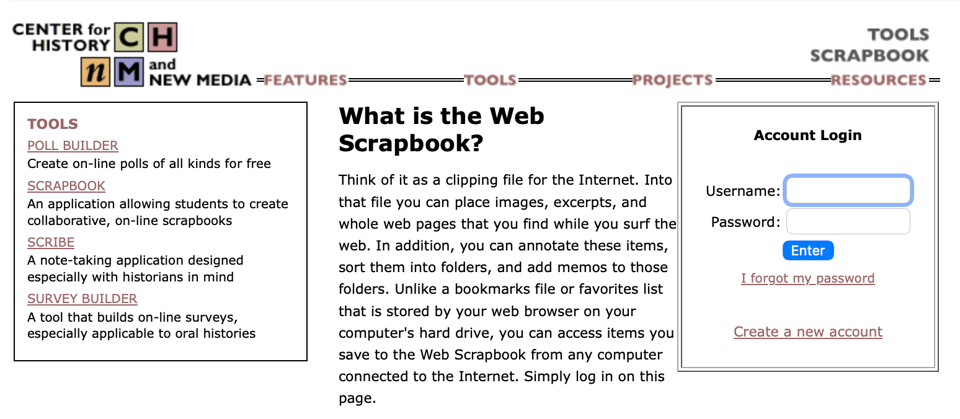
This image shows the login interface for Web Scrapbook, a PHP-based tool for capturing online resources that informed Zotero's goal of combining desktop and web capabilities.