The author tours a personal collection of designer lamps, highlighting pieces with strong design pedigrees such as the Artemide Tolomeo Mini, created in 1987 by Michele De Lucchi and Giancarlo Fassina and winner of the 1989 Compasso d’Oro award; Richard Sapper’s Tizio from 1972, conceived for a better desk lamp with internal electrical arms and counterweight balance; and multiple models from Isamu Noguchi’s Akari series, handcrafted at Ozeki in Gifu using traditional washi paper to achieve a soft, sculptural glow.
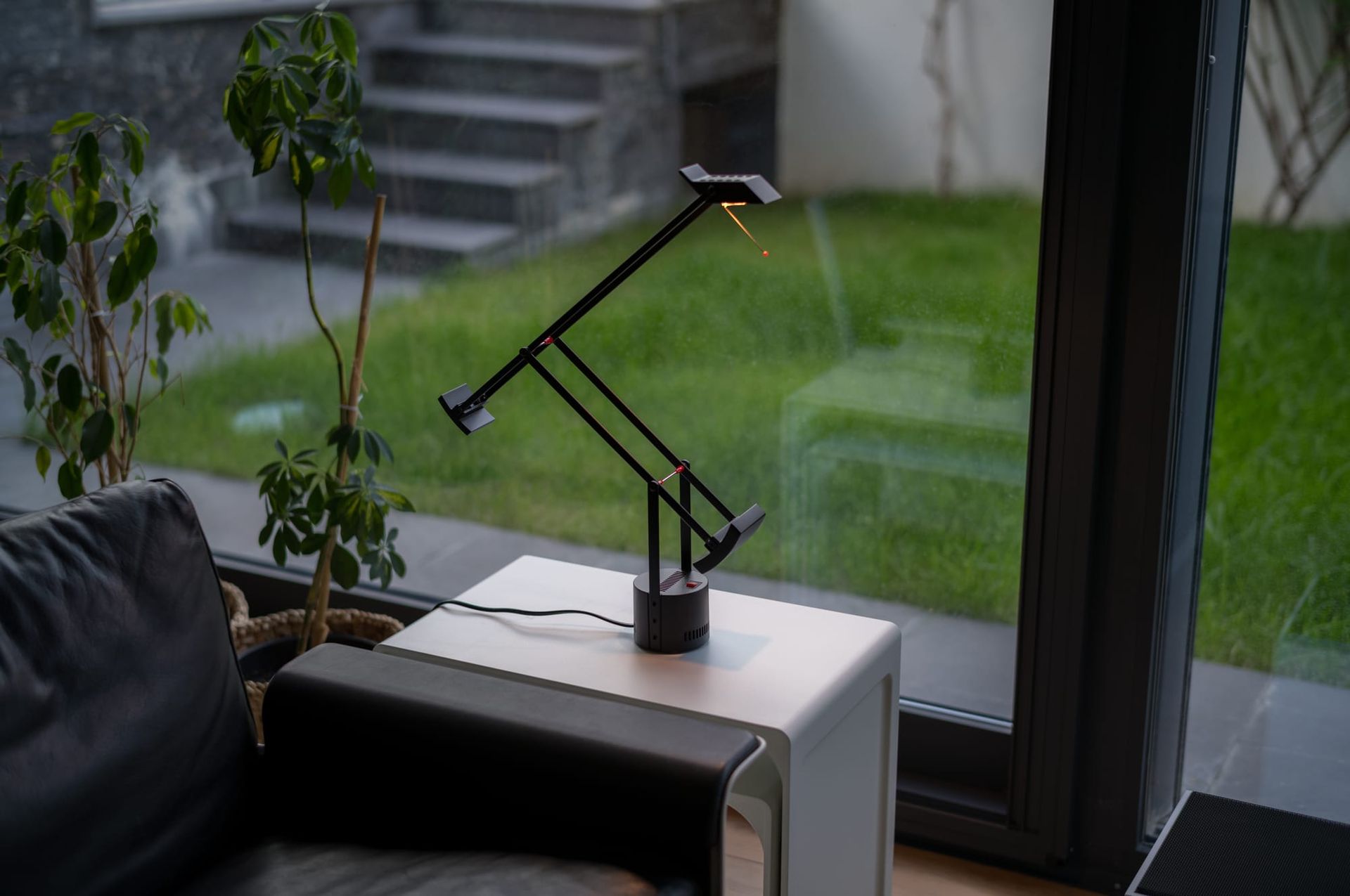
The article tours the author's personal designer lamp collection highlighting specific pieces like the Tolomeo, Tizio, and Akari series, discussing their design pedigrees and functional roles in different spaces.
Functionally, the lamps serve distinct lighting roles: the Tolomeo’s adjustability makes it ideal for work surfaces, the author even fabricated a small adaptor to mount it directly on a USM Haller desk; the Tizio’s balanced arms allow precise one‑finger positioning; the Akari models provide ambient, warm light suited for living spaces; for focused reading, the Arne Jacobsen AJ Wall Lamp (1957) can be tilted toward walls for indirect glow or directly at a book, and the DCW éditions Vision 20/20 Floor Lamp offers dual upward and downward lights with independent dimmers placed beside an Eames chair. The author also adapted the HAY Apex Clip Lamp with a custom 3D‑printed attachment to fit Vitsoe tracks and created an original Block Lamp—a rotatable 3D‑printed piece usable in three configurations for espresso‑bar shelves.
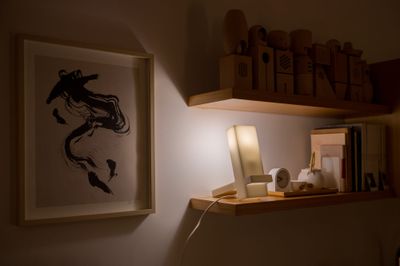
The article discusses the author's original Block Lamp creation as part of their designer lighting collection, describing it as a rotatable 3D-printed piece usable in three configurations for espresso-bar shelves.
Despite their utility, the author acknowledges that many of these lamps cost far more than utilitarian alternatives from IKEA, yet considers them worthwhile as collectible objects rather than mere illumination, noting that some pieces like the Kismas Lamp 01 from Lithuanian designer Ramūnas Minkevičius—incorporating Soviet‑era glass blocks and interchangeable color filters—are appreciated as very artistic but not very functional. The author’s broader engagement with design, including custom keyboard cases and desk setups, reinforces the view that lamp ownership has become a form of personal collecting where aesthetic and historical significance outweigh strict cost‑benefit analysis.