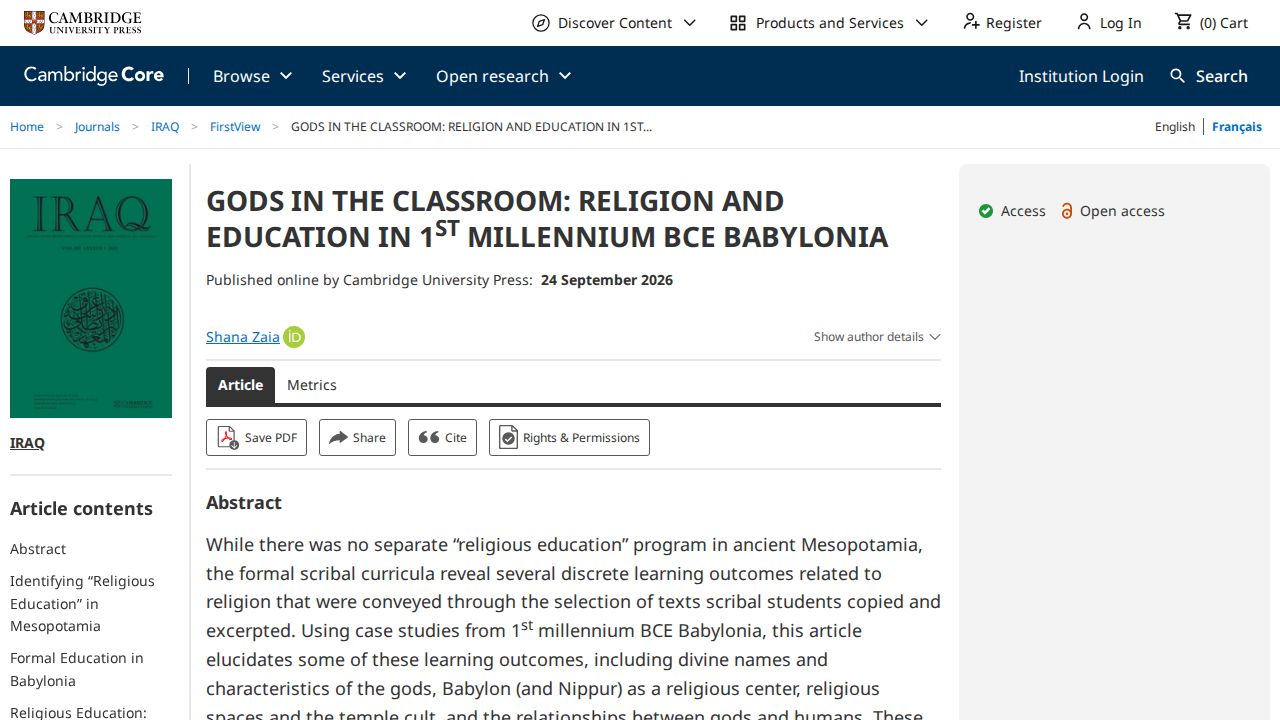
In ancient Babylonia during the first millennium BCE, religious instruction was not delivered through separate classes but was integrated into the training of scribal students, according to a study by Shana Zaia published in the IRAQ journal. The research examines how religious knowledge was transmitted through the formal scribal curriculum of the Neo- and Late Babylonian periods. While Mesopotamian societies did not have a distinct 'religious education' program, Zaia finds that formal scribal education conveyed religious content through the careful selection of texts that students copied and excerpted. This approach allowed educators to embed religious learning within what was primarily vocational training for careers requiring literacy. The study identifies four specific areas of religious knowledge that scribal students encountered through their studies: the names and characteristics of gods; the religious significance of cities like Babylon and Nippur; details about religious spaces and temple rituals; and understandings of the relationships between deities and humans. These learning outcomes emerged from the texts chosen for students to study as part of developing their scribal skills. Babylonian scribal education followed a standardized curriculum that was more structured than typical apprenticeship-based training in other professions. Students typically began their education young and progressed through elementary stages before entering specialized apprenticeships as adolescents. This educational path was largely reserved for boys and young men from elite or aspirational families who would become scribes, administrators, or specialists in fields such as exorcism, divination, cultic singing, or healing. The dual purpose of this education was both practical and cultural: to equip students with the technical skills needed for their future careers while simultaneously imparting the religious traditions, norms, and ideological framework of Mesopotamian society. Instruction typically occurred in household settings rather than formal schools, with teachers often being experienced professionals—frequently the fathers of students—who would take on pupils from other upwardly mobile families. Evidence for these educational practices comes from surviving 'school texts'—either written exercises produced by students or pedagogical materials composed by instructors. These texts demonstrate how the curriculum went beyond basic literacy to transmit cultural and religious knowledge across generations. The study notes that this integration of religious content into broader education reflects the worldview of ancient Mesopotamian societies, where the separation between religious and other forms of knowledge—such as what might be considered scientific or technical—did not exist as it does in modern contexts. Religious concepts were intrinsically connected to state functions and professional practices, making their inclusion in scribal training essential for preparing the next generation of imperial officials. Zaia's research does not claim to provide a comprehensive picture of all educational practices in ancient Babylonia. Instead, it uses specific case studies to illustrate identifiable patterns in how religious knowledge was transmitted through the scribal curriculum. The conclusions are based on analysis of extant textual evidence from school exercises and instructional materials, with the article published online by Cambridge University Press on September 24, 2026.
HN Digest / · HN #49920332
Religious Instruction Was Woven Into Babylonian Scribal Training, Study Finds
Research into 1st millennium BCE Babylonian education reveals that while no separate religious education program existed, scribal students absorbed religious knowledge through their standard curriculum, learning about deities, temple practices, and god-human relationships as part of training for administrative roles.
Screenshot of the source page (cambridge.org)