Nick Park's iconic Wallace and Gromit characters emerged from extraordinarily solitary beginnings. As detailed in an Animation Obsessive newsletter analysis, Park revealed that for his 1989 graduation film A Grand Day Out – the first Wallace and Gromit adventure – he 'did probably 90% of it myself.' This statement underscores the remarkably personal nature of a project that would launch one of Britain's most successful animation franchises. The film began as Park's student project at the National Film and Television School, initially conceived as a simple journey to the moon via a basement rocket, inspired by his old sketchbook characters that originally featured Gromit as a cat and Wallace with a mustache.
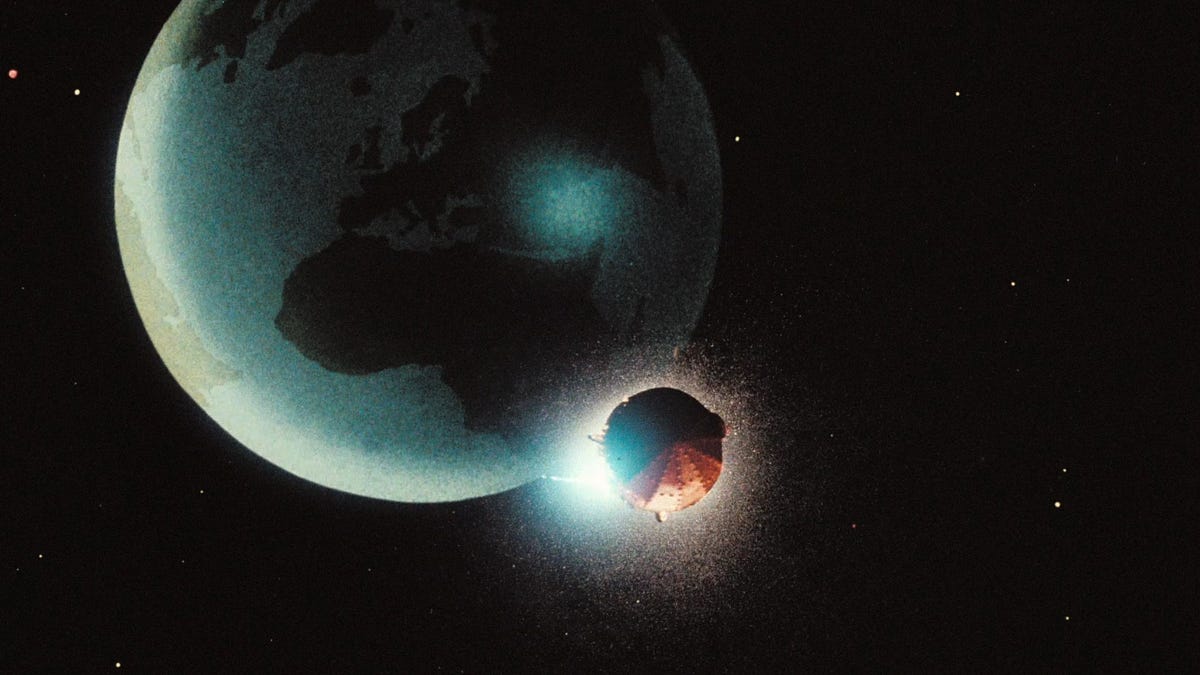
This image shows the iconic characters as they appeared in Park's graduation film, which he largely created alone
Park's solitary work process was shaped by both creative ambition and practical limitations. Despite receiving occasional help – such as initial script collaboration with a friend, prop assistance from animators Alison Snowden and David Fine, a technician-built rocket console, free Plasticine from the manufacturer, and voice work from actors Peter Sallis and Peter Hawkins as favors – the film's budget constraints meant Park remained largely alone on the project. He described commuting 25 miles by bus from his Cricklewood flat to the film school to work on the film in a small workspace behind a curtain at Aardman, where he was eventually placed on salary in 1985 to continue the project in his spare hours. This isolation extended the production timeline dramatically; Park recalled starting what he thought would be a ten-minute film requiring six months, only to find the rocket-building sequence alone taking a year and a half to complete. By 1985, over four years into his studies, he had completed less than a third of the film's eventual length, putting his graduation at risk until arrangements allowed him to finish at Aardman.
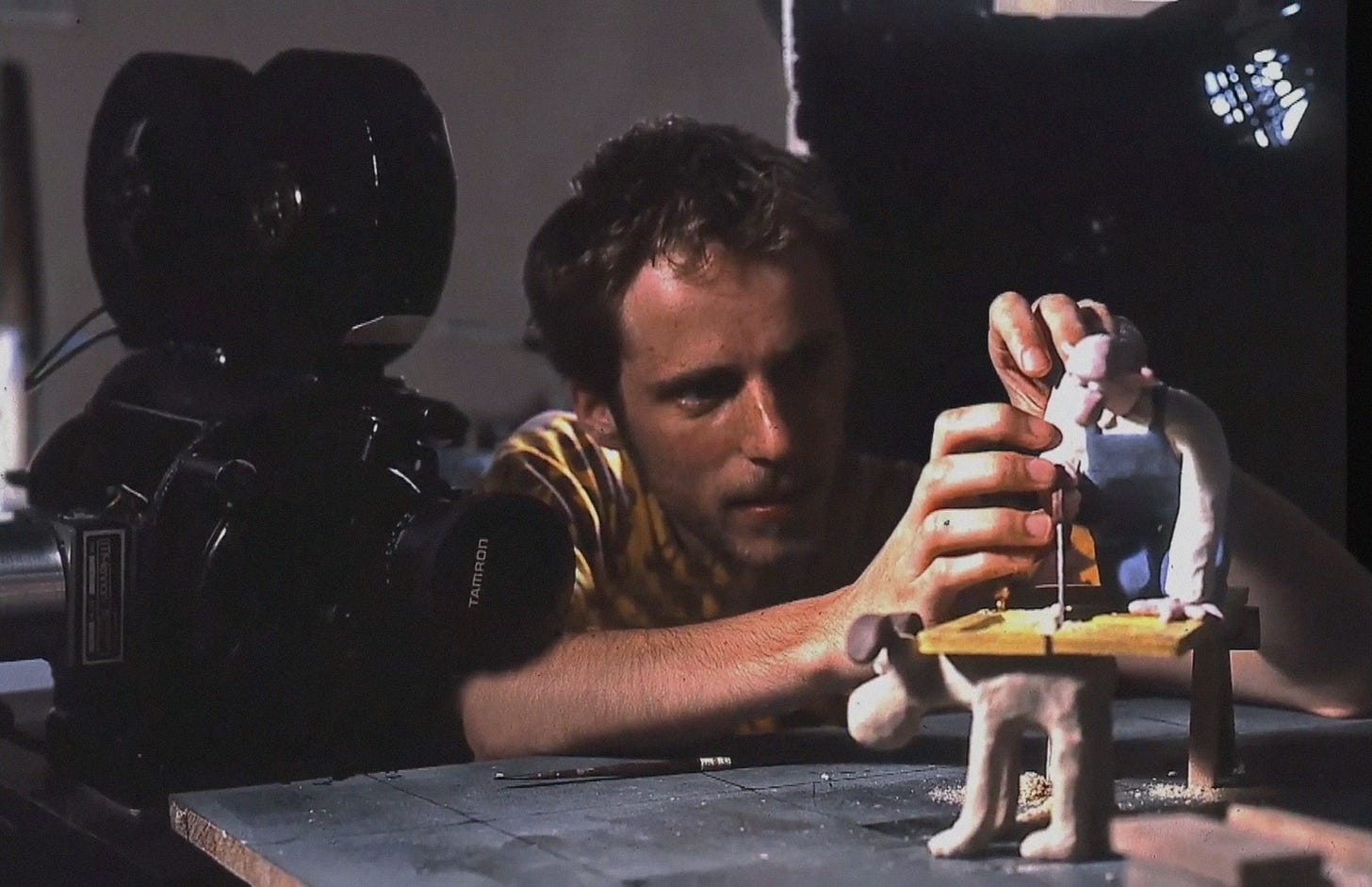
This illustrates Park's solitary work process, where he estimated completing 90% of the film himself
The solitary nature of A Grand Day Out profoundly shaped Park's artistic development and the eventual Wallace and Gromit style. Working largely alone in the attic – as he described spending time while his friends played outside – Park absorbed influences from sources ranging from Roobarb and Clangers to Monty Python, Ray Harryhausen films, and Eastern European animators like Starewicz and Trnka. This independent experimentation allowed him to develop distinctive techniques such as using camera movements inspired by Spielberg's Close Encounters to avoid 'static, puppet-y' animation, and discovering that Gromit's expressiveness could come entirely from his eyes after dialogue was cut due to animation difficulties. Park later reflected that Wallace and Gromit 'gave me my style,' with the characters' close-set eyes, wide mouths, and exaggerated movements originating from this lone proving ground where he 'really started to have a kind of relationship' with his creations, establishing the foundation for his subsequent acclaimed shorts and features.
This demonstrates how Park developed Gromit's expressiveness through eye movements after cutting dialogue due to animation challenges