The tutorial targets intermediate Haskell developers and explains that GTK 4 is the latest version of the GIMP Toolkit, while Adwaita provides the GNOME project’s design language, encoding accessibility and styling guidelines such as automatic adaptation to light and dark themes. It notes that the haskell-gi toolkit auto-generates Haskell bindings from GTK libraries, allowing programmers to work with a Haskell interface that mirrors the underlying C API, and that the full source code for the todo list is available in a public repository.
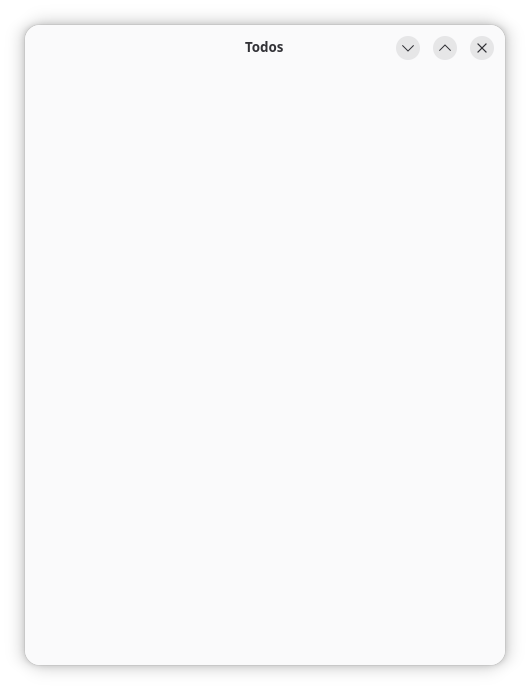
This image depicts the starting state of the application, showing the UI before any todo items have been entered, as introduced in the tutorial's setup.
The core of the article presents the Model-View-Update (MVU) pattern, also known as the Elm Architecture, where the Model represents the application state (a map of todo items with identifiers, titles, and completion flags), the View is a function that turns that state into GTK widgets, and the Update processes user messages (such as adding a new task or toggling completion) to produce an updated model and side‑effects like saving the list to disk. A concrete example shows how entering “Buy leeks” triggers an Add message, updates the Model, and yields a Save effect that persists the todo list.
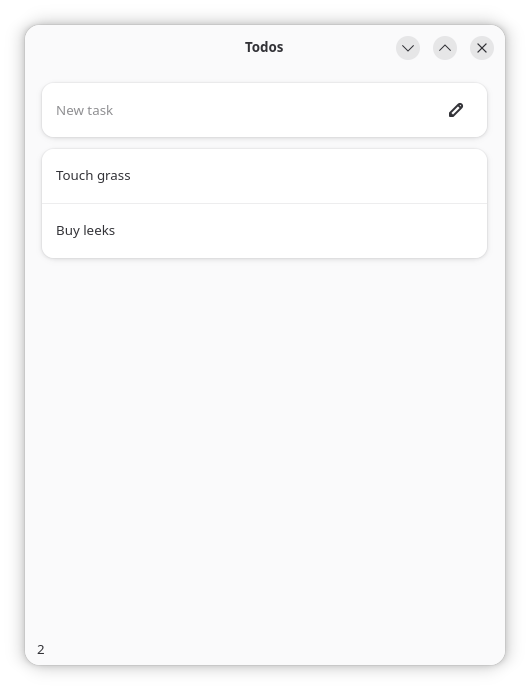
This image shows the user interface state after the user enters 'Buy leeks', demonstrating the Add message handling described in the MVU example.
The article acknowledges a limitation of the approach: the View function rebuilds the entire user interface from scratch on each model update, which means non‑persistent UI state such as scroll positions or half‑entered text is lost. This matches a comment in the discussion that questions whether diffing magic is used, and the author notes that further features will be covered in Part 2 of the series.