The Partner-N64 was an official development kit for the Nintendo 64, made by the company Kyoto Microcomputer (KMC) for Nintendo and sold in two variants: Partner-N64PC, for IBM-compatible PCs running Windows 95/98, and Partner-N64NW, for developers using Silicon Graphics (SGI) workstations. Its job was to let someone writing N64 software pause a game at a chosen line of code, inspect system memory, and step back in — a "runtime" debugger that works while the game is executing.
The mechanism is the most interesting part of the story, because a cartridge sitting in the N64's cartridge slot could not simply reach inside the console and hit its reset or interrupt buttons. The cartridge had only the signals the console's cartridge edge connector made available, and the Partner-N64 needed two signals it did not have: one to halt (pause) the game via an interrupt request, and one to reset the console. So KMC required a specially modified N64 console. The modification consists of rerouting two signals — IRQ (interrupt request) and RESET — from the cartridge slot connector to the N64 CPU chip, using small wires called tie-lines that were not part of the original design. The modified console then lets the debugger software trigger a breakpoint halt or a reset by sending a command that the cartridge converts into one of those two signals. The flow is: debugger software triggers breakpoint/RESET → Partner-N64 cartridge sends IRQ/RESET → the modified console routes those signals to the N64 CPU → the CPU pauses the game or reboots the system. A breakpoint is a software-specified line where the developer can halt the game and inspect the N64's system memory for bugs, then resume execution until the next breakpoint or error is hit.
A how-to guide on ultra64.ca specifies precisely how that modification is done, which clarifies a point the primary article leaves general: it is not a matter of finding spare pins on the cartridge connector, because there are essentially none free. Instead the mod hijacks lines games do not use. Three signals are removed from the Parallel Interface (PI) bus — the N64's cartridge connector bus — at PI pin 24 ("left audio"), PI pin 46 ("video"), and PI pin 49 ("right audio"). Those pins normally pass audio/video data only to special cartridges such as AV-capture carts, so a console modified in this way is no longer compatible with those carts. Three new debugging signals are wired to them, and after the modification PI_24 connects to CPU pin 28 ("int 4", the interrupt), PI_46 connects to the console's reset/warm-reset signal, and PI_49 connects to PIF pin 8 ("enable"). That is exactly the IRQ-and-reset routing the primary article describes, now mapped to specific components. The physical work is non-trivial: the trace to the video DAC (chip U4) that drives PI_46 must be cut, and the four SMD components R21, C30, R17 and C29 on the path to the AMP-NUS audio chip must be desoldered to free PI_24 and PI_49. The guide also notes the mod was performed on a NUS-CPU-04 N64, and that while the other models it lists are likely compatible, that has not been proven.
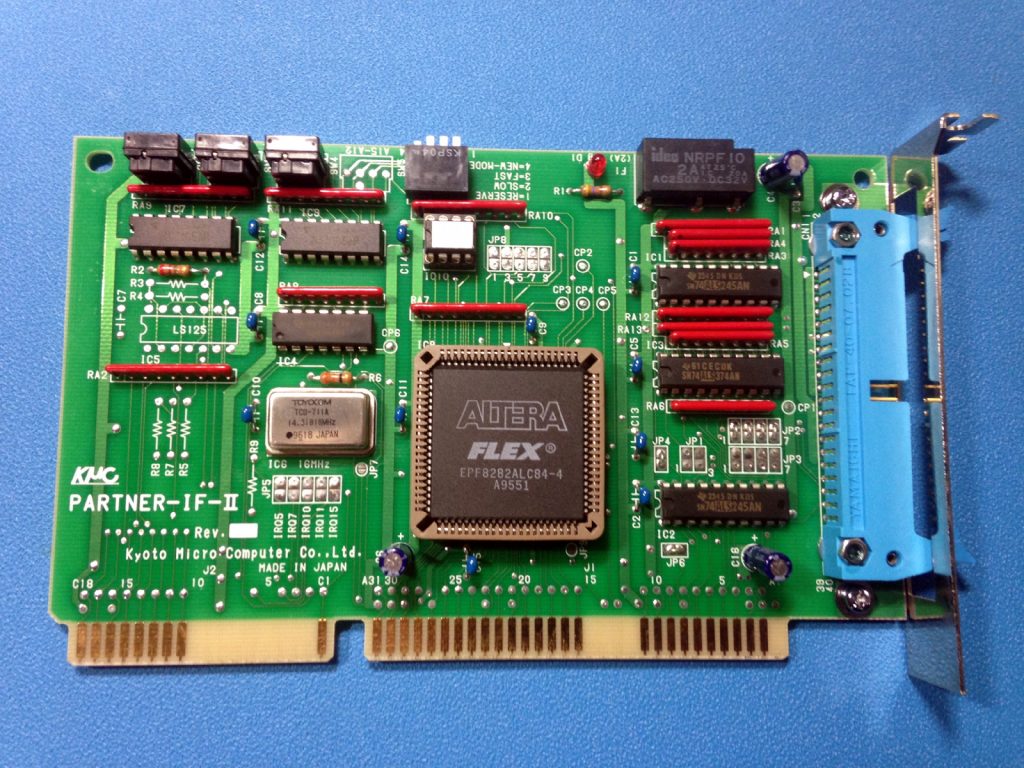
The Partner-N64 debugger required its own modified console and an ISA or PCI interface card inside the host PC, connected to the dev cartridge by a parallel IDC ribbon cable.
This helps explain why the whole stack felt fiddly, and why many developers preferred other kits. The Partner-N64 debugger required its own modified console and an ISA or PCI interface card inside the host PC, connected to the dev cartridge by a parallel IDC ribbon cable. Inside the cartridge itself there is an EEPROM whose memory size can be tested (4K or 16K), and the software ran only on particular platforms. The system's complexity compounds rather than simplifies: the N64 Software Development Kit supplied five discs (OS for PC, OS for SGI, Dev Tools, Online Manuals, Developer Docs), books, and documentation, and of the whole kit only the Partner N ROM emulator cartridges turn up reliably on the internet, while ISA control cards are rare and PCI versions are barely seen.
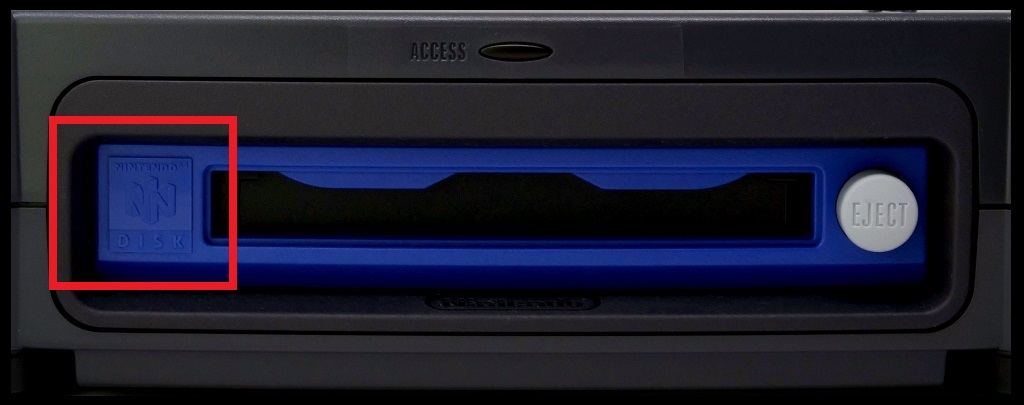
Development drives had a blue bezel around the disk slot while retail drives had black. There was even a rare blue-bezel Prototype Model made for Nintendo by ALPS ELECTRIC CO LTD.

There was even a rare blue-bezel Prototype Model made for Nintendo by ALPS ELECTRIC CO LTD., identifiable by the absence of the N64 3D logo on the left side of the bezel, of which only a handful were made.
The Partner-N64 also worked with the 64DD, Nintendo's disk-drive add-on — a system released only in Japan, described as a flop that was cancelled and never shipped in North America. The 64DD docked on top of the N64 and used proprietary magnetic disks, comparable in technology to 1990s Iomega ZIP100 drives but controlled by Nintendo, with gray disks for retail and blue disks for development. Two physical distinctions matter: retail and development drives use opposite internal disk spin directions, which prevents a development disk from running in a retail drive and vice versa; and development drives had a blue bezel around the disk slot while retail drives had black. There was even a rare blue-bezel "Prototype" Model made for Nintendo by ALPS ELECTRIC CO LTD., identifiable by the absence of the N64 3D logo on the left side of the bezel, of which only a handful were made.
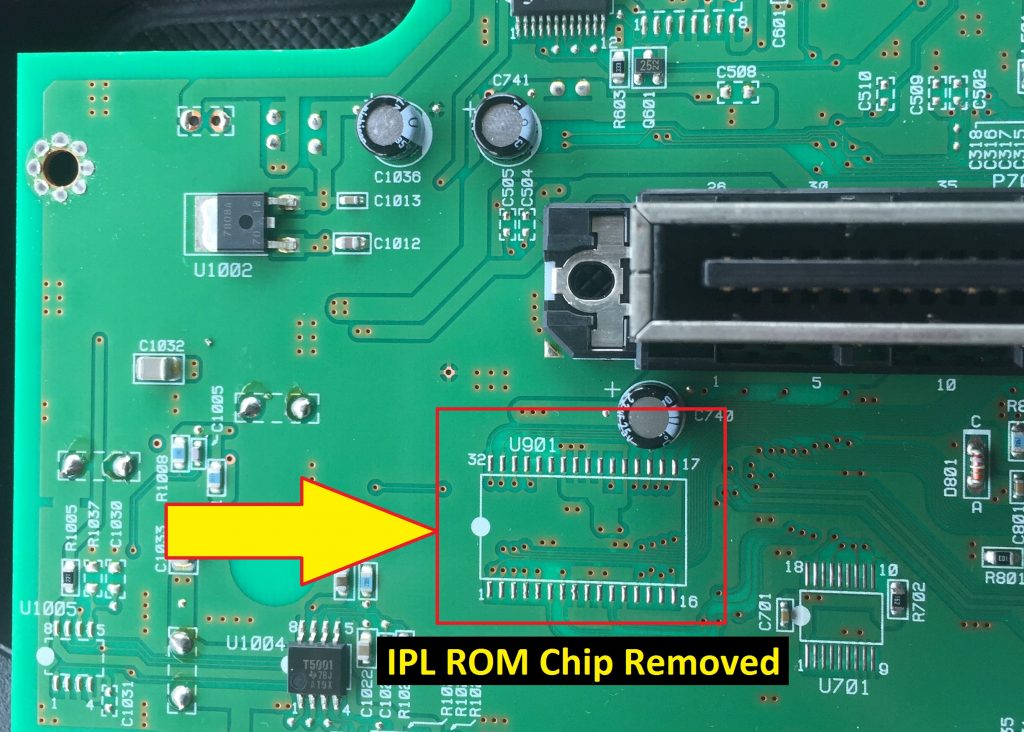
Development drives do not carry an IPL ROM chip the chip that in retail drives stores the IPL4ROM bootloader plus FONT and WAV data. The chip was left unpopulated on development PCBA boards intentionally, so the Partner-N64 debugger could load the IPL4ROM image directly for debugging.
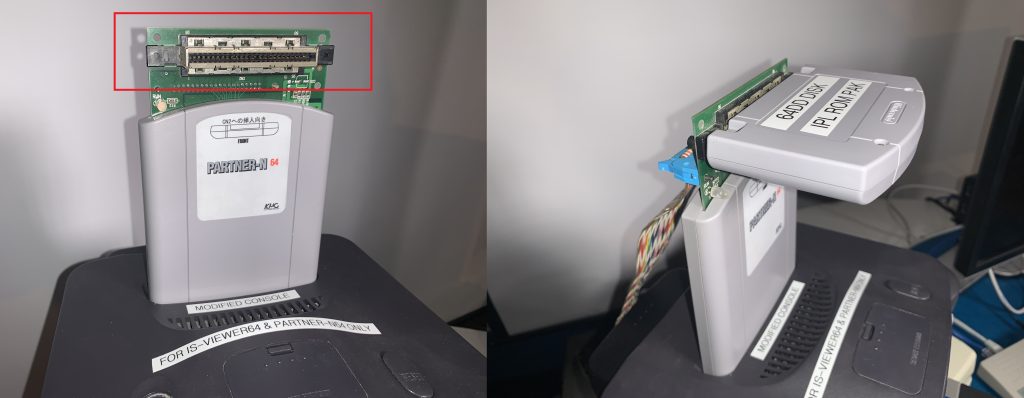
To run a 64DD game while developing, a special cartridge called the IPL ROM PAK had to be inserted into a slot on top of the Partner-N64 dev cart; it held the FONT and WAV data and was necessary to load a special 64DD bootloader program.
Developing for the 64DD introduced its own requirement because development drives do not carry an IPL ROM chip — the chip that in retail drives stores the IPL4ROM bootloader plus FONT and WAV data. The chip was left unpopulated on development PCBA boards intentionally, so the Partner-N64 debugger could load the IPL4ROM image directly for debugging. To run a 64DD game while developing, a special cartridge called the IPL ROM PAK had to be inserted into a slot on top of the Partner-N64 dev cart; it held the FONT and WAV data and was necessary to load a special 64DD bootloader program. Without the IPL ROM PAK, the 64DD would still boot, but the displayed text came out garbled — a direct, visible symptom of missing FONT data. When testing near-final games on actual cartridge hardware, developers used the DCC adapter board (Model NUS DCC-00) to connect two cartridges in parallel: an N64 development flash cartridge, often larger than retail cartridges and used to hold prototype builds, plus an SRAM test cartridge (for example a KMC 256K unit) to add memory the flash cart lacked. A toggle switch on the adapter selected between PAL and NTSC CIC chips, avoiding the need to swap chips by hand.
The hardware stack therefore consisted of a dev cart, a modified console, a host PC with an interface card, and a sometimes multi-cartridge adapter chain. That is a far cry from modern development kits: the primary article's photos of the modified console, the tie-lines soldered to the CPU's IRQ pin, the parallel interface card, and the adapter chain all document a system whose debugging power came from circuit-board surgery rather than firmware.
Several questions about the system remain unanswered by the supplied material. The guide's mod was tested only on the NUS-CPU-04 revision; compatibility with other N64 models is asserted, not proven, and the guide explicitly warns that its pictures should not be applied to any other revision. The source does not state what fraction of N64 developers actually used the Partner-N64 versus the SN-Systems SN64 kits it names as the preferred alternative, nor whether its runtime-breakpoint features proved materially faster or slower in practice than those kits. And while the ultra64.ca guide describes the signal routing, it is a single how-to account, not an engineering teardown of the KMC hardware itself — so the exact electrical timing of the IRQ and RESET signals comes from the primary article's description, not from independent measurement.