Simon Green developed BinRange to address a gap in his Home Assistant setup: while the system could predict when trash bins should be put out for collection using the Waste Collection Schedule integration, it could not verify whether the bins had actually been moved to the curb. Motivated by the limitations of his earlier attempt using Bluetooth tags—which suffered from rapid battery drain and unreliable proximity readings due to environmental interference—Green turned to ultra-wideband (UWB) radio technology for a more robust solution.
BinRange employs UWB technology, which measures distance by timing the travel of radio signals between devices rather than relying on signal strength indication (RSSI) that is affected by walls, vehicles, and antenna orientation. The system consists of six battery-powered KKM K4W tags (each with an nRF52833 processor, DW3110 radio, and LIS3DH accelerometer) attached to household bins, and a fixed anchor built from a Makerfabs ESP32-WROVER/DW3000 board with a DW3000 radio module. The anchor measures the distance to each tag and publishes the readings over MQTT to Home Assistant, where they are combined with collection schedule data to generate put-out and bring-in notifications. Green's testing showed that antenna orientation significantly impacted reliability, with success rates increasing from 37% to 100% when changing from flat to upright positioning at ten meters, and he established a site-specific threshold of ten meters to determine whether a bin had moved far enough from its storage area to be considered 'Out' for collection.
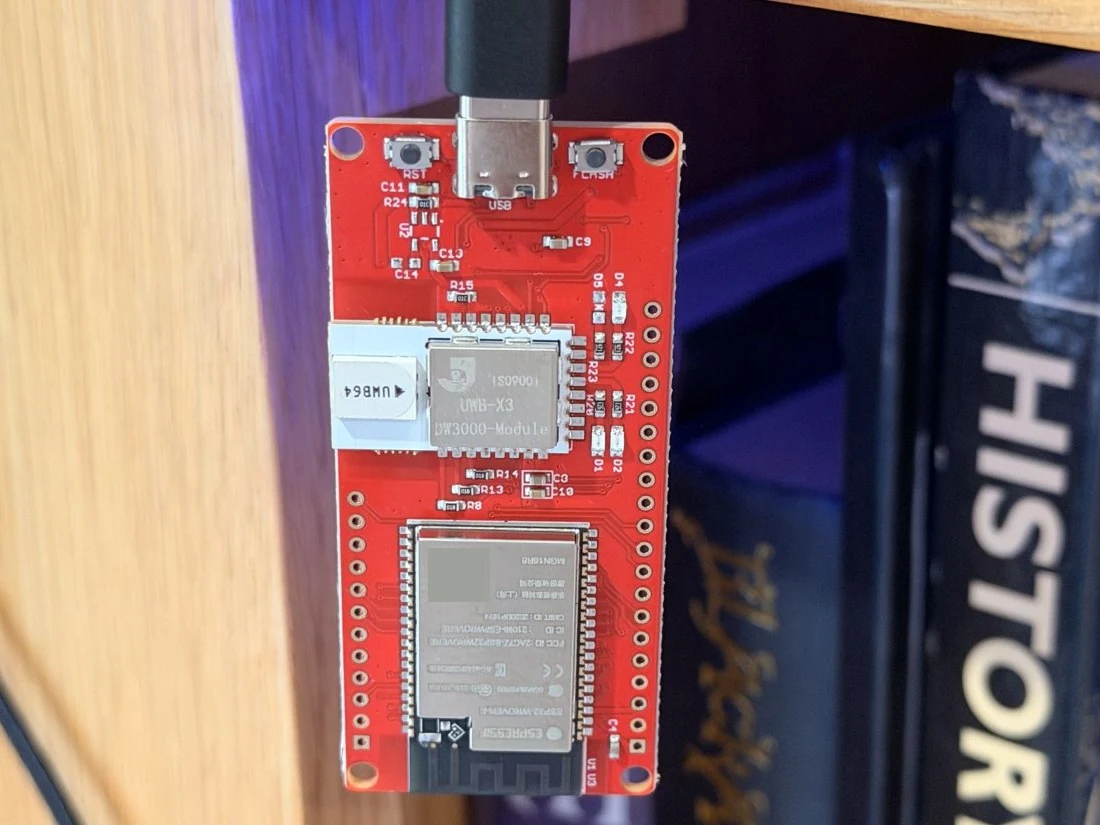
Shows the fixed anchor component that measures distances to tags and publishes data to Home Assistant, as described in the system overview.
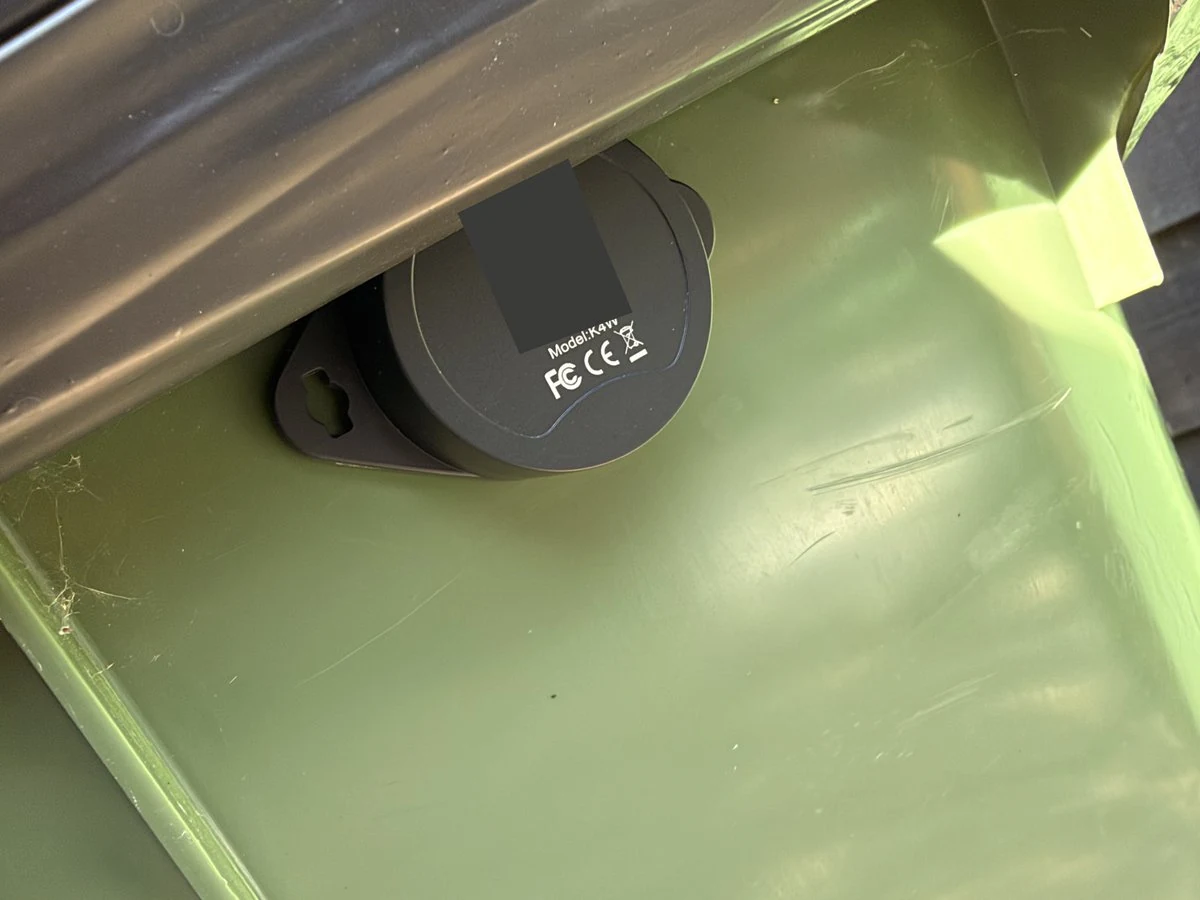
Illustrates one of the six battery-powered tags attached to bins, which communicate with the anchor to determine bin status.
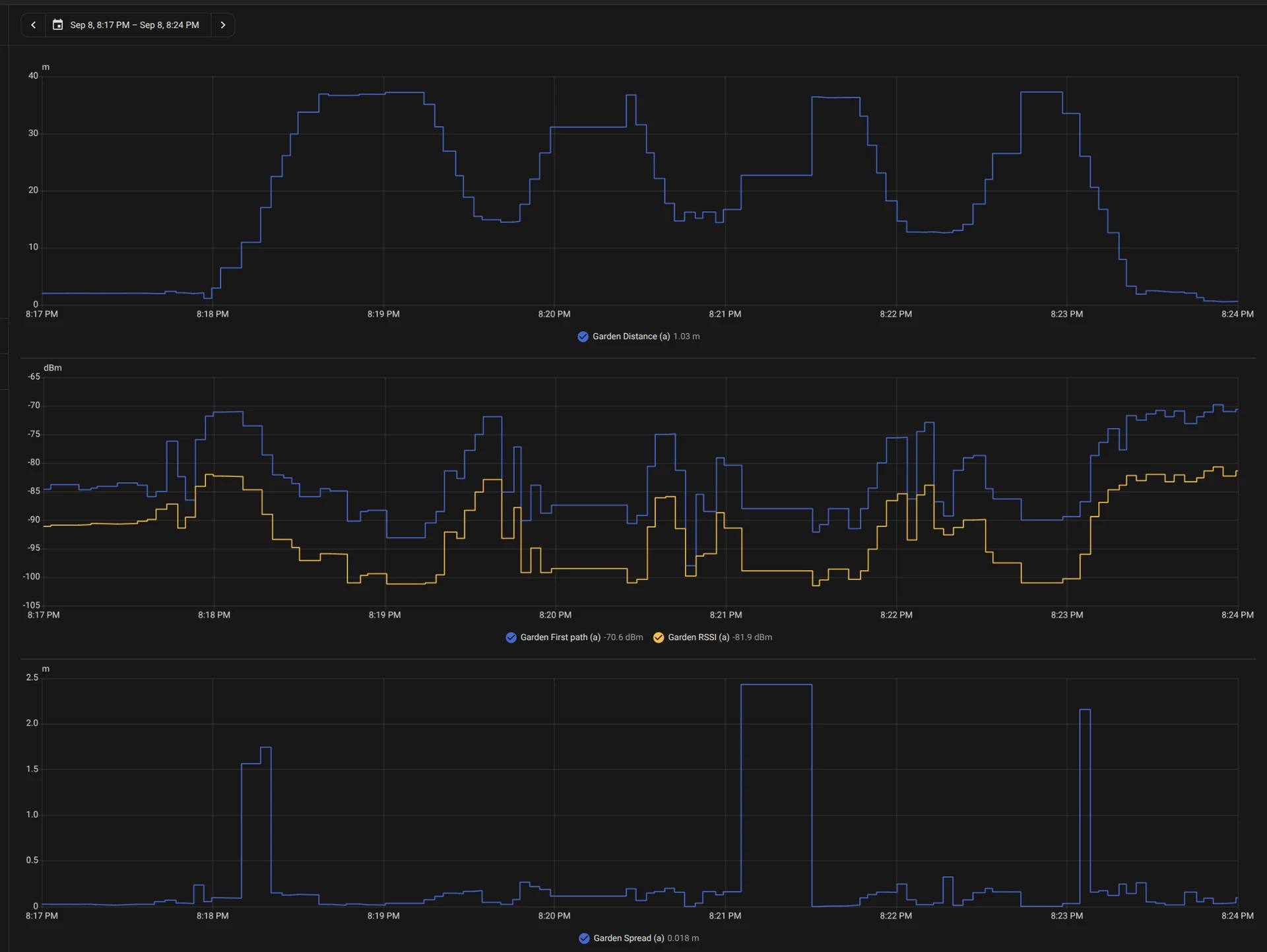
Visualizes the walk‑test used to evaluate antenna orientation effects and establish the ten‑meter threshold for bin‑out detection.

Represents the bring‑in notification generated when the system detects that bins have been emptied and are ready to be retrieved.
While the BinRange system has proven functional in Green's six-bin installation, several limitations remain under investigation. Battery life estimation is challenging because collecting voltage data alone does not provide defensible estimates for months or years of operation, and Green notes he is not interested in using the majority of the battery's life for reporting its own voltage. Outdoor reliability extends to roughly thirty meters before becoming intermittent, with complete obstruction possible from vehicles blocking the signal path. Green acknowledges the project remains an experimental field prototype requiring longer-term evidence for multi-week battery life, installed coverage verification, and unattended Bluetooth maintenance reliability, though he has successfully performed wireless firmware updates on all six tags without physical access.