Meta's Muse has topped the US App Store free-chart, and a 2026 essay by product designer Mete Polat explains why. The essay argues that Muse succeeds where other consumer AI agents falter by making three design choices: simplifying the interface to a single chat, funding a permissive free tier with ads instead of token sales, and leaning into anthropomorphized personality.
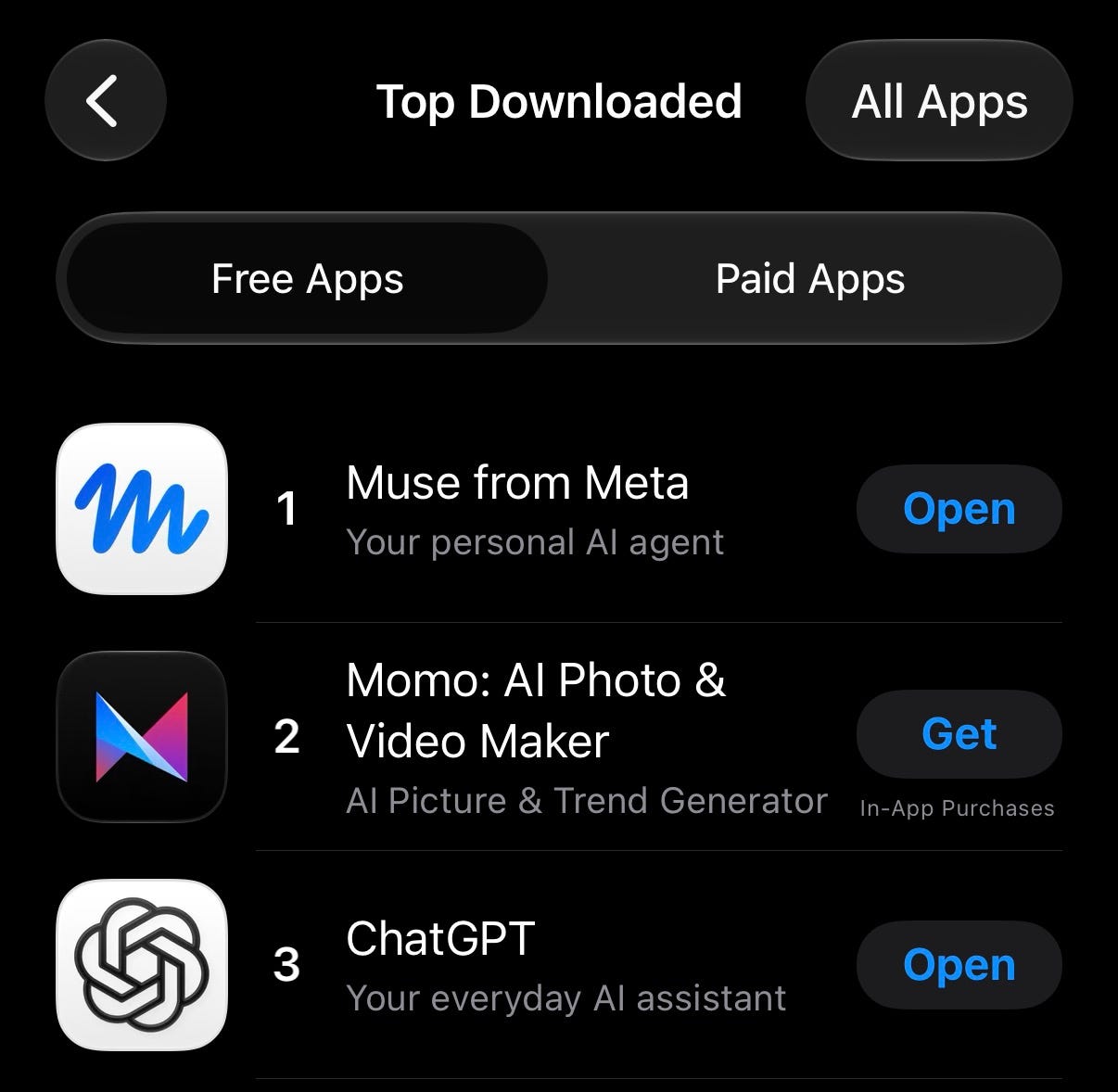
The article opens by noting Muse's achievement of topping the US App Store free-chart, which sets the stage for analyzing the design choices behind its success.
The single-chat interface is the most immediately noticeable difference. Frontier agentic products such as Codex, Claude Code, and OpenClaw have had browser use, cloud workflows, and remote-control capabilities since 2025, but they have compounded these features into a confusing array of switches—model pickers, chat-versus-work toggles, project choosers, and explicit token budgets. Muse strips all of that away. There is one chat window; everything else serves to support it: a space to elevate ideas, track goals, and surface artifacts. The mental model is familiar: "this is your personal helper with their own computer." Polat describes having to make ten choices just to start or continue a chat in the ChatGPT ecosystem; Muse reduces this to a single action.
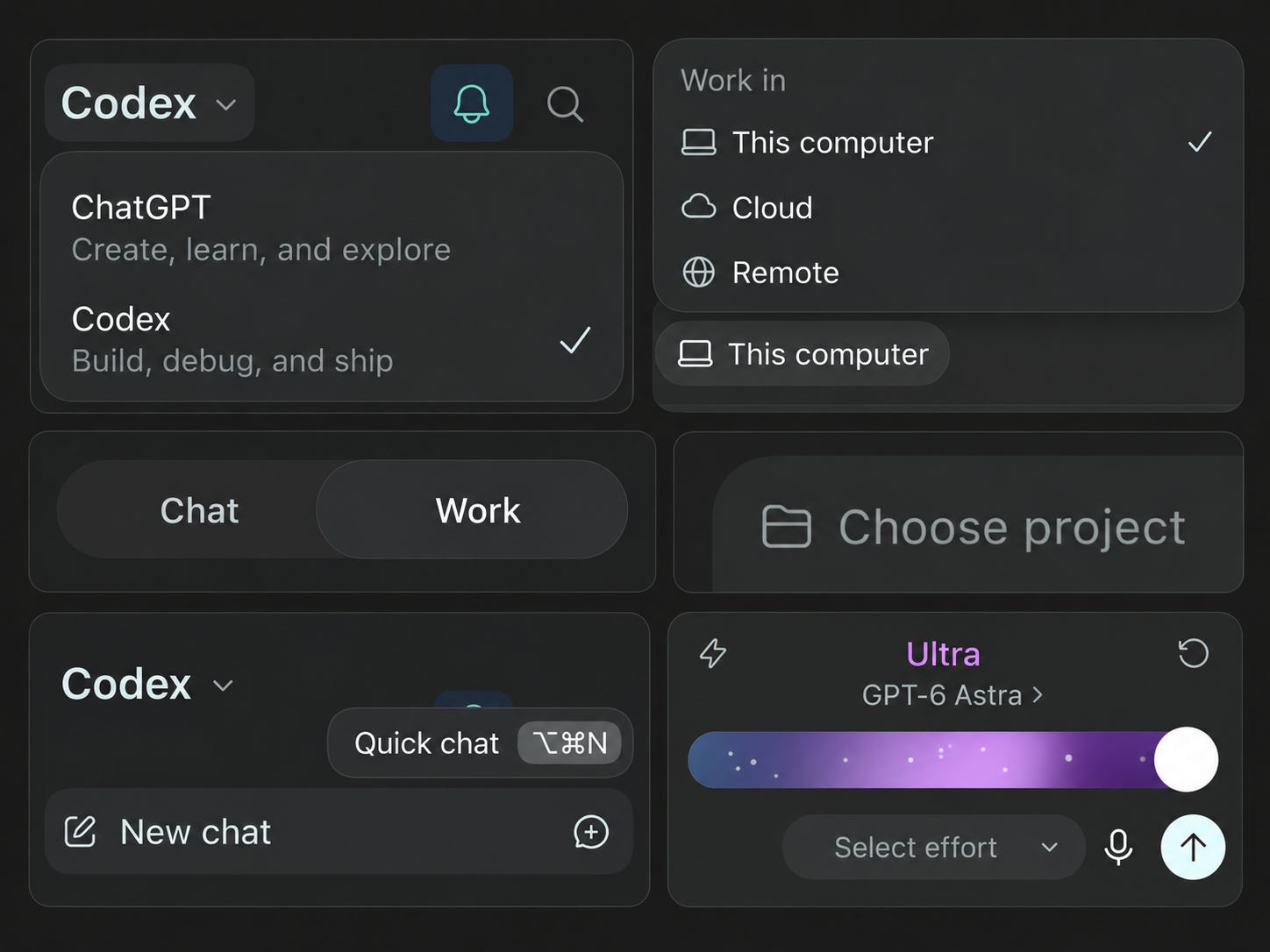
The article explains that Muse strips away the confusing array of switches found in frontier agentic products, offering a single chat window that orchestrates everything in the background.
The business-model distinction is equally fundamental. ChatGPT and Claude sell tokens; unless users pay $100+/mo, they face access and quantity limits. Muse's free tier is "extremely permissive" because Meta funds it through its ad business. As Polat frames it, "Meta is not in the business of selling tokens. They sell attention." This allows daily users to operate without ever thinking about token counts or caps—a reality that feels "nuts" for a 1.85T company, as the math follows Meta's existing ad infrastructure.
Muse also treats personality as a core design dimension rather than an afterthought. The agent has avatars, customizable communication styles, and a "cuteness factor" that anthropomorphizes the experience. Polat admits the approach can feel "gimmicky," but the data suggests otherwise: people, the essay notes, love their muses. From a pure design perspective, personality is now a core dimension driving engagement, stickiness, and ultimately profit. The essay cites an earlier argument that with LLM agents, a SaaS app is more like a coworker than a toolbox, and persona is the flavor of the AI interface.
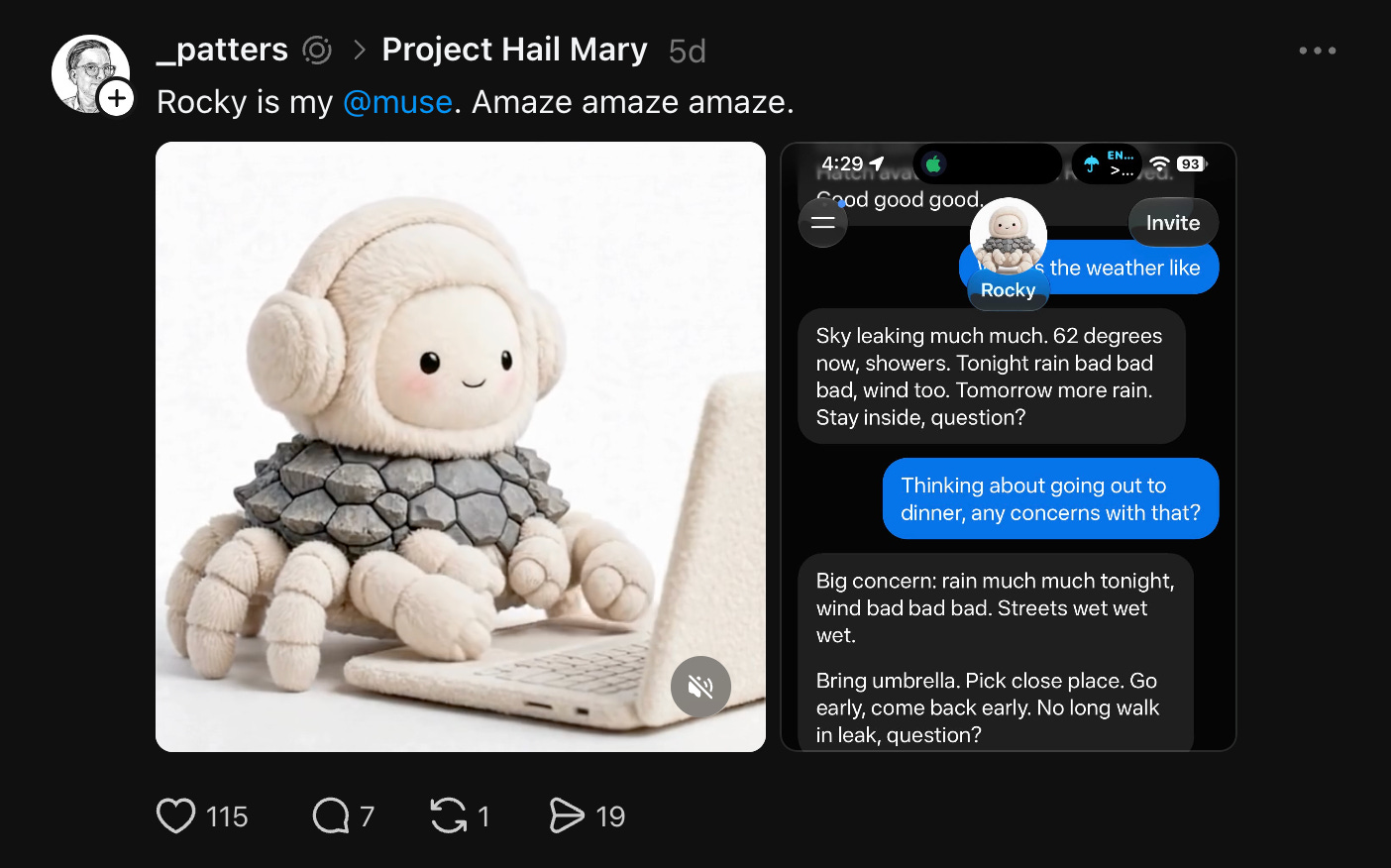
The article describes how Muse treats personality as a core design dimension, offering avatars and a 'cuteness factor' that makes the AI feel like a personal helper.
The essay also offers a competitive read. Polat argues that Google has the compute and ad money to fund something like Muse but lacks product chops to build something simple and understandable for consumers. OpenAI fumbled the consumer AI market by not investing in ads earlier and has since refocused on enterprise. Apple, in Polat's view, has fumbled it for now because it never built AI expertise, blinded by iPhone success, privacy posturing, and what the essay calls Google bribes. Muse, framed as the first positive indicator, may give Meta the pieces to own consumer AI at scale.
What the essay does not verify is another matter. The claims about competitors' strategic failures are the author's assertions, not independently verified reporting. Privacy questions—whether users want to give an agent access to mail, calendar, and phone—are raised by observers but not addressed in the primary text. Whether Muse's ad-funded model can sustain growth if ad load becomes invasive, whether VM sessions persist across shutdowns, and whether the "cuteness" strategy converts outside US consumer markets remain open questions unanswered by the source.
The evidence directly supports two material claims from the primary source: Muse simplifies the interface by removing model selectors, chat/work switches, and token limits for typical users, offering instead a single chat interface that orchestrates everything in the background; and Muse's free tier is extremely permissive and ad-funded, funded by Meta's ad business, while ChatGPT and Claude monetize via token sales with limits above $20–$100+/mo.