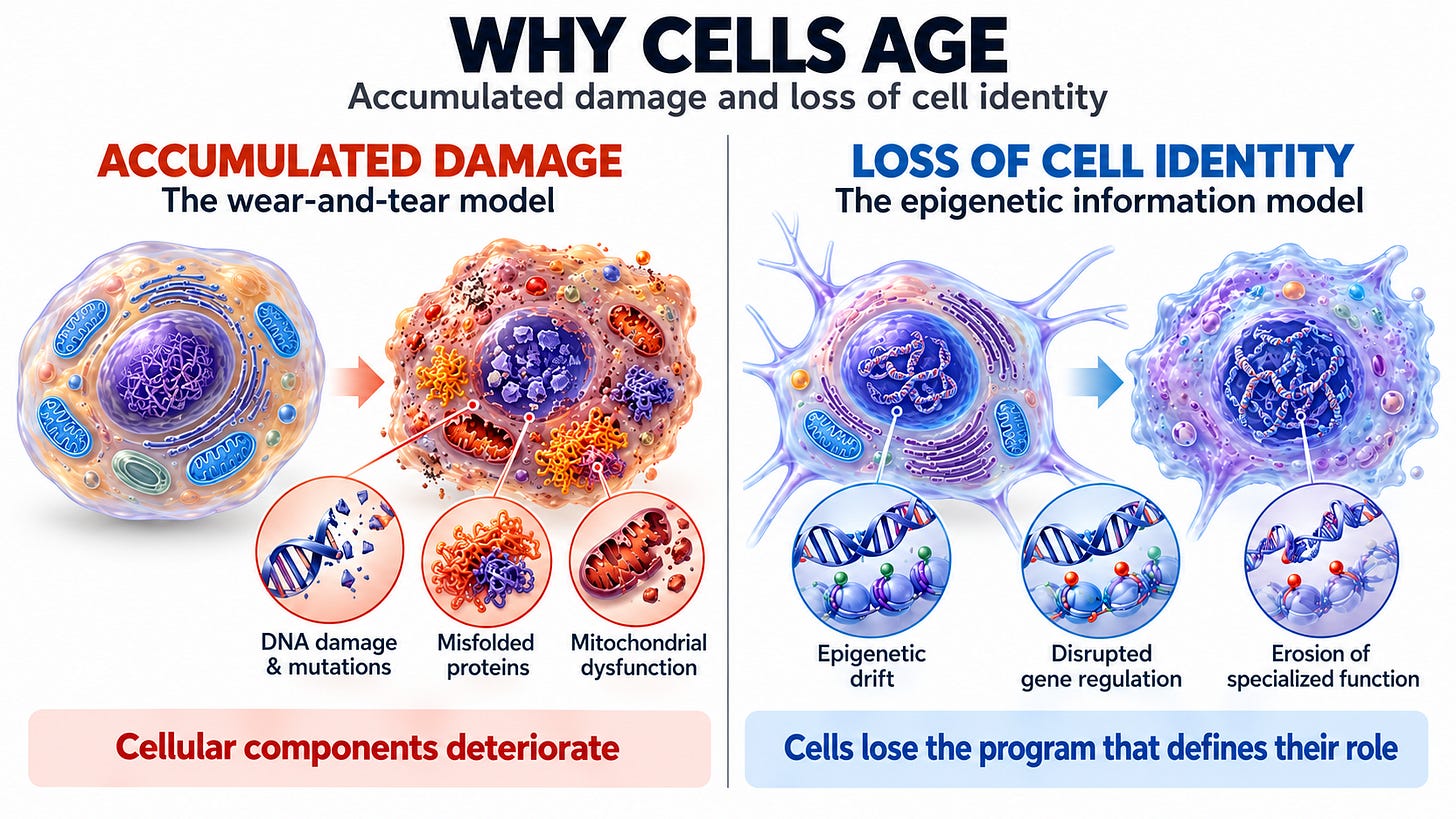
For decades, the dominant explanation for cellular aging has been 'wear and tear'—the idea that DNA mutations, oxidative stress, and molecular damage accumulate until cells stop working. But two papers published in September 2026, one in Nature by Vadim Gladyshev's group at Harvard and another in Cell by Juan Carlos Izpisua Belmonte's team at Altos Labs, advance a complementary model: aging is driven in large part by the loss of cell identity itself.
In this model, every cell in the body carries the same genome, but its identity—whether it is a neuron, a hepatocyte, a cardiomyocyte—is established and maintained by a three-dimensional epigenetic architecture in the nucleus. This architecture includes DNA methylation, histone modifications, nucleosome positioning, and chromatin structure. Together they form what Eric Topol, reporting on the studies in his Ground Truths newsletter, calls a 'three-tier regulatory grammar' that keeps each cell type locked in its designated role.
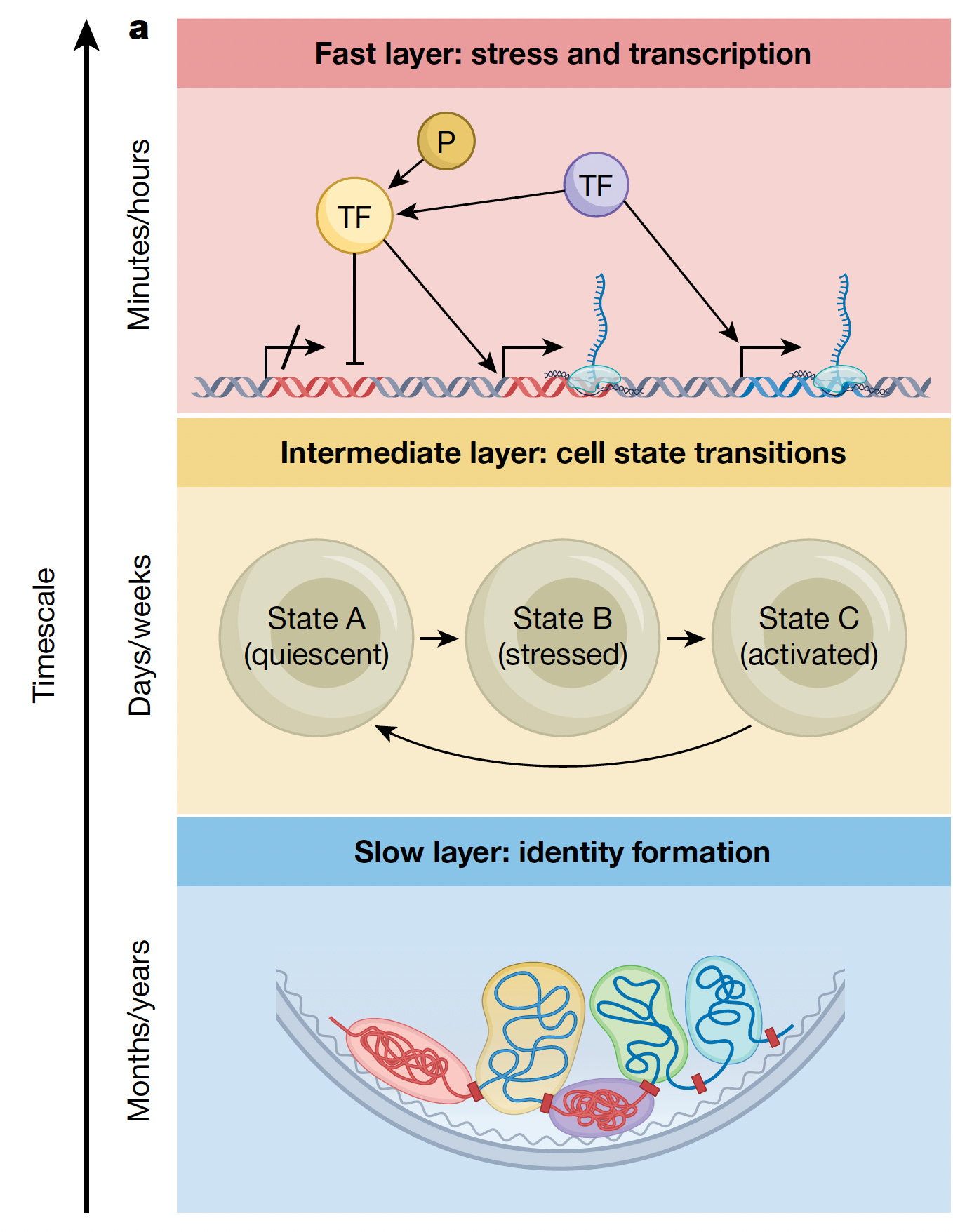
The fast tier responds to acute stress within minutes to hours, deploying transcription factors such as AP-1. The intermediate tier manages cell-state transitions over days to weeks, such as activating a cell for wound healing and then returning it to baseline. The slow tier is the critical one: it establishes the hard boundary that insulates cell identity over a lifetime. This slow layer relies on chromatin architecture, and its erosion is what the new papers link to aging.
Placed after paragraph 3, which explains the fast, intermediate, and slow tiers; this lead figure from the primary source anchors the three-tier regulatory grammar explanation described in the article
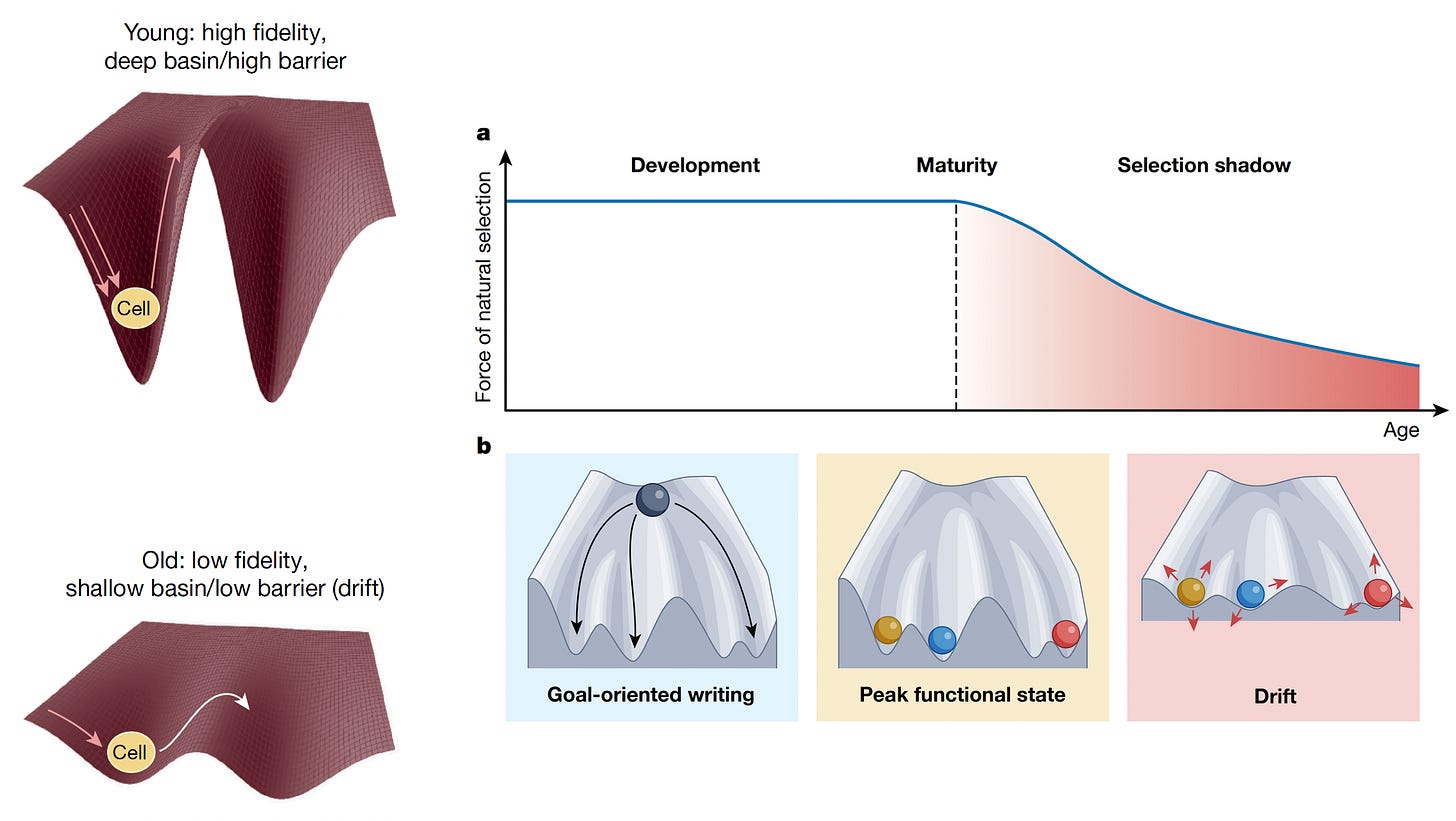
The conceptual framework draws on Conrad Waddington's 1957 'epigenetic landscape' metaphor. Picture a ball rolling down a hillsided valley: the valley represents a differentiated cell type, its steep walls and deep basin providing stability—what developmental biologists call canalization. With age, the valleys lose their slope and the basins become shallow, a process termed decanalization. The cell becomes unstable and begins to drift out of its assigned identity.
Placed after paragraph 4, which introduces the Waddington landscape metaphor and explains that aging erodes the valley walls and shallows the basins, causing cells to drift out of their assigned identity
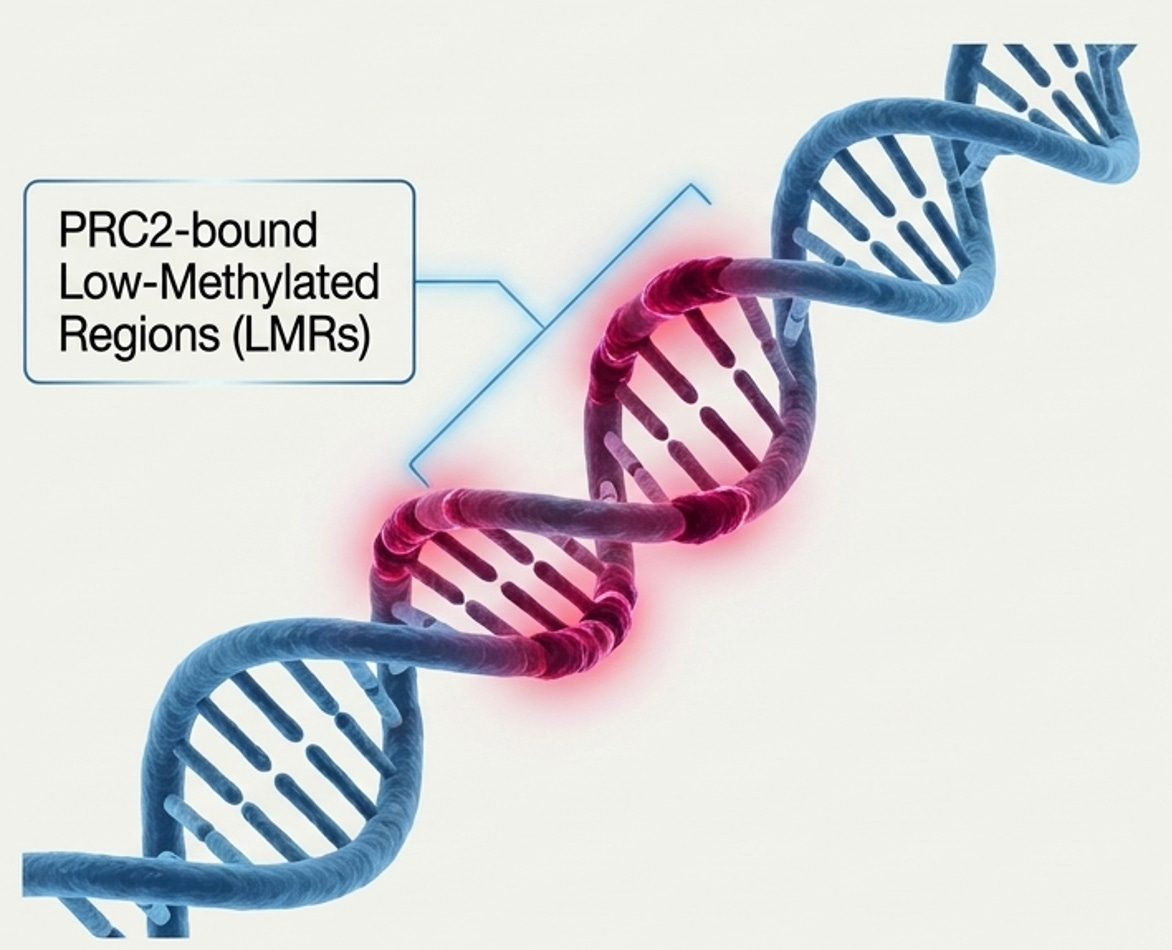
The molecular 'sculptor' of this landscape, according to the Nature paper, is the Polycomb Repressive Complex 2 (PRC2). PRC2 establishes the deep epigenetic constraints—the hard boundaries—that keep a neuron a neuron and a liver cell a liver cell. Strikingly, the papers report that epigenetic clocks—biomarkers based on DNA methylation patterns that predict lifespan across 348 mammalian species—are measuring the pace of PRC2 low-methylated region erosion. In other words, the clocks track the slow layer's decay.
Chronic inflammation emerges as a key accelerant. When persistent inflammatory signals overwhelm the fast layer's capacity to respond, they block PRC2 function, hastening the erosion of the Waddington landscape. Even after inflammation resolves, epigenetic changes in chromatin can persist, locking in the damage. This loss of epigenetic grammar can also create permissive ground for cancer.
The Cell paper details the destination of this drift: a mesenchymal, fibroblast-like state. Cells across 46 tissue types have been shown to adopt this state, laying down extracellular matrix—'mushy putty' in Topol's phrasing—driving fibrosis and chronic inflammation. This mesenchymal drift is implicated in atherosclerosis, age-related macular degeneration, Alzheimer's disease, and other age-related conditions. A positive feedback loop compounds the problem: activated fibroblasts recruit more fibroblasts, amplifying scarring.
Placed after paragraph 7, the destination of drift described in the Cell paper; the figure anchors the description of cells across 46 tissue types adopting the fibroblast-like state, linked to atherosclerosis, macular degeneration, and Alzheimer's disease
If loss of identity drives aging, can the process be halted or reversed? The papers and Topol's synthesis highlight three avenues:
Caloric restriction reduces acetyl-CoA levels and PRC2 methylation, conceptually 'freezing the drift' by preserving slow-layer architecture. It extends lifespan in many mammals, but results in non-human primates have been inconsistent, and the degree and duration of restriction required in humans is likely impractical.
Partial epigenetic reprogramming uses brief exposure to the four Yamanaka factors—OSKM (Oct-4, Sox2, Klf4, c-Myc)—to rejuvenate cells without erasing their identity and reverting them to pluripotency (which carries cancer risk). Short bursts have restored cell identity in aged human fibroblasts, including from a 96-year-old donor, and in animal models, re-establishing PRC2 domains and actively reversing mesenchymal drift. An alternative approach uses only three factors (OSK, omitting the oncogenic c-Myc) and is being tested in a pilot study for severe optic nerve damage via direct eye injection.
Placed after paragraph 10, which covers the three intervention avenues; the figure anchors the partial reprogramming discussion, with OSKM restoring identity in aged fibroblasts including a 96-year-old donor and OSK-only tested in a pilot for optic nerve damage
Lithium, the Nature paper notes, may preserve neuronal identity by interfering with the slow-layer failure pathway—specifically through GSK3β inhibition, which blocks tau phosphorylation in experimental models. Lithium orotate has been previously proposed as an Alzheimer's preventive, and this mechanism may underlie that effect.
Topol emphasizes that whether partial reprogramming or other interventions can safely reverse aging at the whole-body, organ, or tissue level in humans remains uncertain. The feedback loop between chronic stress on the fast layer and erosion of the slow layer suggests that lifestyle factors—pro-inflammatory diet, sedentary behavior, poor sleep—act as chronic stressors that accelerate identity loss.
Several questions remain open. The papers do not address why different species age at vastly different rates (e.g., dogs versus humans) or how the model accounts for the Hayflick limit on cellular division. Circadian rhythms—a daily oscillation that integrates shorter-term signals and is known to affect aging—are absent from the three-timescale framework. And while embryonic development demonstrates that a near-complete epigenetic reset is possible (the paternal genome is stripped of age-linked tags, mitochondria are replaced, telomeres rebuilt, and damaged proteins cleared, though sperm-acquired DNA mutations persist), translating that natural reprogramming into a safe therapeutic strategy for adults is a distant prospect. Targeted methylation or demethylation at specific genomic sites in vivo is not currently feasible.
The convergence of these two studies on PRC2 and the Waddington landscape provides a mechanistic explanation for what epigenetic clocks have been measuring all along. It reframes aging not merely as accumulated damage but as a progressive loss of the epigenetic constraints that define what a cell is. Whether that insight yields safe, effective interventions for human aging is the critical next question.