Floci, described as "Any cloud. Locally. The local cloud for AI agents," provides emulated cloud services that run on a developer’s laptop or CI runner. Four product‑specific emulators are available: floci aws offers 119 services on port 4566, floci‑az provides 28 services (Blob, Functions, Key Vault, Service Bus) on port 4577, floci‑gcp covers 25 services (GCS, Pub/Sub, Firestore, Cloud Run) on port 4588, and floci‑oci exposes 8 services (Object Storage, Queue, Streaming, Vault) on port 4599. Each emulator starts in approximately 24 ms and idles at about 13 MiB of memory, enabling rapid start‑stop cycles inside edit loops.
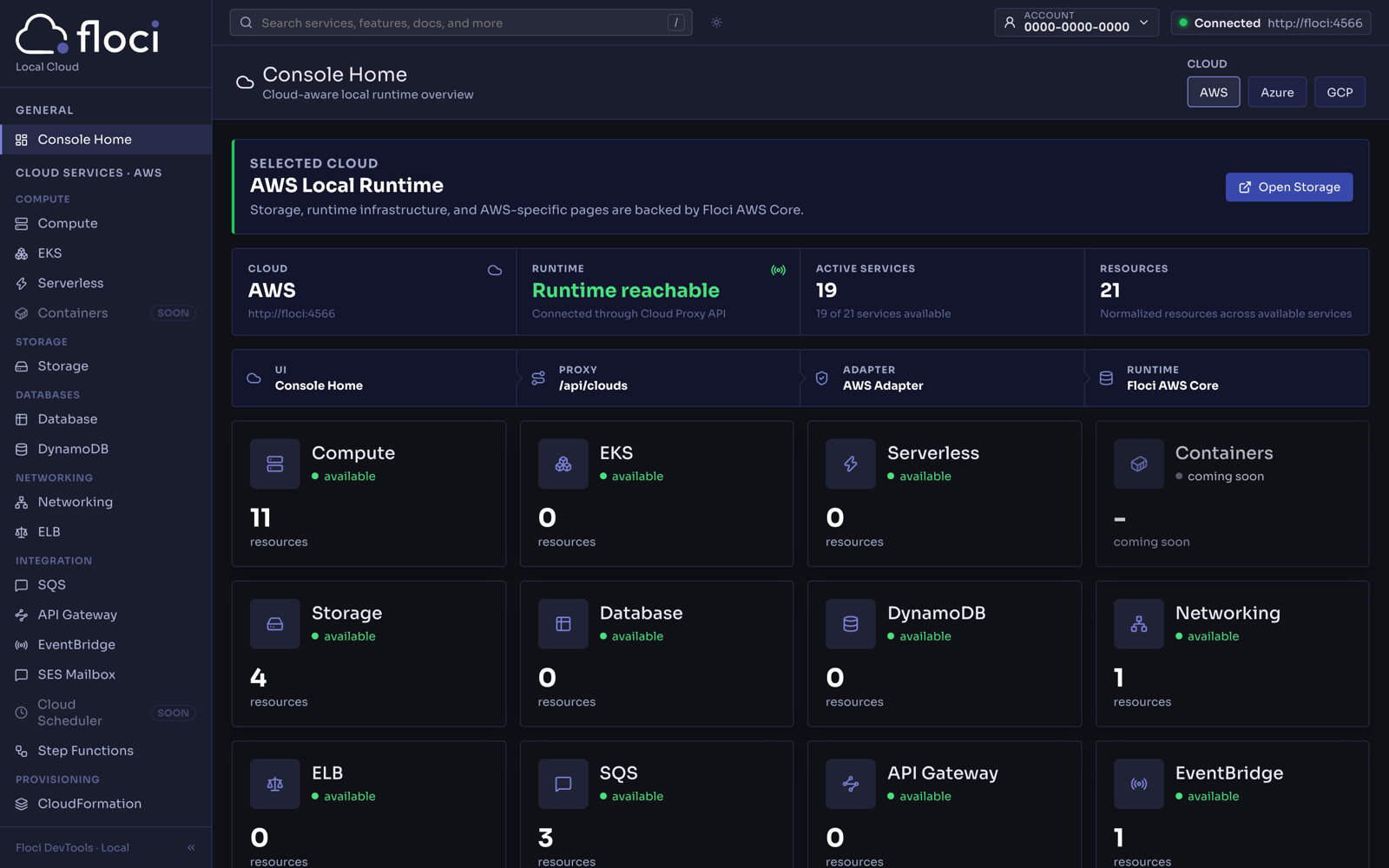
The article describes four product-specific emulators, starting with floci aws offering 119 services on port 4566. The console screenshot illustrates what the AWS emulator interface looks like, showing the service grid and runtime status that developers interact with when testing infrastructure locally.
The project is managed through a unified command‑line interface, floci-cli. Users can install it via a curl‑script, Homebrew (`brew install floci‑io/floci/floci`), Scoop (`scoop install floci`), or as a JVM fallback (java -jar floci.jar). A single `floci start` launches the default AWS emulator; `floci gcp start`, `floci az start`, or `floci oci start` switch the product. Environment variables are exported with `eval $(floci env)` so that familiar CLI tools (aws, az, gcloud, oci) can point at the local emulators.
Floci is deliberately credential‑free. Agents connect with throwaway keys; no real cloud secrets enter the agent’s context or sandbox. Worst‑case, a local container is reset rather than a staging environment or cloud bill incurred. This "zero blast radius" model makes it suitable for CI ephemeral environments, local‑first development, infrastructure‑as‑code dry runs, and workshops where students run the whole stack on their machines without provisioning accounts.
The emulators run real serverless functions, databases, and cache services inside Docker containers, so code that works locally is expected to behave the same in production. Sponsorship options exist under the MIT license, and the project is developed in the open.