Flet 1.0 is the first stable release of a Python framework whose core deal is simple: write your UI and logic in Python, and Flet renders it natively on iOS, Android, Windows, macOS, Linux, and the web. Under the hood it is a Python layer over Flutter — so Flet apps ultimately run on Flutter's engine, and developers can extend Flet by wrapping Flutter packages as Python extensions when a needed control is missing. The project positions itself against Electron, React Native, Xamarin, Tauri, and Kivy by removing the requirement to know a frontend stack. To run a Flet app you install flet, write Python, then invoke flet run (or flet run --web for the browser). A standard first example is a counter: a Text widget showing "0" and a FloatingActionButton whose on_click handler increments the displayed value. The counter.py snippet in the docs ships in both imperative and declarative variants; the imperative form mutates control properties directly, while the declarative form re-describes the UI on state change. Packaging is handled by flet build, which produces distributable bundles for desktop, mobile, and web and can target the App Store and Google Play, with dependencies and icons configured in pyproject.toml. Flet Studio offers a no-install browser entry point with an examples gallery, AI assistance, and shareable project links. On the testing side, flet test runs pytest integration tests against a packaged app, tapping buttons and entering text; screenshot comparison is available on iOS and Android. Deployment can run Python server-side with real-time UI sync, or compile to Pyodide/WebAssembly so the browser runs Python without a server. The supplied sources do not include a 1.0 changelog, performance benchmarks, a layout/alignment guide, or an independent security review. Community comments flag layout alignment as a pain point and question the framework's depth for complex UIs, but those reports are anecdotal and are not reflected in the supplied primary material. Because both supplied sources are first-party publisher pages, they establish what Flet claims, not independently verified behavior. Readers should treat performance, store-submission reliability, and layout ergonomics as unverified by the supplied packet and test them directly before relying on them for a production decision.

The official logo of the Flet framework, a Python layer over Flutter for cross-platform app development.
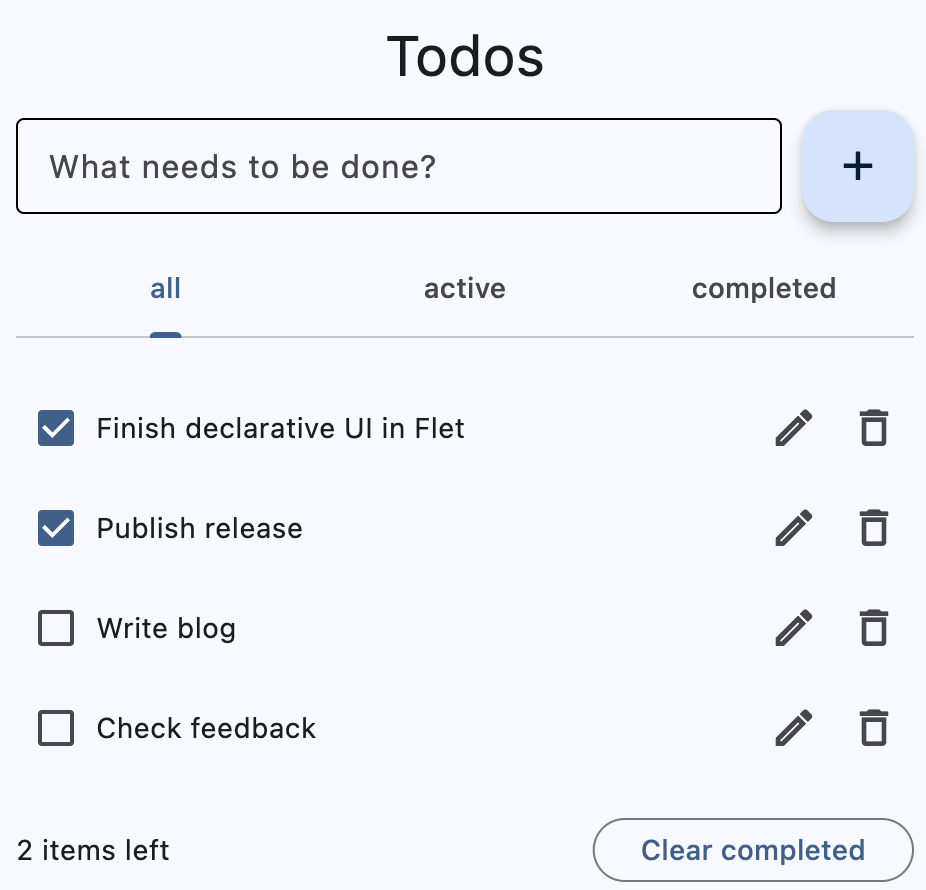
A to-do application demonstration showing Flet's editable tasks and completion filter UI, illustrating the framework's UI capabilities.
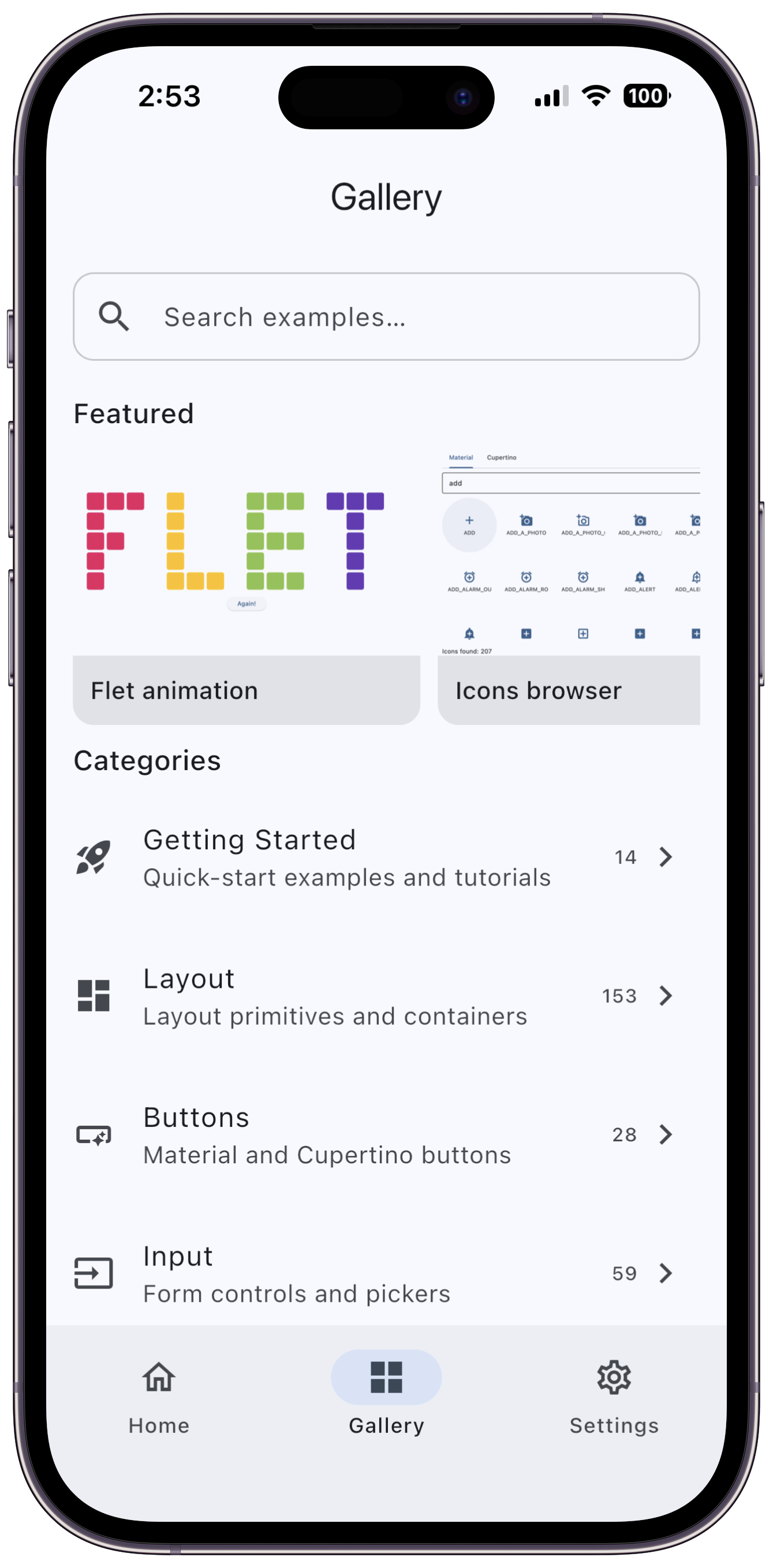
Screenshot of the Flet Gallery running on an iPhone, demonstrating native iOS app support and the framework's mobile capabilities.

The Flet web support illustration showing the framework's ability to compile Python apps to WebAssembly for browser execution.