The Massachusetts Institute of Technology (MIT) has recently installed hundreds of new surveillance cameras across its campus, a move that has drawn sharp criticism from a group of faculty members. According to a report in the MIT Faculty Newsletter, these cameras—some of which are positioned near faculty offices and restrooms—are being integrated with AI capabilities provided by Ambient.ai. This technology potentially allows for advanced tracking and search functions, such as identifying specific individuals based on appearance or behavior. Faculty authors of the report expressed concern that the administration tested these AI capacities without prior community knowledge or consent. Critics argue that the widespread surveillance creates a 'Panopticon effect,' where the constant possibility of being monitored leads individuals to alter their behavior, potentially chilling speech, protest, and academic freedom. Concerns have also been raised regarding the potential for gender and racial biases in AI detection systems, as well as the security of data stored in the cloud. The report highlights that the MIT Police maintains a data-sharing agreement with the Boston Joint Terrorism Task Force, raising questions about how campus surveillance data might be accessed by external law enforcement agencies. In response to the installation, some faculty members have launched a protest initiative, decorating the cameras with decorative gems to draw attention to the surveillance infrastructure. While the administration has reportedly formed a committee to advise on contract terms for AI tools, critics maintain that the decision-making process was opaque, involving minimal consultation with the broader campus community, including those with expertise in AI ethics and those from vulnerable populations.
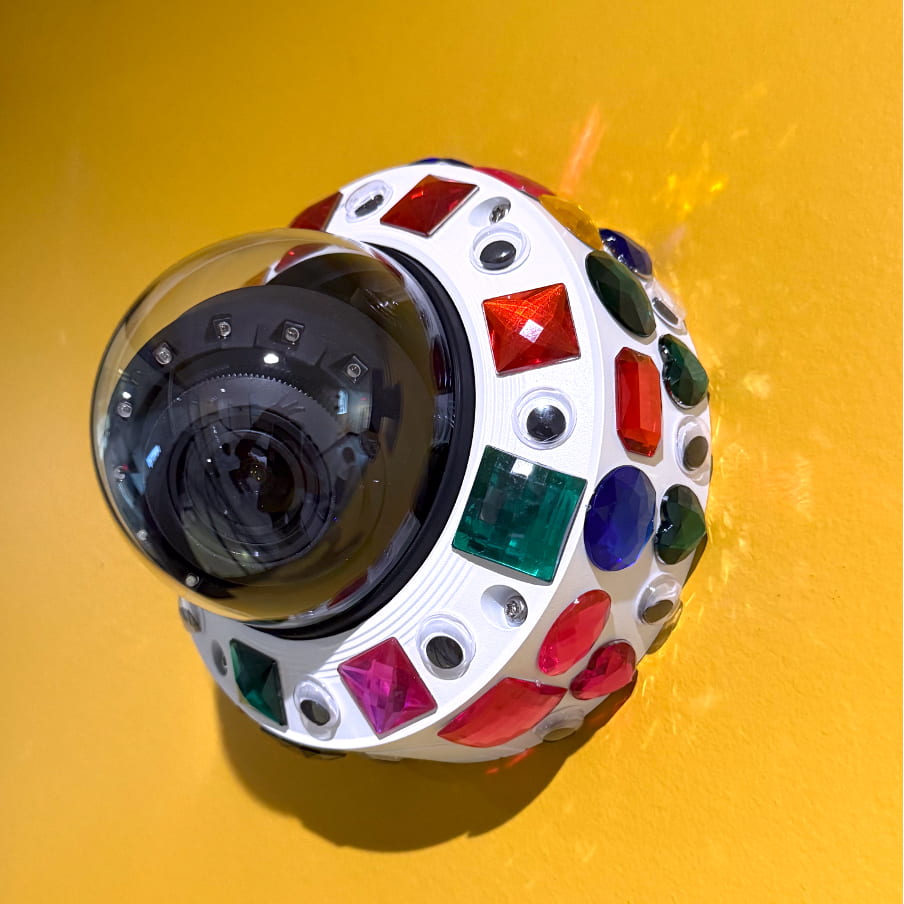
The image illustrates the protest initiative where faculty members decorated the new surveillance cameras with gems to draw attention to the campus-wide infrastructure.