Lemmings was a puzzle game released in 1991 by DMA Design, a Scottish studio, and published by Psygnosis. Its premise was easy to grasp: guide a crowd of tiny creatures through hazardous levels using a small set of special abilities. The original reached 23 platforms and became Psygnosis's biggest-selling game by a wide margin, helped by its mix of simplicity, charm, and addictive challenge.
The first strain appeared with Lemmings 2: The Tribes in 1993. It expanded the formula from eight abilities to 60, divided the creatures into 12 tribes, and added a narrative thread about escaping captivity. The Digital Antiquarian argues that this made the sequel richer for experienced players but harder to enter without the first game's gentle tutorials. It also became heavier to port, reaching eight platforms instead of roughly two dozen.
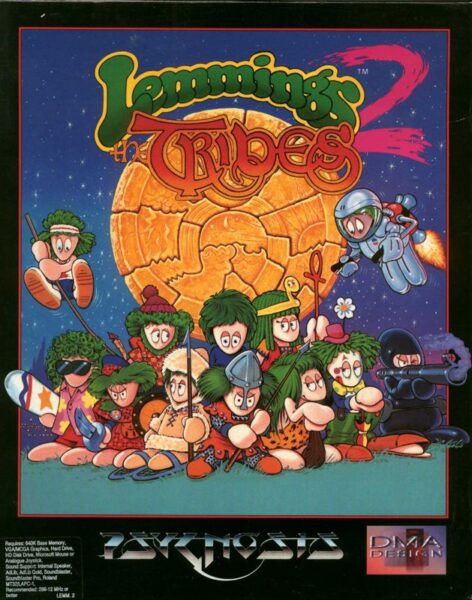
The sequel’s larger cast and expanded systems illustrate the growing complexity discussed in this paragraph.
The deeper problem was strategic. DMA Design wanted Lemmings to become more difficult and ambitious, while the original had succeeded partly because it welcomed casual players. At the same time, Psygnosis was acquired by Sony and explored a Lemmings television show with the Children's Television Workshop, the maker of Sesame Street. That pushed the studio toward larger, more individualized characters—an awkward fit for creatures designed as a nearly identical mass.
The next game, All New World of Lemmings, tried to satisfy those pressures by changing both presentation and mechanics. Lemmings gained distinct faces, but players now had to walk them into loot boxes to assign abilities, a system the source describes as fiddly and annoying. Making the creatures larger also changed the tone: deaths that had seemed cartoonish at tiny scale became grislier. The article frames this as a case of several small decisions combining into one bad fit.

The animation reflects the original scale and tone that later changes made darker and less mass-market friendly.
After DMA Design moved on, Psygnosis handed later projects to other developers. Lemmings 3D, released in 1995, followed the industry's rush toward 3D graphics, but the source says its mobile camera often worked against the player by forcing attention onto viewing angles instead of puzzles. The supplied evidence does not establish a single cause for the franchise's decline; it supports a narrower conclusion: Lemmings lost momentum when later choices made the series less accessible, less coherent, and less faithful to what had made the original distinctive.

A later cover helps frame the handoff to other developers and the broader decline in momentum described here.