Nadeem initially believed that planning would become the most important part of building software with AI, which motivated him to create Nuanced—a desktop app designed to make plan mode a first‑class, persistent document that could guide development from intent through implementation and verification. He saw plan mode as a way for humans to specify precise instructions for AI agents and to maintain a coherent mental model of what they were building while machines generated code faster than humans could inspect.
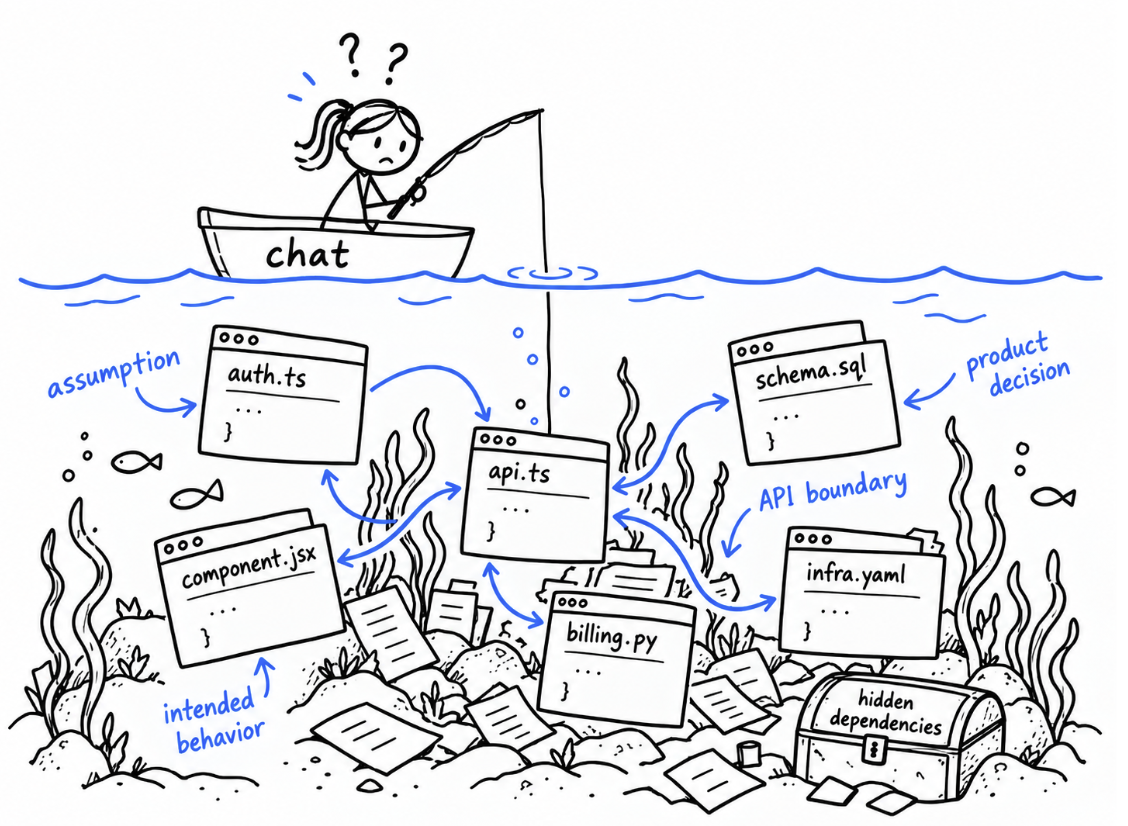
This image supports the idea that AI models can explore repositories and make assumptions about hidden dependencies, reducing the need for detailed upfront plans.
He identified two key reasons why plan modes are becoming obsolete: first, AI models have rapidly improved at understanding large codebases through context and memory, allowing them to explore repositories and make reasonable assumptions without explicit human instruction, which reduces the need for detailed upfront plans. Second, the AI‑generated specifications produced by plan mode are long and overly structured, making them painful to read and defeating their purpose of providing clarity; moreover, the linear workflow of plan mode (chat → disambiguate → generate spec → review → revise → approve → implement) does not match how humans actually think, which is iterative and interleaves understanding, action, inspection, clarification, and adjustment.
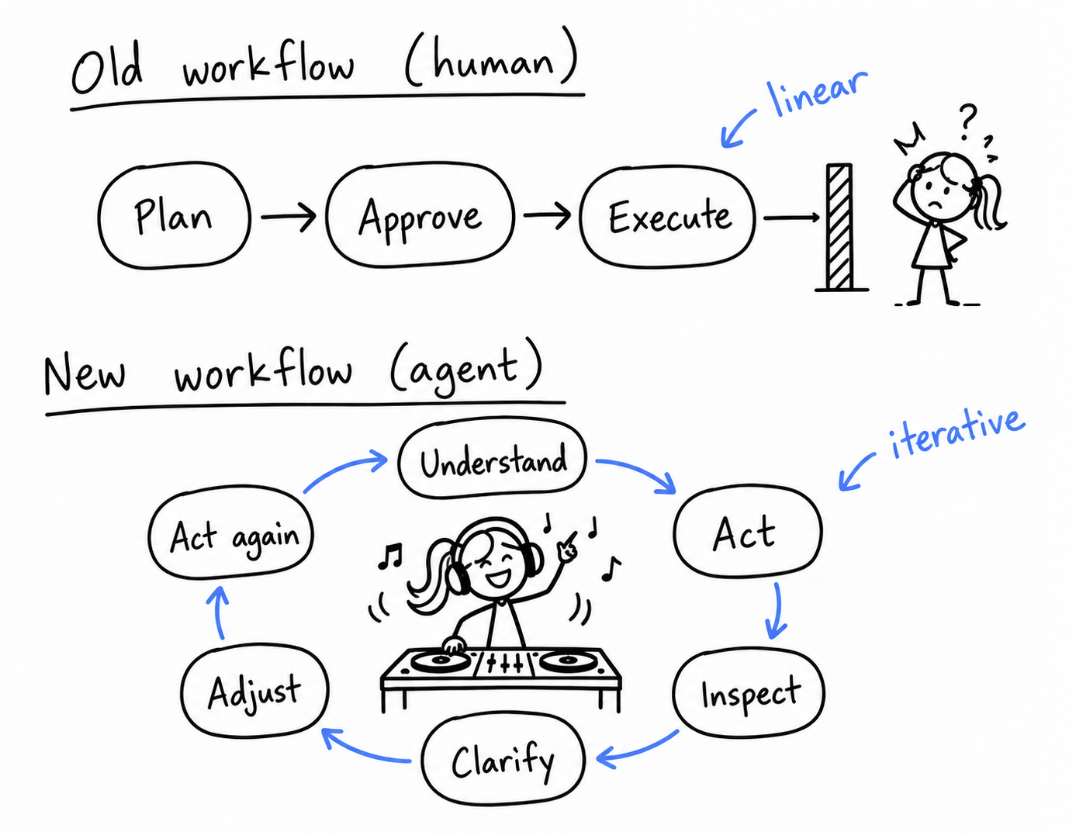
This image illustrates the article's point that plan mode follows a linear sequence (chat → disambiguate → generate spec → review → revise → approve → implement) which contrasts with the iterative human workflow of understanding, acting, inspecting, clarifying, and adjusting.
Nadeem acknowledges that thinking through what to build, why it matters, and evaluating decisions remains important for maintaining a coherent mental model, especially as the number of parallel agents grows from five to hundreds, but he argues that large bodies of AI‑generated text are not the right interface for that understanding. Instead, agents should surface only the most relevant context so that human attention can be focused where it has the greatest impact. The deeper problem of helping humans stay oriented as increasingly capable agents change systems at once remains unsolved, reflecting an enduring challenge of making complexity comprehensible in the face of evolving tooling.
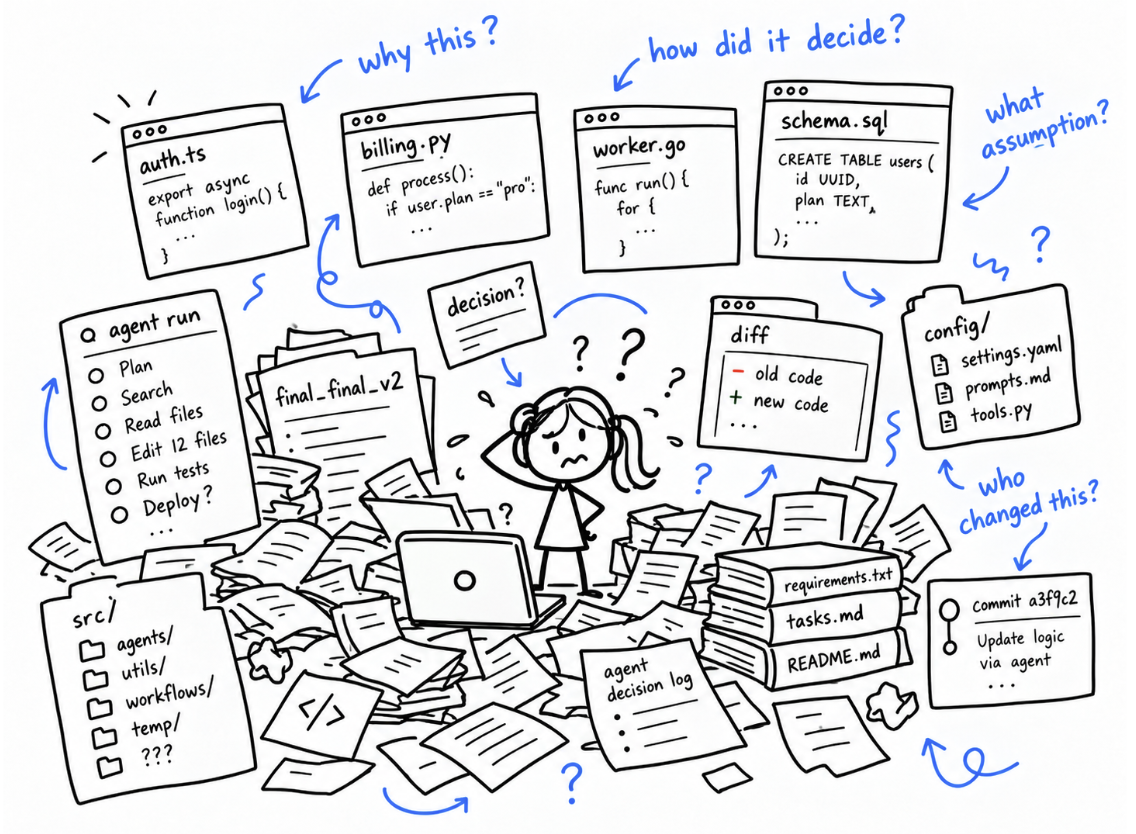
This reflects the article's criticism that plan‑generated specs are painful to read and defeat their purpose of providing clarity.
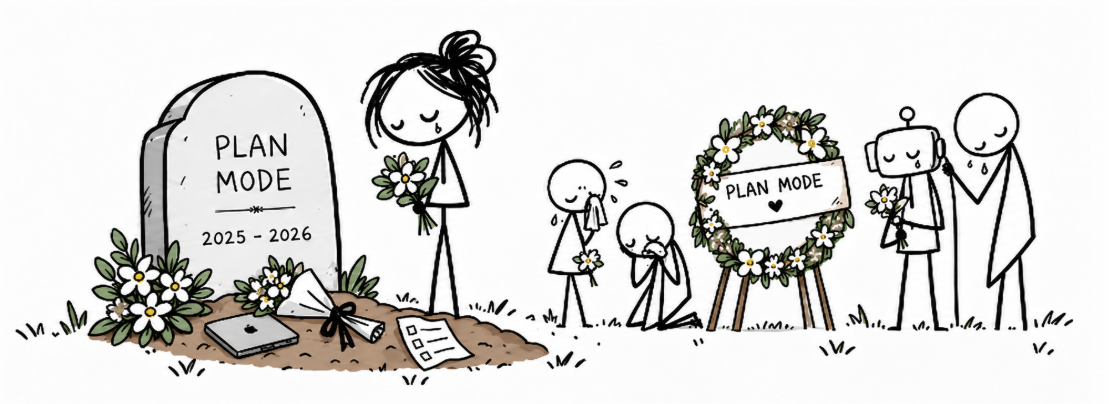
This visual metaphor captures the article's thesis that plan mode is losing usefulness as AI coding agents evolve.