In a first-person essay, sociologist and metal writer Keith Kahn-Harris reads Ozzy Osbourne’s final concert as a revelation rather than a contradiction. The performance took place at Villa Park in Birmingham, UK, during the Back to the Beginning farewell event. According to Kahn-Harris, Ozzy sang while seated on a bat-shaped throne, unable to reproduce the movement and physical force long associated with his stage persona.
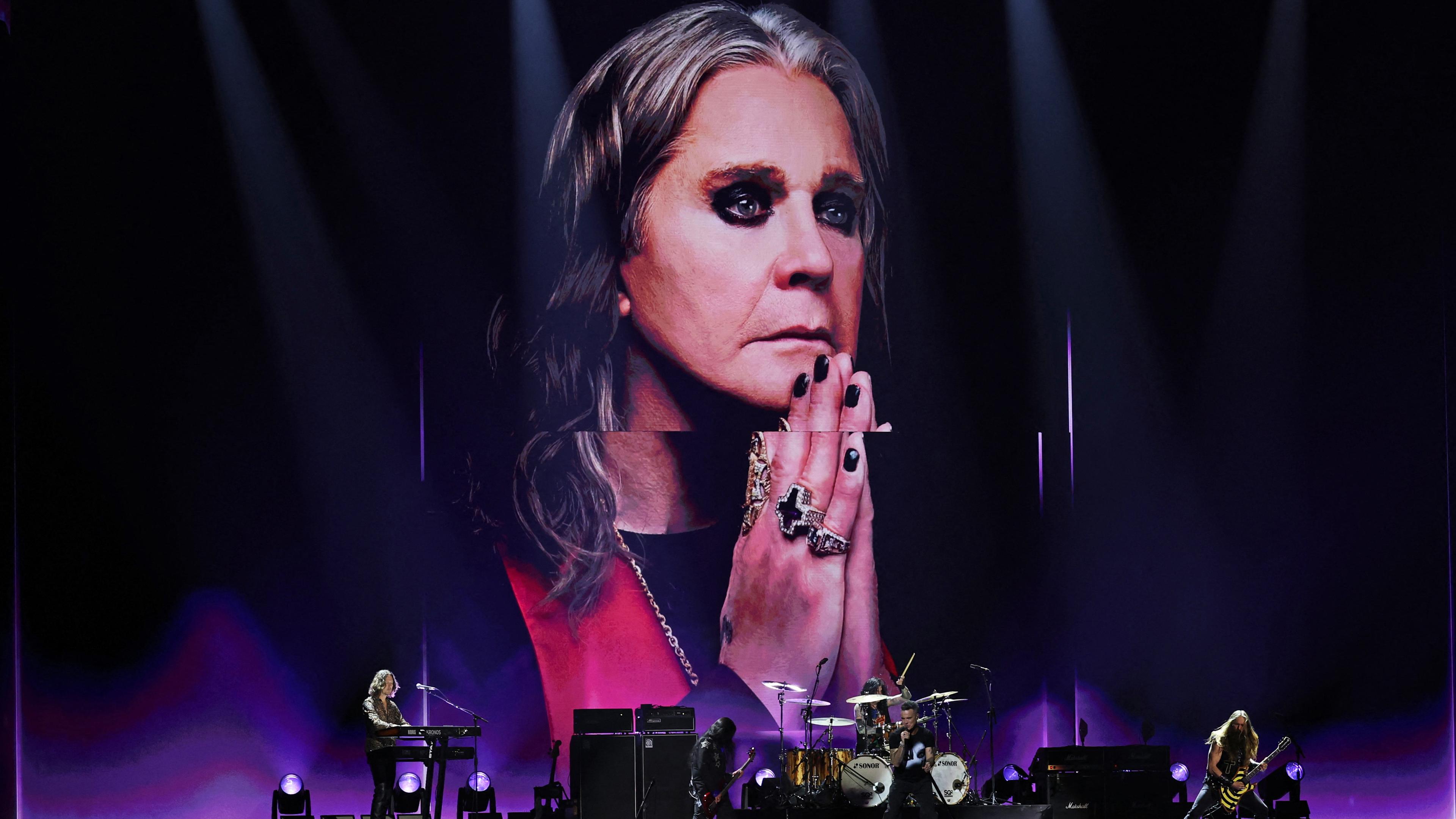
This suits the opening account of Ozzy’s concert, stage persona, and the physical force associated with his performances.
The essay’s central claim is about heavy metal’s “softness.” Metal often presents strength through distortion, screams, dramatic poses, and images of bodily power. Yet Kahn-Harris argues that vulnerability has always been part of the genre: songs about pain, despair, shame, and bodily failure sit alongside its aggressive surface. Ozzy’s visible struggle, in this reading, made that hidden tension impossible to ignore.

The close-up supports the discussion of pain, bodily failure, and the vulnerability beneath metal’s aggressive surface.
The argument is deliberately personal. Kahn-Harris watched the concert with a broken ankle, while thinking about his father’s Parkinson’s disease and his daughter’s experiences with disability at metal shows. These examples explain why the performance felt emotionally direct to him: metal became a place where frailty could be acknowledged rather than disguised. That is an individual interpretation, not evidence that all fans or musicians share the same view.

This fits the personal paragraph about frailty, disability, and metal as a place where vulnerability can be acknowledged.
The supplied HarperCollins product page describes Kahn-Harris’s book as an exploration of Ozzy, metal culture, and Ozzy’s legacy, but it does not independently verify the essay’s memories or conclusions. Likewise, the article does not establish a broad consensus about metal audiences, the concert’s charitable impact, or medical details beyond Kahn-Harris’s account. The strongest supported point is narrower: one writer sees Ozzy’s final show as proof that metal’s hardness has always depended on an exposed, human softness beneath it.