Microsoft stopped selling Visual FoxPro in 2007, but many organizations still have applications built around its projects, forms, tables and event-driven language. FoxDev Studio, from the FoxDevCommunity, is a new attempt to keep that software usable without first migrating it to another platform.
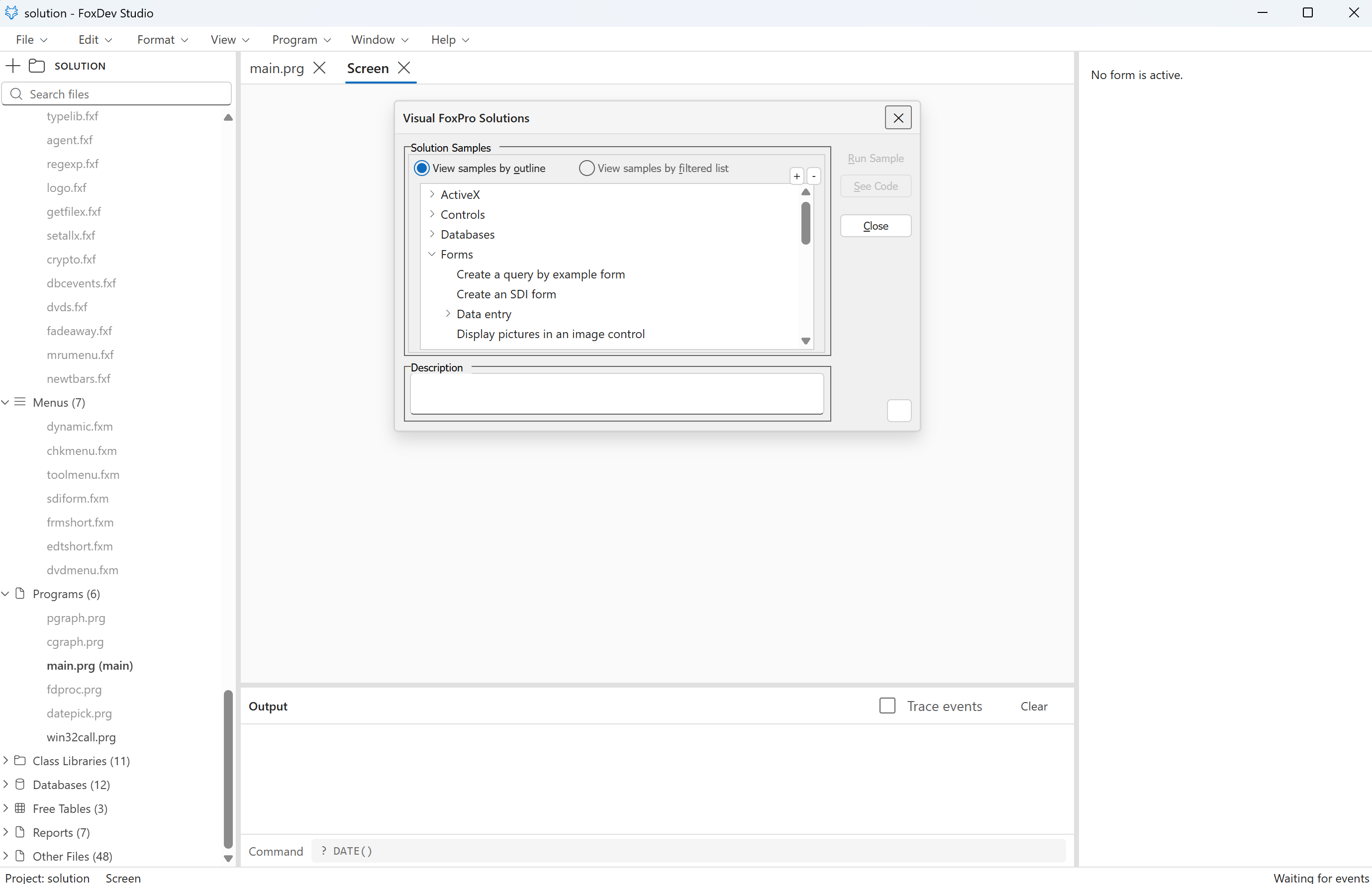
This interface illustrates the existing projects, forms, menus, programs and databases that FoxDev Studio aims to open directly.
The project describes an IDE and runtime that open existing Visual FoxPro 9 projects, forms, menus, programs and tables directly. Its documentation says the same compiler and bytecode interpreter are used in the editor, shipped applications and a headless runner, with the core VM written in Rust and compiled to WebAssembly. That matters because legacy FoxPro behavior depends on small details: event order, form state, file formats and the way a runtime answers a particular language construct.
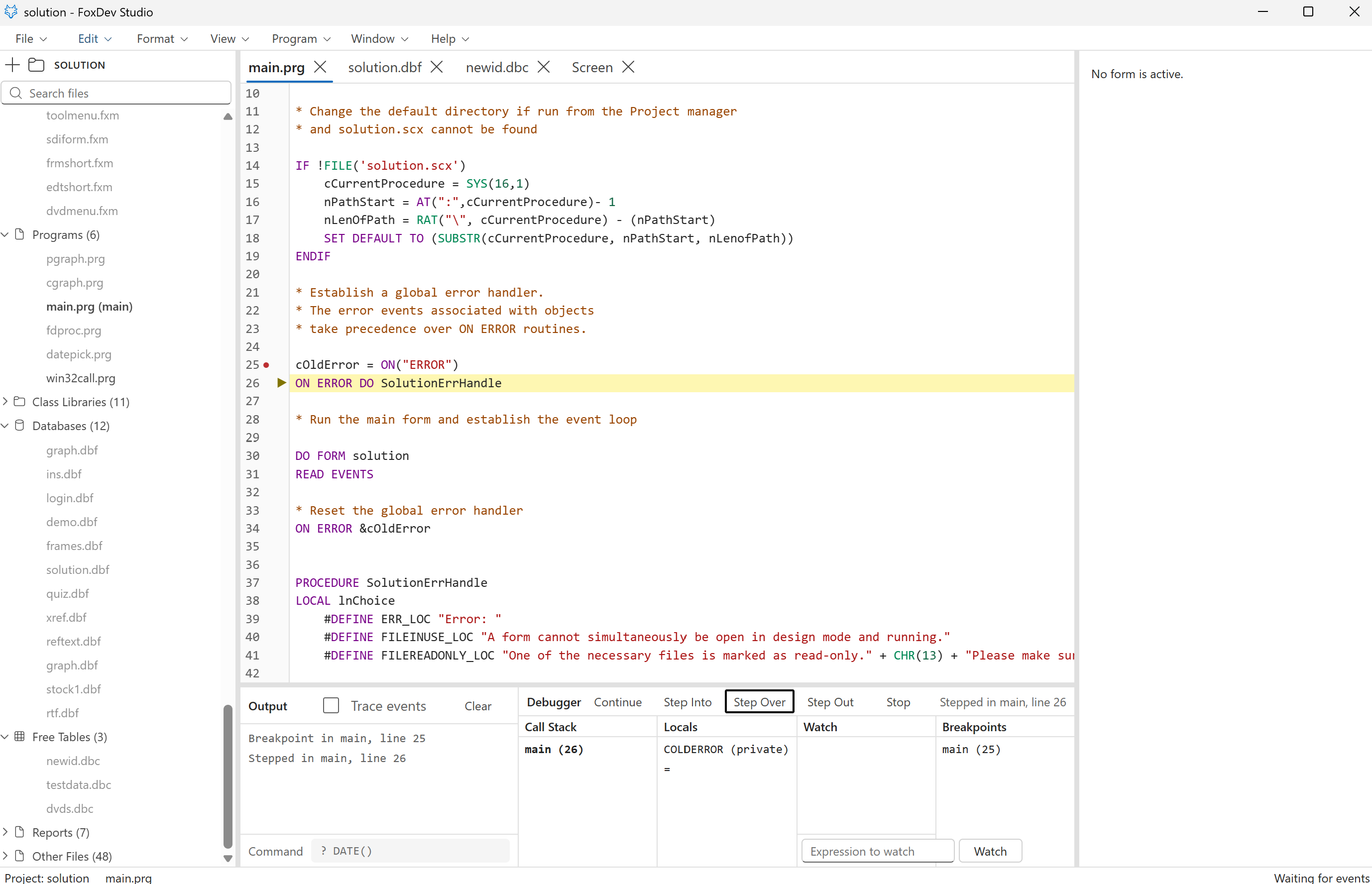
This development view supports the article’s point about preserving detailed IDE and runtime behavior for legacy FoxPro applications.
The most consequential change is 64-bit support. The project says Visual FoxPro's two-gigabyte table and memo limits come from signed 32-bit file offsets, while FoxDev uses 64-bit offsets and streams table bytes instead of loading whole files into memory. Its repository says it verified reads and writes at a 5.2 GB offset, and that remaining ceilings come from the DBF format itself, including its 32-bit record count and memo block fields.
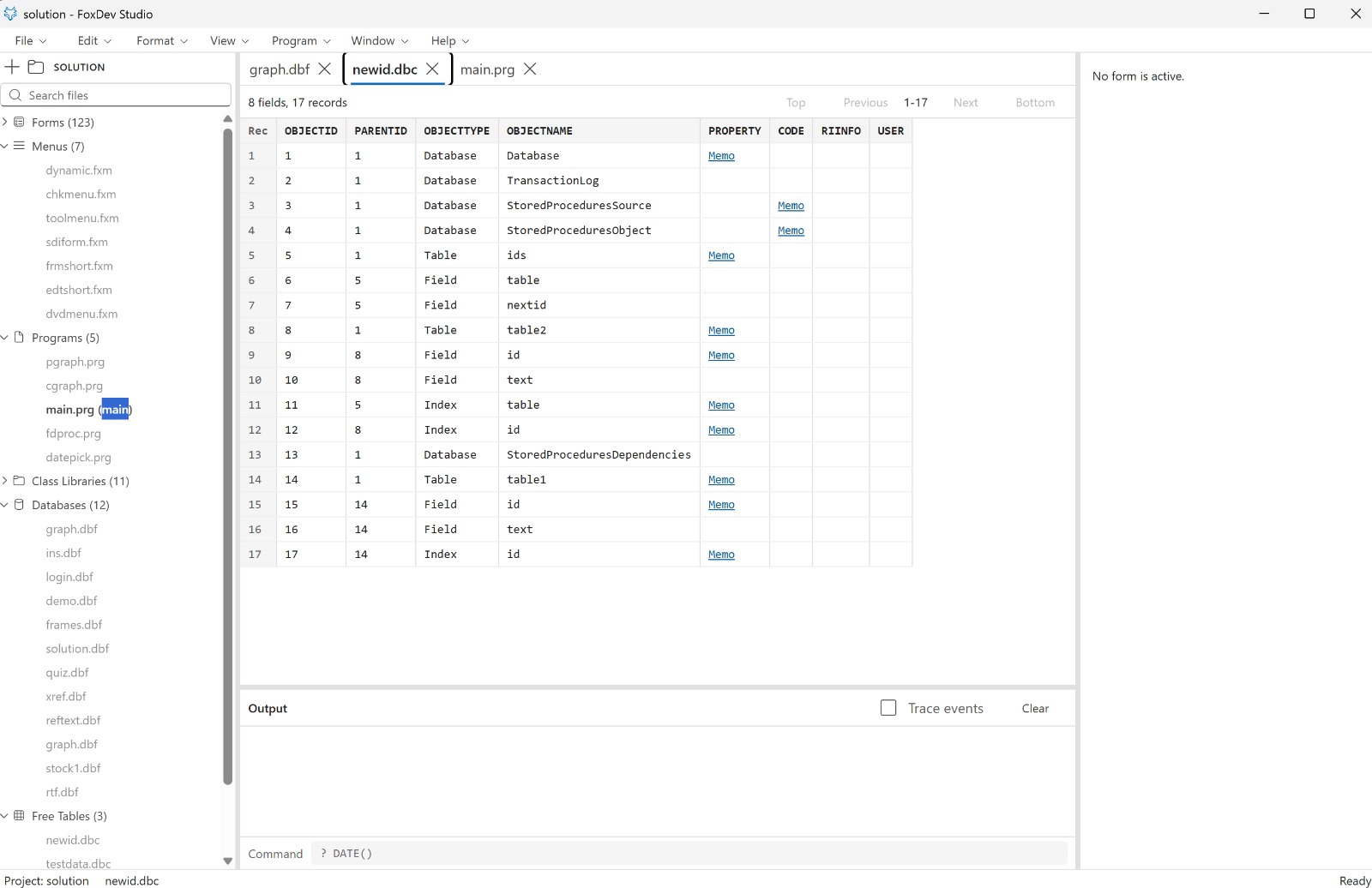
The database view relates directly to the article’s discussion of direct table access, file formats and larger data handling.
There is an important compatibility caveat. The product's own documentation says behavior is settled by running vfp9.exe and matching its answers, with tests failing when an implementation drifts. The site reports 1,534 of 1,722 Visual FoxPro 9 language-reference elements exercised by tests and three unknown; the GitHub page separately lists unfinished areas such as indexes, memo-field writing and some control bindings. Those figures describe the project's own testing and roadmap, not independent validation.
The practical consequence is narrower than “FoxPro is back.” FoxDev Studio appears designed for teams that need to keep an existing VFP application running while gaining a modern host, 64-bit data access and a path toward new features such as FoxScript lambdas and HTTP routes. It does not remove the need to test the application's real forms, libraries, databases and deployment path before treating it as a replacement for the original runtime.
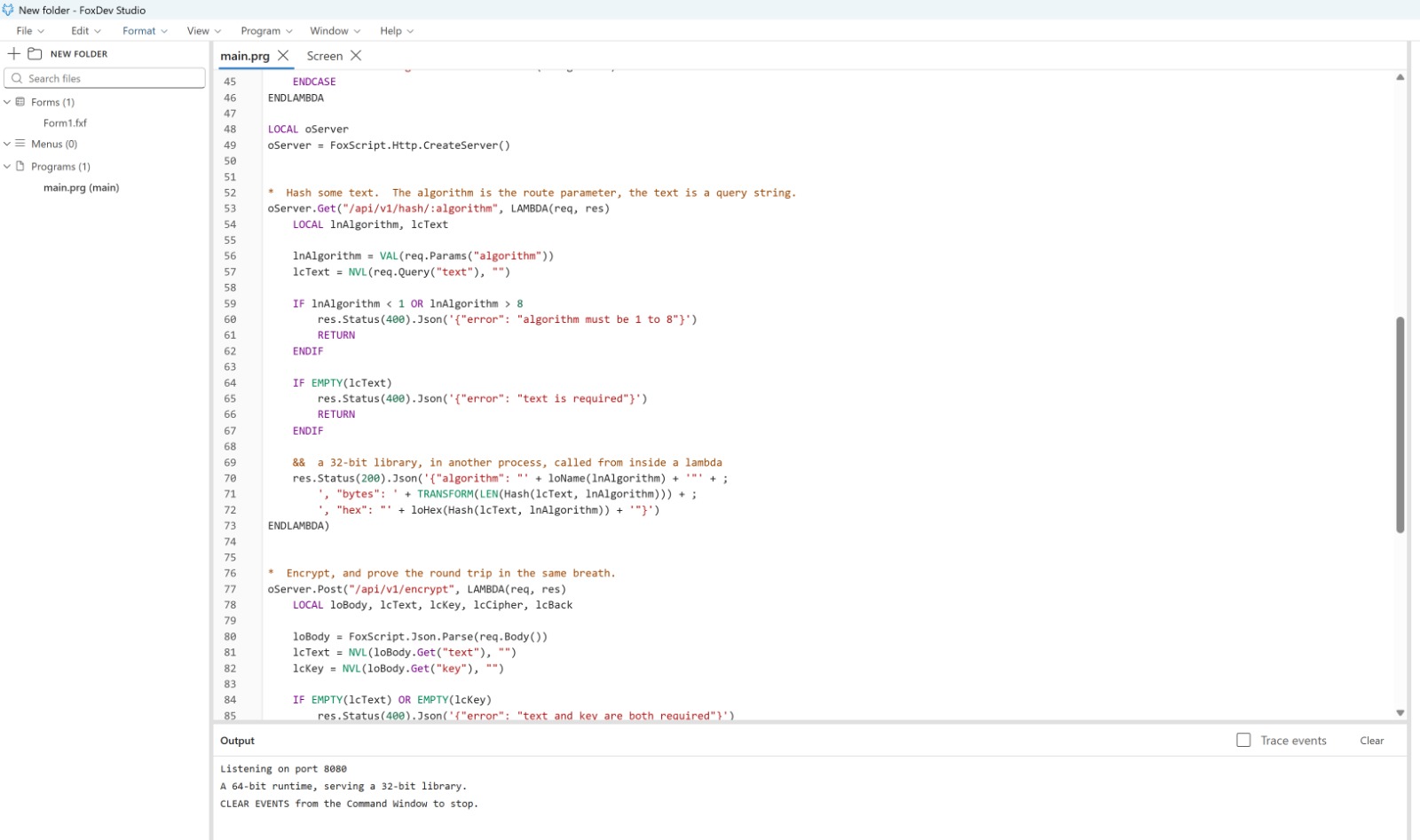
This example illustrates the new-feature path described in the article, including FoxScript lambdas and HTTP routes.