LA Metro's escalator design specifications call for a speed of 90 feet per minute (0.46 meters per second), according to research published by The Basin. This speed is substantially slower than escalator systems in many international cities. For comparison, Hong Kong's MTR station escalators typically operate at 0.75 meters per second (about 148 feet per minute), making them approximately 64% faster than LA Metro's specified speed.

The article compares LA Metro's escalator speed to Hong Kong's MTR, stating Hong Kong's are about 64% faster.
The research found that LA Metro's specified speed falls below the maximum allowed in every single city examined across 58 countries. While many cities follow either European or American escalator safety standards, LA Metro operates at 90 feet per minute, which is 10% below the American standard maximum of 100 feet per minute (0.508 meters per second). Notably, even within Los Angeles, LAX specifies the full 100 feet per minute for its escalators, creating an 11% difference between airport and subway escalator speeds in the same metropolitan area.
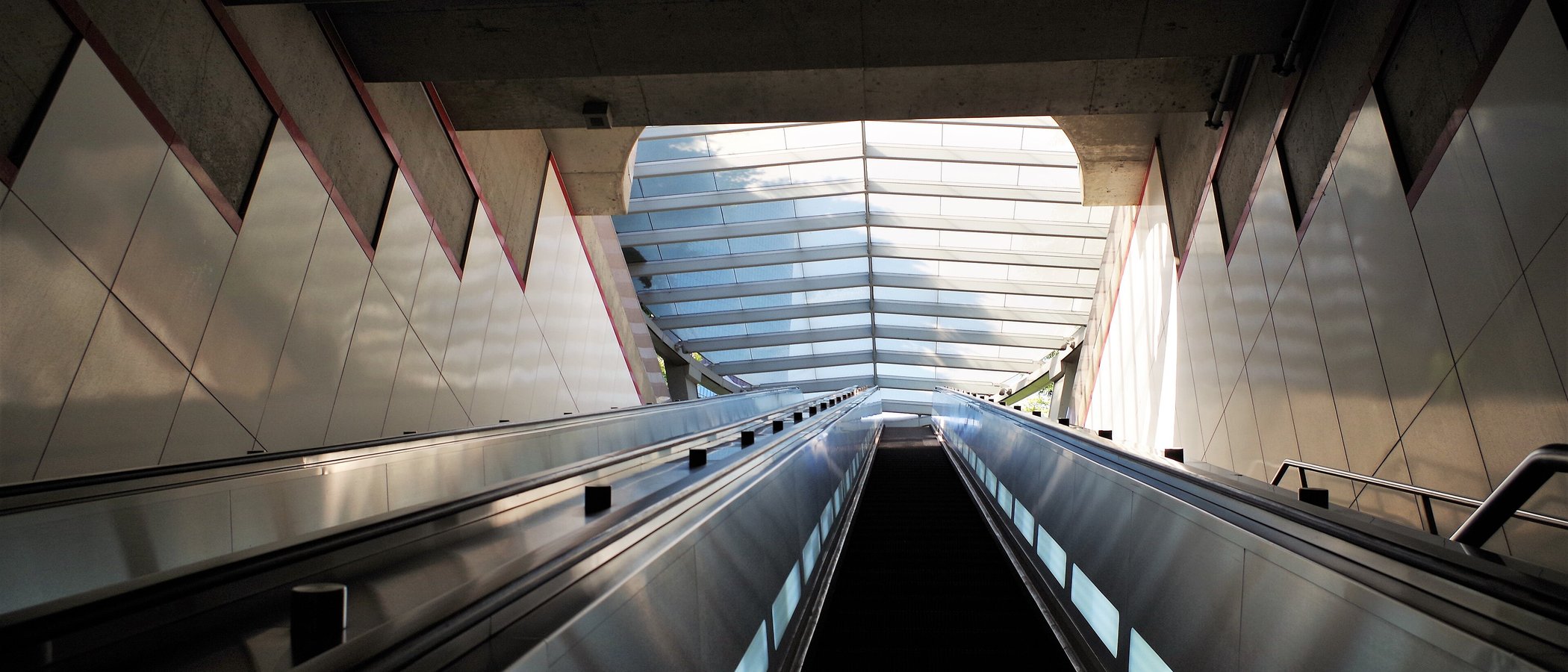
The article examines LA Metro escalator speeds, noting they are slower than standards and comparing them to other systems like LAX.
Historical documents reveal that LA's original subway design rules actually required escalators capable of running at both 90 and 120 feet per minute. At the faster 120 feet per minute speed, the platform-to-street ascent at Civic Center/Grand Park station would take about 66 seconds instead of the 87 seconds required at the current specified speed. The Basin notes that it's unclear whether the installed escalators ever actually ran at 120 feet per minute or when and why that requirement disappeared from later rulebooks.
Modeling based on FY2026 ridership data suggests that if LA Metro's underground station escalators matched Hong Kong's typical speed, commuters could save approximately 670,000 hours of escalator riding time annually. For an individual commuting between two underground stations every workday, this would amount to about 9.5 hours saved per year. However, The Basin reports that simply increasing speeds isn't straightforward, as escalator operators must work within limits set by safety codes, and questions remain about whether existing equipment could accommodate higher speeds.
The article includes a correction noting that while LA Metro's design specifications call for 90 feet per minute, measurements of some newer Schindler escalators in the system show speeds of 98.4 feet per minute - just under the American maximum and faster than the official specification.