Fable 5, as described in the supplied post, is an Anthropic model available through subscription plans. The central claim is not that its underlying weights were proven to have been changed, but that users may receive different inference regimes—the computational allowance and reasoning process used to answer a prompt. Lon Lundgren reports that after Fable 5 became permanently available, August invocations received “dramatically fewer thinking tokens” than July across five measurement methods. “Thinking tokens” are the model’s reasoning-output tokens; fewer of them can mean less internal deliberation before the final answer.
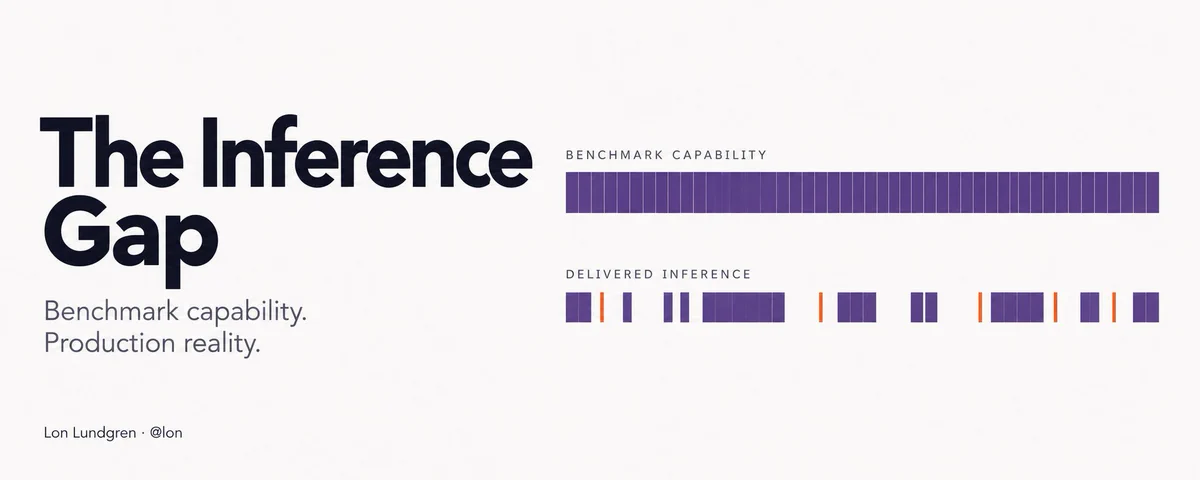
Lundgren’s post is the primary source for the article’s report that August invocations used fewer thinking tokens than July across five measurement methods.
The post says the pattern persisted across six weeks, with multi-day fluctuations and some changes aligned with product announcements or releases. Lundgren also reports that most requests received little or no thinking, even when the interface appeared to request xhigh or max effort, and that longer runs rarely reached published benchmark levels. This helps explain why the same model can feel capable one day and weak the next: the visible model name may remain constant while the serving regime changes.
A key reader question is whether this proves a deliberate “nerf.” It does not. The primary source establishes Lundgren’s measurements and interpretation, not Anthropic’s intent, the cause of the allocation changes, or whether all users experienced the same pattern. The supplied packet also lacks the underlying dataset, definitions for the five methods, and a direct comparison with Anthropic’s own benchmark protocol.
Marginlab’s separate tracker is relevant only as context about how model performance can be monitored. It says it benchmarks Claude Code with Opus 5.0 on a curated subset of SWE-Bench-Pro, using 50 daily evaluations and larger weekly and monthly samples to detect statistically significant changes. Its page says baseline collection is still underway and degradation detection is paused, so it does not corroborate the Fable 5 claim or establish that the same issue affects other models.
The practical consequence is uncertainty for subscribers: consistent output quality may depend not only on which model is selected, but also on the inference budget actually served. What remains unknown is whether the reported August decline was temporary, load-related, policy-driven, or tied to a specific product change. Based on this packet alone, the defensible conclusion is that Lundgren observed a substantial reduction in reasoning-token use, while the cause and broader prevalence remain unverified.