Integrating Large Language Models (LLMs) into a writing workflow requires a disciplined approach to prevent the resulting prose from becoming indistinguishable from automated output. The primary risk is that frontier models are optimized to produce polished, headline-style text that can strip a piece of its unique voice. To mitigate this, writers should adopt two core rules: never use a word suggested by an LLM, and disable the model's tendency to offer praise or encouragement. These safeguards ensure the writer remains the sole architect of their prose, using the model only to highlight mechanical issues like passive voice, nominalization, or repetitive word choices. A recommended framework for this process involves treating the LLM as a stern editor rather than a creative partner. Writers can perform editing passes by asking the model to flag specific problems, then manually rewriting the affected sections to address those issues. For those seeking a structured approach to prose improvement, the book 'Style: Lessons in Clarity and Grace' by Joseph M. Williams provides a foundational methodology for identifying and correcting common writing weaknesses. By combining such established stylistic principles with the mechanical efficiency of LLMs, authors can outsource the tedious aspects of proofreading while retaining full control over their narrative structure and tone.
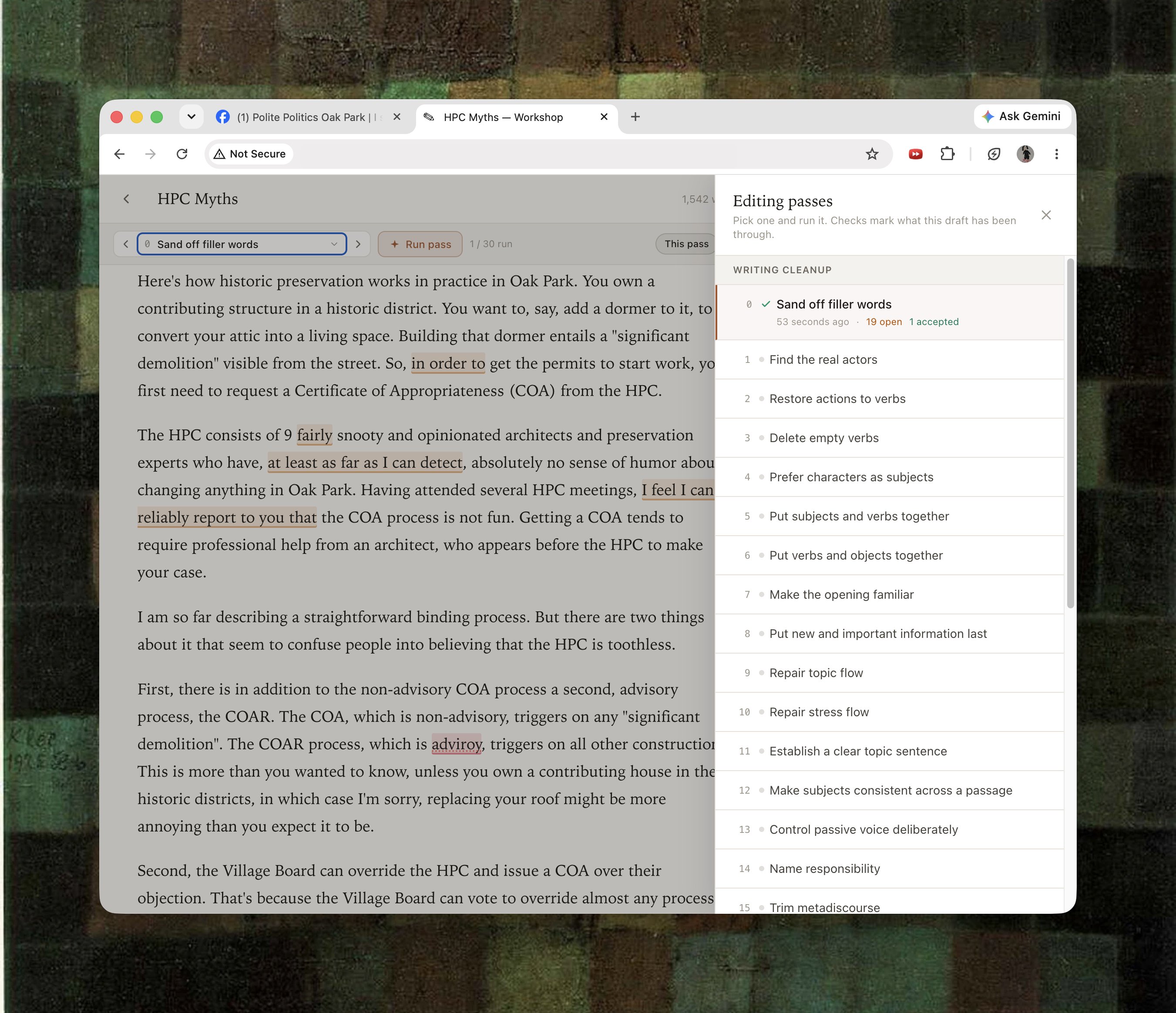
The article suggests treating the LLM as a stern editor by having it flag specific problems, which is demonstrated here by a tool performing an editing pass on a draft.