A recent essay argues that machine-learning intelligence is becoming so inexpensive that the number of tokens consumed may soon matter less than output quality and access. A token is a small unit of text; the essay uses roughly 1.5 tokens per word. It distinguishes raw token prices from cost per completed task, because a smaller model can sometimes spend more tokens while thinking or correcting itself.
The central mechanism is not one breakthrough. The author combines improving graphics-processing-unit (GPU) efficiency, better inference software, and model designs that activate fewer parameters for each request. Mixture-of-experts models, for example, route work to selected specialist components rather than running every part of the network. The essay estimates about a 2.5-order-of-magnitude drop in token cost over the past year, including roughly 100-fold better cost efficiency per task, 1.3-fold better hardware energy efficiency, and 1.4-fold better inference-engine efficiency.
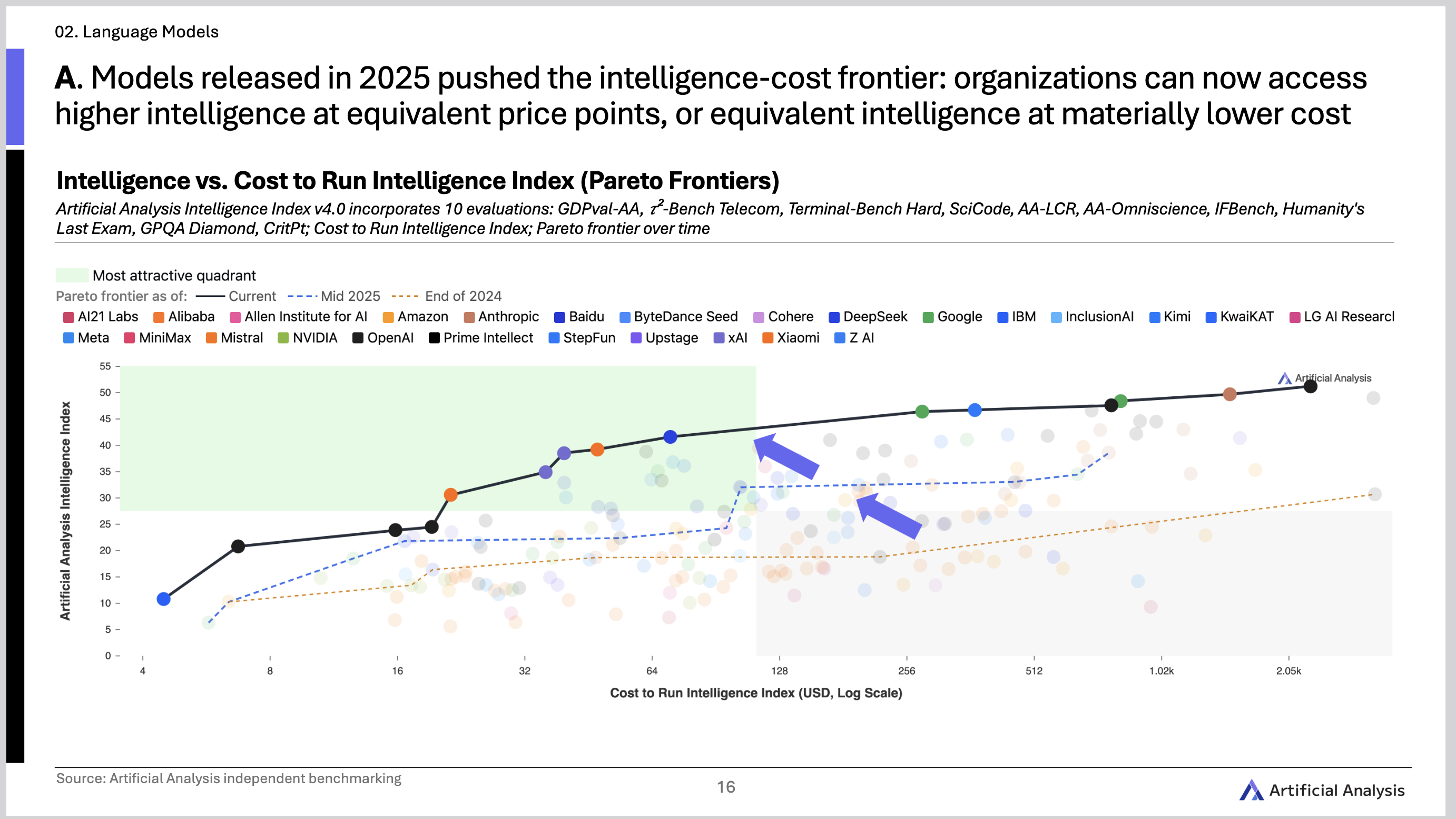
Placed after the article explains the measured decline in token costs and the shift from raw token prices to cost per completed task.
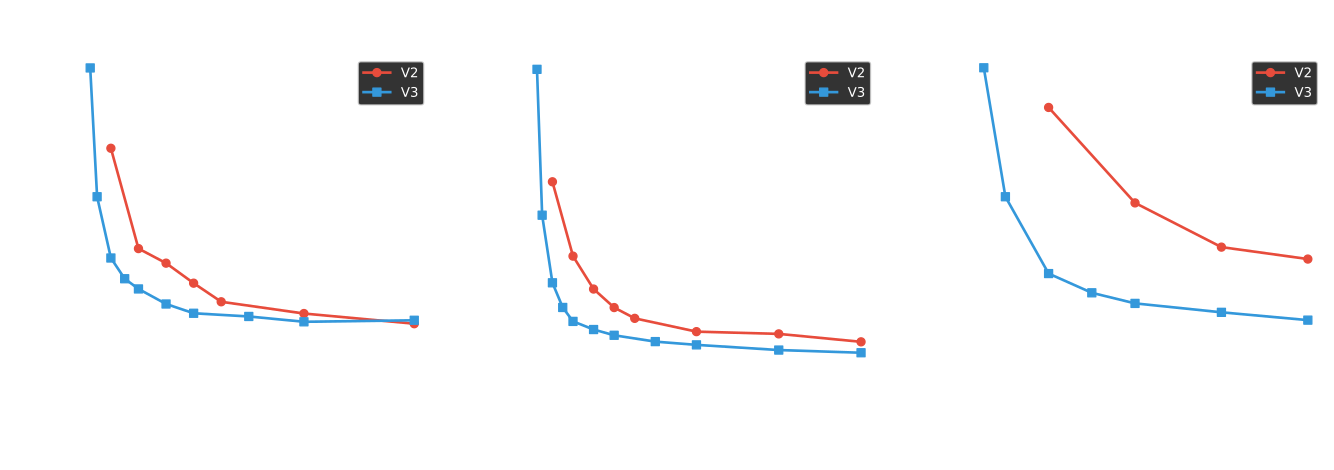
Placed after the article identifies GPU efficiency, inference software, and model design as separate mechanisms reducing inference cost.
The supplied model pages illustrate the architectural shift. Muse Glimmer is a 30-billion-parameter local model whose publisher says 4-bit quantization reduces it to under 20GB, leaving room to run within a 24GB or 32GB memory envelope. Qwen3-Coder-30B-A3B-Instruct has 30.5 billion total parameters but activates 3.3 billion per request, with 8 of 128 experts used at a time; it supports a native context of 262,144 tokens, extendable to 1 million with Yarn. These are publisher specifications, not independent proof of typical user performance.
If inference becomes cheap enough, the essay argues, models could move inside ordinary tools rather than remain separate chat products. Its rough comparison puts a model turn several orders of magnitude above the electricity cost of commands such as grep, parsing HTML, or building code. That would make AI-assisted filtering, scheduling, or triage practical in places where a full conversational interface would be wasteful. The comparison is illustrative, however: it uses estimated token counts, local power draw, and electricity prices rather than a controlled end-to-end benchmark.
The largest uncertainty is whether the trend continues. Efficiency gains can encounter hardware limits, software bottlenecks, or diminishing returns, and lower costs may simply encourage more compute-intensive uses. The packet also contains no independent cost study validating the essay’s combined forecast. What it supports is a narrower conclusion: several parts of the AI stack are improving quickly, and their combined effect could make some model calls surprisingly cheap. Whether that produces durable economic value, rather than merely greater consumption, remains unproven.