Mozilla and Mistral have entered into a partnership to power 'Smart Window' (beta), a browsing assistant designed to help users manage complex online tasks. Smart Window functions by analyzing the context of a user's open tabs and browsing history to help them summarize information, find specific pages, and organize related content. By integrating Mistral's models, Mozilla aims to provide a more 'sovereign' AI experience that moves beyond a single company's proprietary pipeline, allowing for a more open and competitive AI ecosystem within the web browser.

This visual depicts the core functionality of the Smart Window assistant as it processes user tabs and history.
The core of this integration lies in Mistral's use of open-weight models that are specifically fine-tuned on regional languages, dialects, and cultural contexts. This approach is intended to ensure that AI responses feel native to users regardless of their location. Technically, Smart Window also incorporates a partnership with Exa to retrieve current web information and display sources directly within the interface, allowing users to check facts without navigating away from their current page. To maintain user autonomy, the system is designed so that users can choose exactly which browsing context—such as specific tabs or history—the AI is permitted to access.
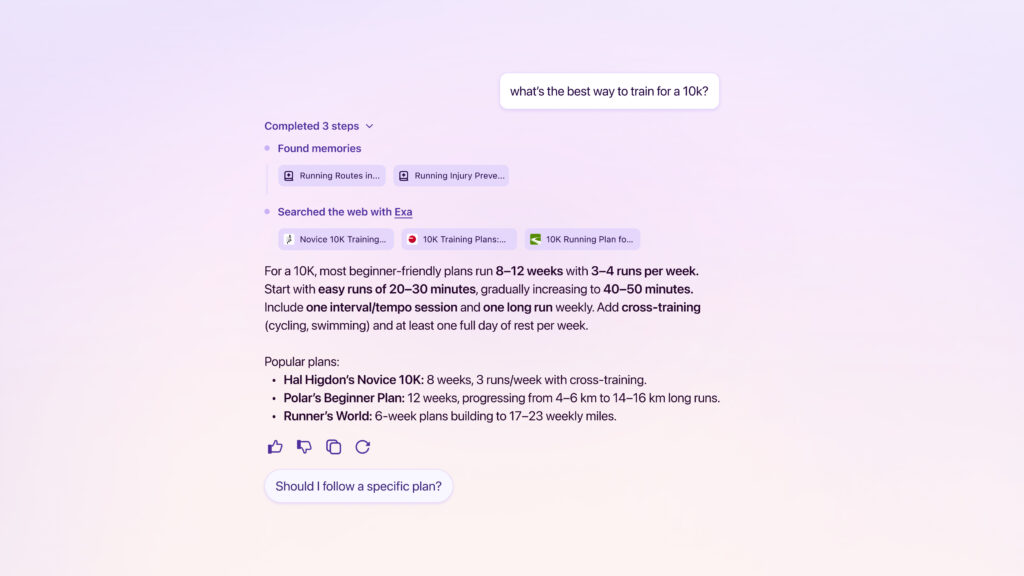
This image illustrates the technical integration with Exa to retrieve and display web information directly within the browser interface.
Despite the emphasis on privacy, the partnership introduces a complex trade-off regarding data handling and trust. While both companies commit to a zero-data retention policy and ensure that conversations are not saved on Mozilla’s servers by default, the system still relies on cloud-based inference. This has led to some scrutiny regarding the necessity of cloud processing versus local, on-device inference. Because the current implementation requires users to trust that both Mozilla and Mistral adhere to their contractual privacy obligations, the extent of data transit remains a point of discussion for privacy-conscious users who prefer local processing to minimize third-party exposure.