Michal Zalewski, known online as lcamtuf, has released "The Secret Life of Circuits" through No Starch Press. The book began shipping to direct-order customers in September 2026, with broader retail availability through Amazon, Barnes & Noble, and other booksellers following in October.
Zalewski brings three decades of hands-on circuit design experience to the project. A computer security specialist who spent over a decade building Google's product security program and later served as VP of security and privacy engineering at Snap Inc., he is also the author of "The Tangled Web," "Silence on the Wire," and "Practical Doomsday." His electronics blog has long been a reference for practitioners who appreciate his blend of physical intuition, mathematical rigor, and practical workbench perspective.
### What the book covers
The 472-page volume is organized into six parts spanning 31 chapters:
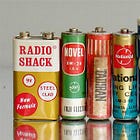
Part I of The Secret Life of Circuits establishes conduction physics, semiconductor behavior, and the movement of electrons that underpin everything that follows, so a figure that asks what electricity actually is sits naturally at the start of that coverage.
**Part I: The Fundamentals** establishes conduction physics, semiconductor behavior, time-invariant characteristics, time-varying signals, ideal inductors and capacitors, and high-frequency effects where circuit dimensions approach the wavelength of signals.
**Part II: Circuit Building Blocks** moves to practical components — voltage and current sources, passive parts, electromechanical devices (relays, motors, speakers), and discrete semiconductors.

In Part III, Zalewski covers schematic creation, passive networks, and diode applications alongside transistor circuits and operational amplifiers; the diode figure gives readers a concrete look at the semiconductor behaviors explored in that section.
**Part III: Exploring Analog Circuits** covers schematic creation, passive networks, diode applications, transistor circuits, operational amplifiers, supply regulation, and other analog ICs.
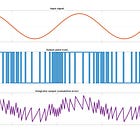
Part IV of the book covers the digital realm, including logic, memory, and analog-to-digital conversion; the DAC and ADC figure illustrates the bridge between the analog and digital domains that this part explores.
**Part IV: The Digital Realm** walks through logic gates, binary arithmetic, memory, sequential logic, analog-to-digital conversion, clocking, and the assembly of a rudimentary computer.
**Part V: Software Eats the World** introduces microcontrollers, peripheral interfaces, and firmware bring-up.
**Part VI: Making Your Dream a Reality** addresses surface-mount assembly, PCB layout fundamentals, high-speed signal integrity, and design for reliability.
A sample chapter (Chapter 9: Basic Electromechanical Devices) is available for download from the publisher.
### Design philosophy: physics first, math where it earns its place
Zalewski describes the book as "the reference I wish I had when first learning the craft." The approach avoids two common extremes: textbooks that demand a year of calculus before showing a working circuit, and hobbyist guides that rely on plumbing analogies and recipe-following. Instead, the book uses mathematics where it clarifies — Laplace transforms are notably absent — and builds understanding from the movement of electrons through conductors and semiconductors upward.
Nearly 300 hand-drawn color illustrations and photographed experiments replace stock diagrams. The goal is to show real component behavior — parasitics, noise, reflections — that ideal models hide, and to explain how to develop original designs rather than copy existing ones.
### Endorsements and early reception
The book carries endorsements from several recognized figures in the hardware community:
- **Travis Goodspeed** (author of "Microcontroller Exploits"): "Reading this gem of a book is like exploring the component drawers at RadioShack, with an expert on hand to explain what each part does and how to design electronics with them. There is no better introduction."
- **Eric Schlaepfer** (co-author of "Open Circuits," creator of the MOnSter 6502): "The Secret Life of Circuits is neither a textbook nor a trivial introduction; it's a balanced mix of practical knowledge, math, and conceptual explanations free of clichéd analogies."
- **Colin O'Flynn** (co-author of "The Hardware Hacking Handbook," assistant professor of electrical and computer engineering at Dalhousie University): "A complete tour of electronics from low-level physics to modern microcontrollers, along the way providing hands-on experiments and insights that make even complex topics like impedance matching and antennas feel intuitive."
- **Chris Gammell** (founder of Contextual Electronics, co-host of "The Amp Hour"): "Michal's book bridges the difficult chasm between theory and practice with beautiful illustrations and an easy-to-understand framing of the physics of electronics."
Early recipients posting on the author's Substack report the physical hardcover uses quality paper with excellent color reproduction and clear diagrams.
### Availability and pricing
Direct orders from No Starch Press (nostarch.com/secret-life-of-circuits) include a free ebook edition (PDF, Mobi, ePub) with the $39.99 print book. The ebook alone is $31.99. Barnes & Noble lists the hardcover at $39.99 with an ebook at $23.99, with a release date of October 20, 2026. Amazon (including regional sites in Germany, France, Poland, Spain, Netherlands, Sweden, Italy, United Kingdom, and Canada) will ship in October. European buyers are advised to check their local Amazon storefront first to avoid unexpected import charges.
### Who this book is for
The publisher positions it for "inquisitive hobbyists who hit a wall in the usual books, and engineers who want to close the gap between the classroom and where the work actually happens." Several commenters on the announcement thread identify as software engineers with microcontroller hobby experience who lack formal electronics training — exactly the audience Zalewski describes. One notes that their only formal electronics education was a university introductory module two decades ago "led by a lecturer who assumed students had a huge corpus of pre-existing knowledge."
### Context: a gap in existing resources
The discussion around the release highlights a persistent gap in electronics education. Classic texts like Agarwal and Lang's "Foundations of Analog and Digital Electronics" (used in MIT's 6.002 course, available via OpenCourseWare) provide rigorous academic foundations but can feel distant from modern workbench practice. Video series like "Captive Aire" and "Nand to Tetris" offer accessible entry points but lack the comprehensive reference structure of a book. Zalewski's work attempts to span both: the physical intuition of a practitioner and the systematic coverage of a textbook, without requiring readers to already know the answers.
### What remains to be seen
The book's effectiveness as a self-study guide for complete beginners versus those with some prior exposure will only be clear once more readers work through it. The sample chapter provides a glimpse of the pedagogical style, but the full progression from quantum-scale conduction physics through to reliable PCB layout represents an ambitious scope. Whether the "no Laplace transforms" constraint holds across all 31 chapters without sacrificing analytical depth in later sections (particularly high-speed signals and impedance matching) is a question only the complete text can answer.
For now, the physical book exists, it's shipping, and the early signal from both the author's peers and his blog readership is positive.