In 1954, the Soviet Union halted coffee exports to the German Democratic Republic (GDR), leaving the East German state in a desperate scramble to secure a staple commodity. To manage the shortage, the GDR spent approximately 150 million West German marks annually to source coffee from wherever possible, while also relying on West Germans sending coffee to relatives in the East to cover about a fifth of the demand.
The GDR's Coffee Dilemma
The GDR's inability to source coffee from its primary socialist ally, the Soviet Union, forced the regime to seek alternative routes. Because the West also imposed trade limitations, the GDR was forced to buy coffee at high costs or rely on 'ersatz' blends.
These substitutes, often mixed with chicory or oats, became a hallmark of East German daily life. While some proper coffee remained available through personal connections and Western relatives, the 'coffee crisis' of 1977 further strained the supply chain.
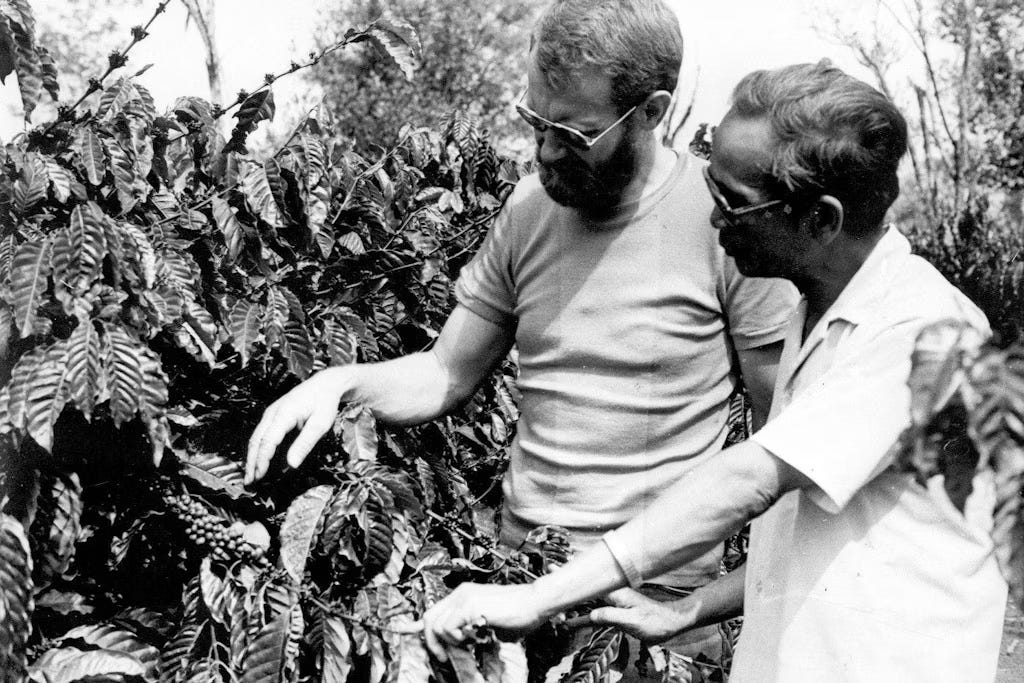
This image illustrates the historical context of the GDR's coffee dilemma and its subsequent shift toward Vietnamese trade.
The Pivot to Vietnam
To stabilize its supply, the GDR entered into a long-term economic partnership with Vietnam. This move was a strategic pivot that helped secure a steady flow of coffee beans to the East German market.
Commenters on Hacker News noted that while the two nations agreed on a long-term economic partnership, they were often restricted from forming more open 'cross-partnerships' due to the geopolitical constraints of the era.
Human and Systemic Exchanges
The relationship between the GDR and Vietnam extended beyond coffee trade to include labor and security. The GDR imported Vietnamese workers, though some accounts suggest these workers faced poor treatment and systemic hardships during their time in East Germany.
Simultaneously, the GDR exported surveillance expertise to Vietnam. In the late 1950s, Vietnam modernized its Public Security apparatus with help from the GDR's Stasi, adopting East German systems for population databases and biometrics.
Modern Consequences
Today, Vietnam has emerged as the world's second-largest coffee producer, trailing only Brazil. It is a significant exporter of Robusta and Liberica varieties, which are often noted for their high yields and distinct flavors.
The transition from the GDR's 'fake coffee' era to Vietnam's status as a global coffee empire illustrates the long-term impact of Cold War economic maneuvering on modern global trade.
Discussion Perspectives
The Hacker News discussion provided various perspectives on the historical and modern context of this trade. One commenter, writing as 'ValentineC', noted that Vietnamese roasters now offer high-value specialty Robusta and Liberica at prices significantly lower than those from traditional coffee-growing regions like Colombia.
Other participants highlighted the broader implications of GDR history, with one commenter, writing as 'niemandhier', noting that the GDR's treatment of Vietnamese workers was often traumatic, specifically mentioning the heavy encouragement of abortions during pregnancies.