The author set out to reverse engineer and modernize War of the Lance, a 1989 strategy game based on the Dragonlance setting, using frontier AI models. With Qwen‑3.8‑Flash‑Next handling the initial binary analysis and rendering reconstruction, a faithful Three.js‑based recreation of the game’s graphics and rules was produced in about a week, despite the author’s VRAM‑limited workstation allowing less than four hours of dedicated attention to the harness.
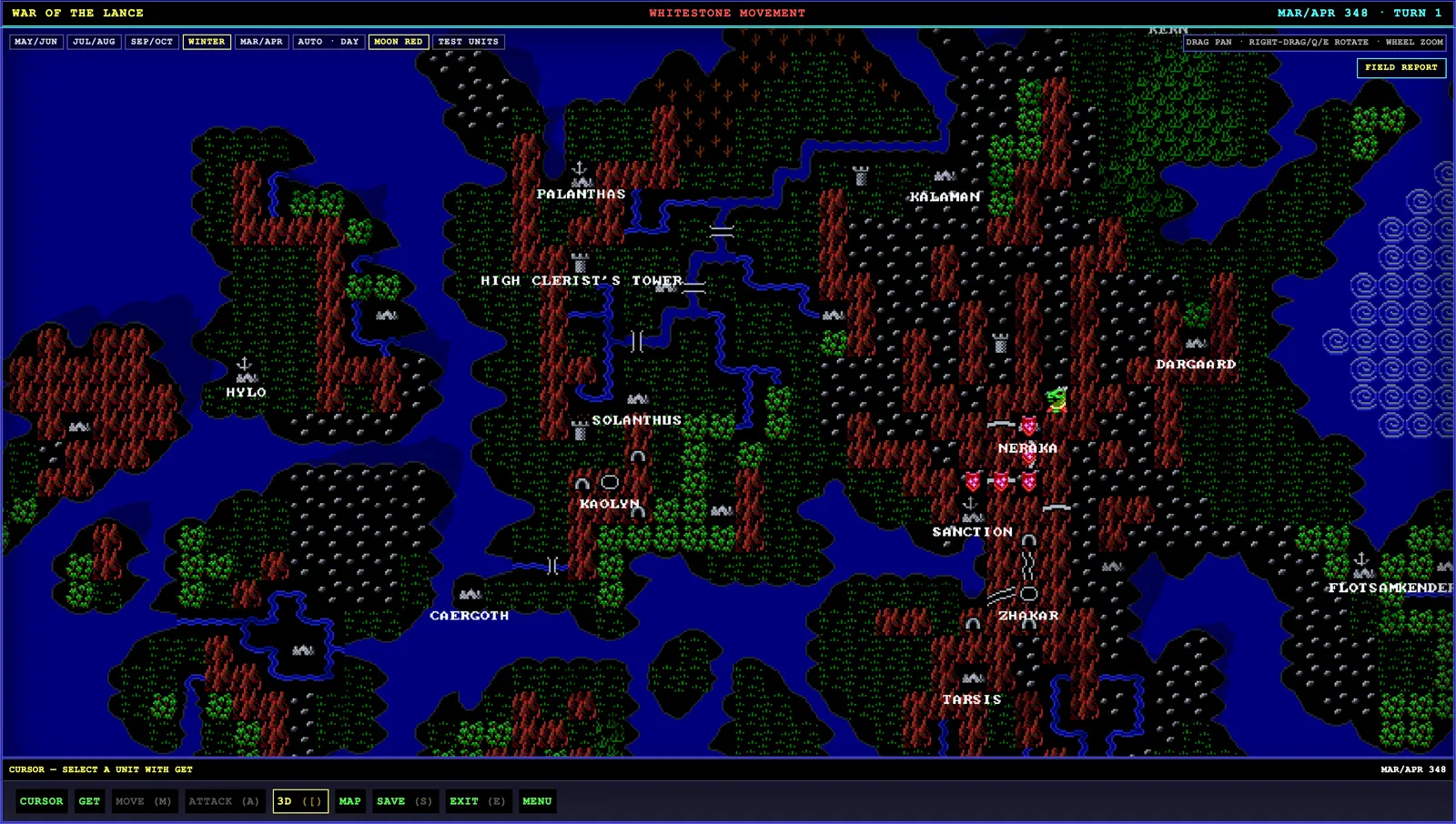
This image shows the game’s graphics as rebuilt with Qwen‑3.8‑Flash‑Next and Three.js, illustrating the rapid AI‑driven porting described in the article.
The process went beyond mere porting: Fable 5.1 was employed to drive Blender’s headless mode API, generating web‑usable GLB assets quickly and token‑efficiently, while GPT6 Astra provided a noticeable leap in 3‑D modelling ability, turning what once required a junior modeller’s effort into mid‑career‑level output. These models also automated testing via Playwright and DOSBox‑X memory analysis, ensuring the new version behaved like the original.
These results illustrate a broader economic shift: the transformer family acts as a cheap, scalable substitute for deep, specialised knowledge labor that previously demanded months or years of expert work and commanded high wages due to its rarity. As the time needed for such complex retro‑game projects falls from weeks to hours—and is projected to shrink to minutes with cloud‑scale worker lanes—the traditional knowledge‑sharing economy, where expertise was rewarded for its difficulty to acquire, faces commoditization pressures similar to those brought by internal combustion engines on horse‑based transport.