A study conducted by Ryan Burge and Anna Bohlen explores how Americans perceive their own moral character and the role of age and religious engagement in that perception. By surveying 557 respondents, the researchers sought to understand the level of self-reflection regarding moral improvement. The data suggests a distinct generational divide: younger adults are significantly more likely to feel 'far' from the person they ought to be morally, while older adults (55 and over) report much higher levels of contentment, with nearly half stating they are 'pretty close' or 'already there' in their moral refinement.
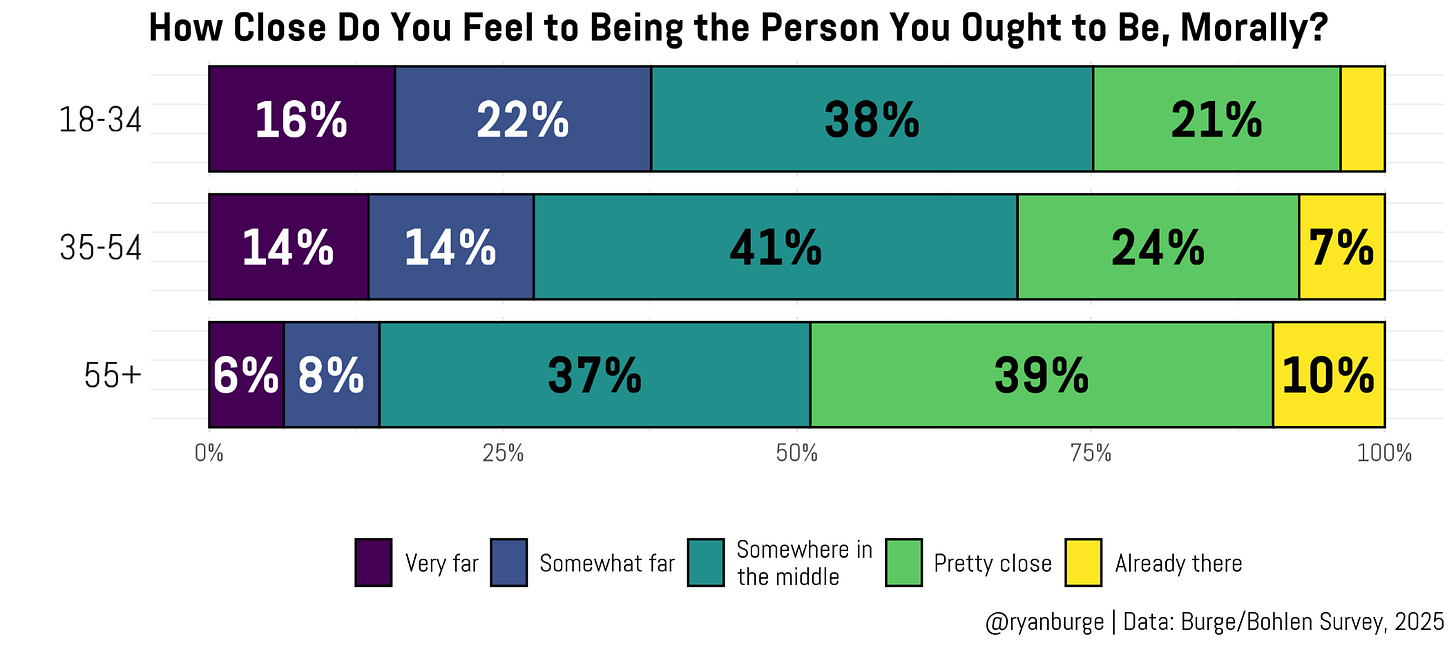
This chart visualizes the generational and religious divides in moral self-reflection described in the study.
The mechanism behind these perceptions appears tied to the frequency of deliberate effort and reflection. The survey found that older adults are about 11 percentage points more likely than younger adults to make a deliberate effort to improve their character daily. However, these same older respondents are less likely to ruminate on their actions frequently. The authors suggest that decades of conscious work may translate into a perception of progress, allowing older individuals to 'let things go' more easily than their younger counterparts. Conversely, religious engagement creates a different pattern; practicing religious individuals are much more likely to think about the morality of their actions frequently compared to non-religious or non-practicing peers.
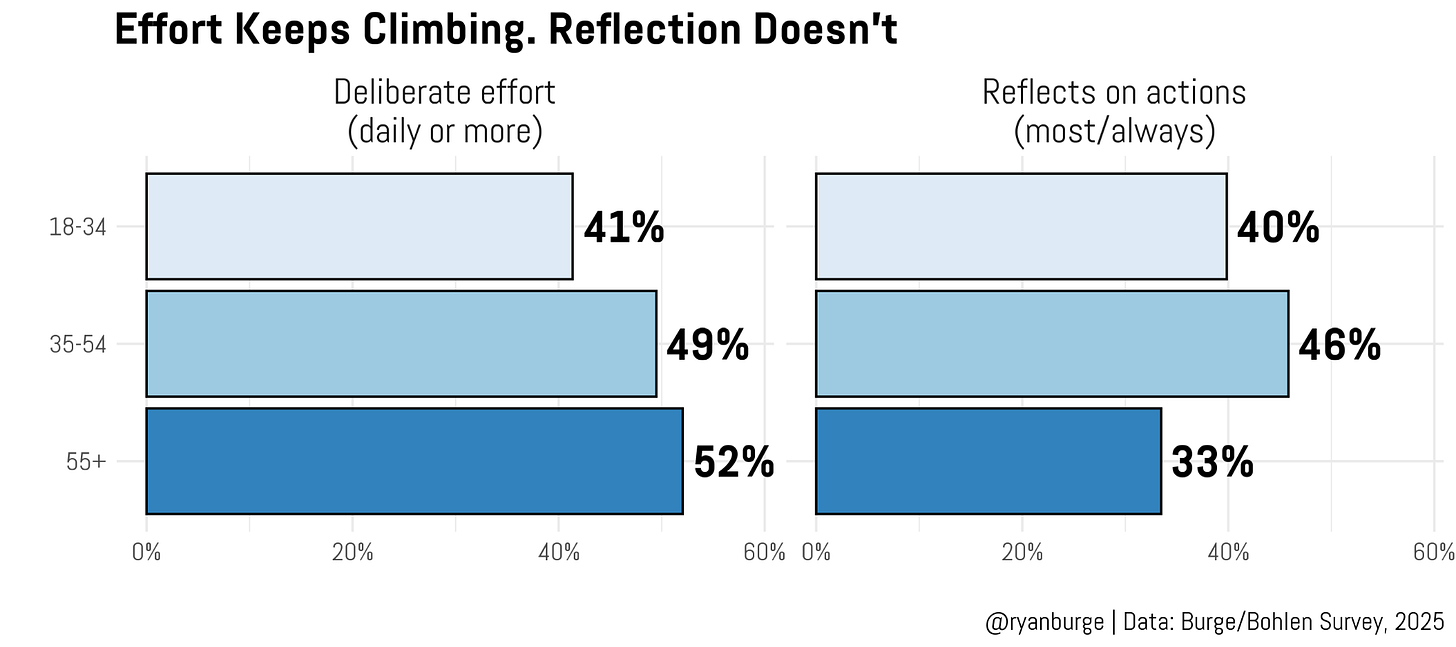
This figure supports the discussion on how older adults prioritize effort over rumination compared to younger peers.
One of the most striking findings involves the intersection of moral confidence and actual reflection. Among young adults, religious respondents show a high level of 'moral dissatisfaction,' characterized by frequent reflection coupled with a feeling of being far from their moral ideal. In contrast, the oldest non-religious respondents showed the highest level of moral contentment in the study, with nearly 60% feeling they have 'arrived' at their moral goals. The authors note that these results are subjective and influenced by different standards; for instance, religious individuals may be held to a higher standard of 'sanctification' that makes it harder to feel they have reached their goal, whereas non-religious individuals may operate under different internal benchmarks. Because the data is self-reported, the study highlights a tension between the active 'soul-searching' of the young and the settled contentment of the elderly.
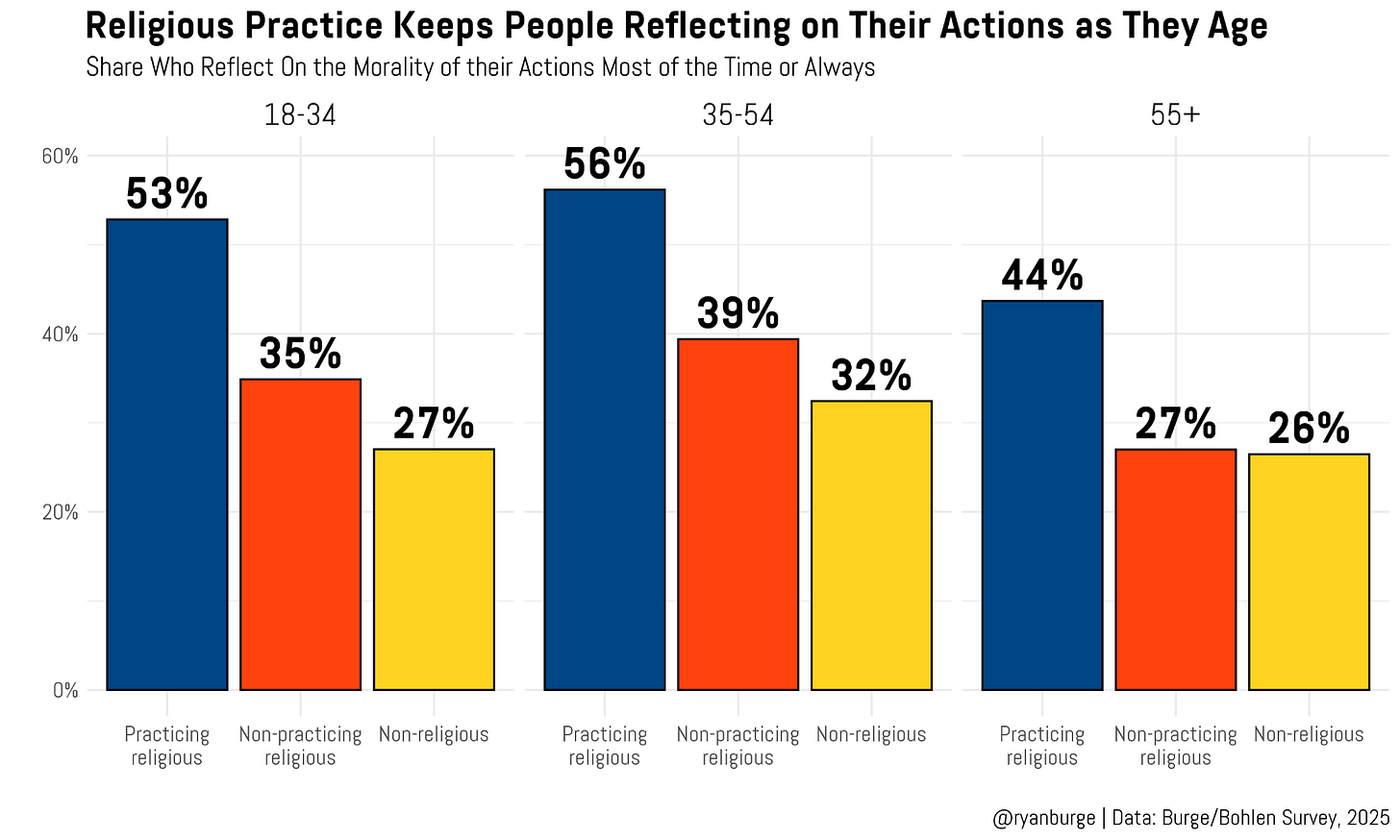
This image illustrates the specific finding regarding young religious individuals and their 'soul-searching' patterns.