The Department of Defense (DOD) is currently undertaking a dual-track effort to rebuild and recast the United States' munitions industrial base. This strategy involves both increasing the volume of existing high-performance systems and diversifying the arsenal with more affordable, mass-producible options. This shift is intended to address the demands of modern high-intensity warfare, where the military must contend with both precision-guided threats and high-volume attrition, such as swarms of unmanned autonomous systems. By pursuing a "high-low mix," the Pentagon aims to maintain "magazine depth" (the quantity of specific high-end weapons) while expanding "magazine breadth" (the variety of available munitions).
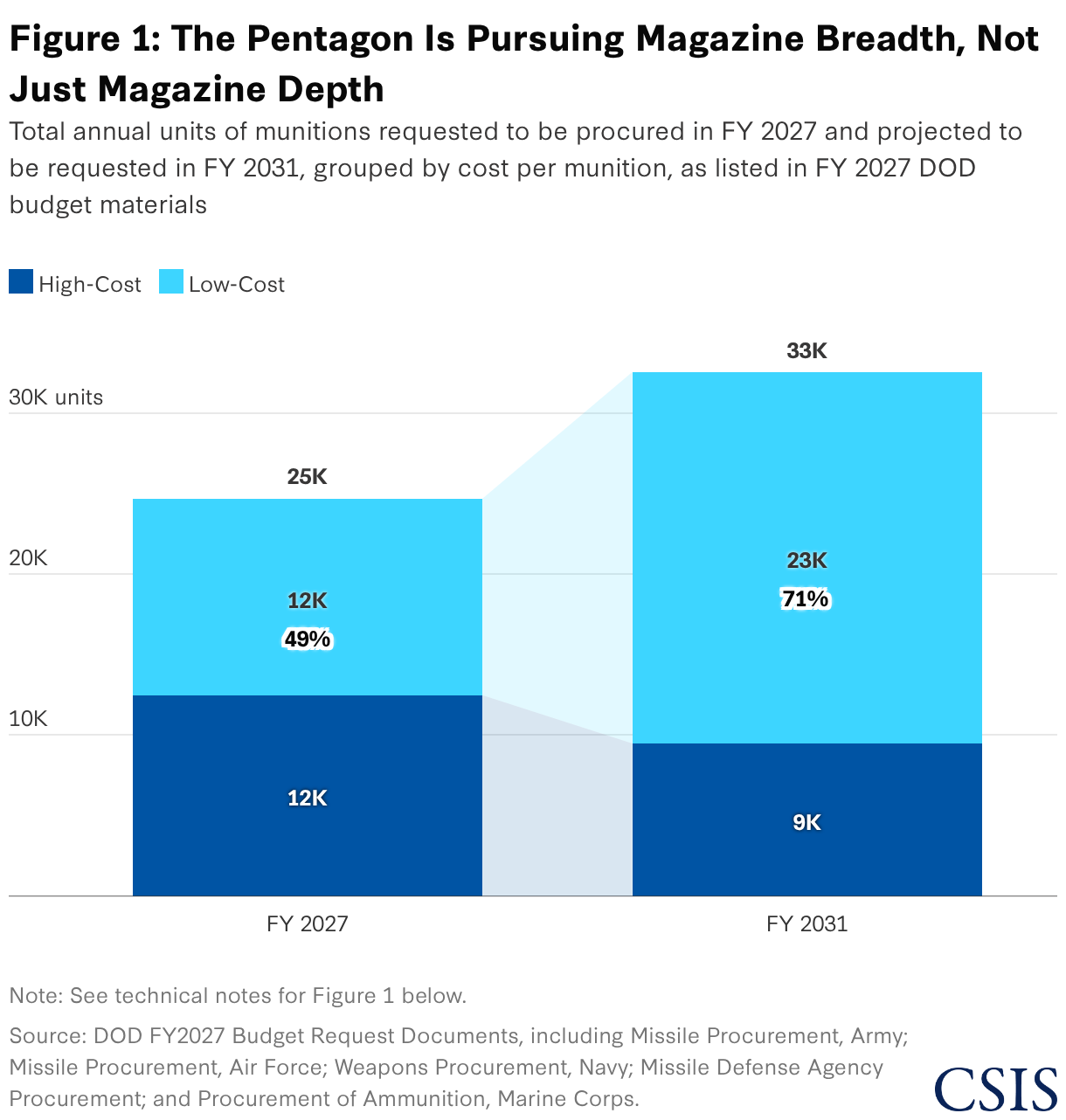
This chart visualizes the dual-track effort to increase the volume of high-performance systems while diversifying the arsenal with affordable options.
The mechanism for this expansion relies on multiyear framework agreements between the DOD and major defense contractors. These agreements provide the demand signals necessary for industry to justify significant capital expenditures (CapEx) in factories, machinery, and supply chains. For example, the DOD has signed agreements with companies like Lockheed Martin and RTX to significantly scale the production of legacy systems like the PAC-3 MSE interceptor and the Tomahawk missile. Simultaneously, the Pentagon is accelerating the deployment of low-cost munitions. Programs such as the Air Force’s Family of Affordable Mass Missile (FAMM) and the Low-Cost Containerized Missiles (LCCM) are designed to move at the speed of commercial industry. These systems, which can cost under $1,000,000 per unit, are intended to be delivered more rapidly than traditional exquisite systems, which often face manufacturing lead times of 25 to 51 months.
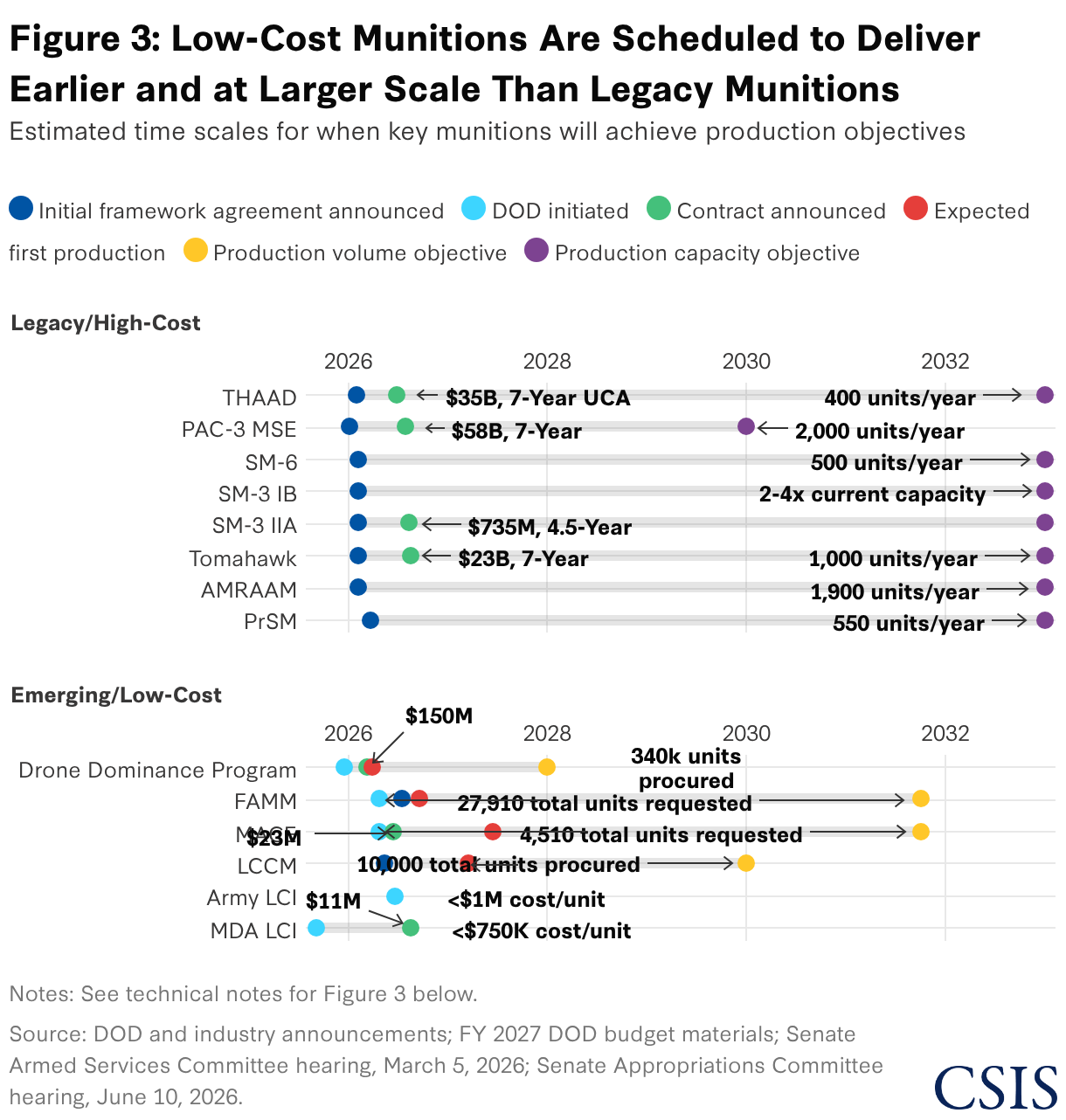
This figure highlights the accelerated deployment of low-cost munitions like the FAMM and LCCM programs.
Despite these framework agreements, several obstacles remain in converting demand signals into actual production capacity. Framework agreements are not appropriations; they require subsequent funding from Congress to become active contracts. A significant portion of the funding for prioritized munitions remains tied to mandatory spending in reconciliation bills, which face uncertain legislative paths. Furthermore, while major contractors have committed billions in CapEx—such as Lockheed Martin’s $9 billion investment to expand capacity—the success of these initiatives depends on the ability of new entrants to overcome supply bottlenecks and the DOD's ability to rigorously test and field these new, lower-cost systems at a commercial-like pace. The ultimate success of this transition depends on whether these investments can translate into a sustainable, scalable industrial base capable of meeting rapid production goals.
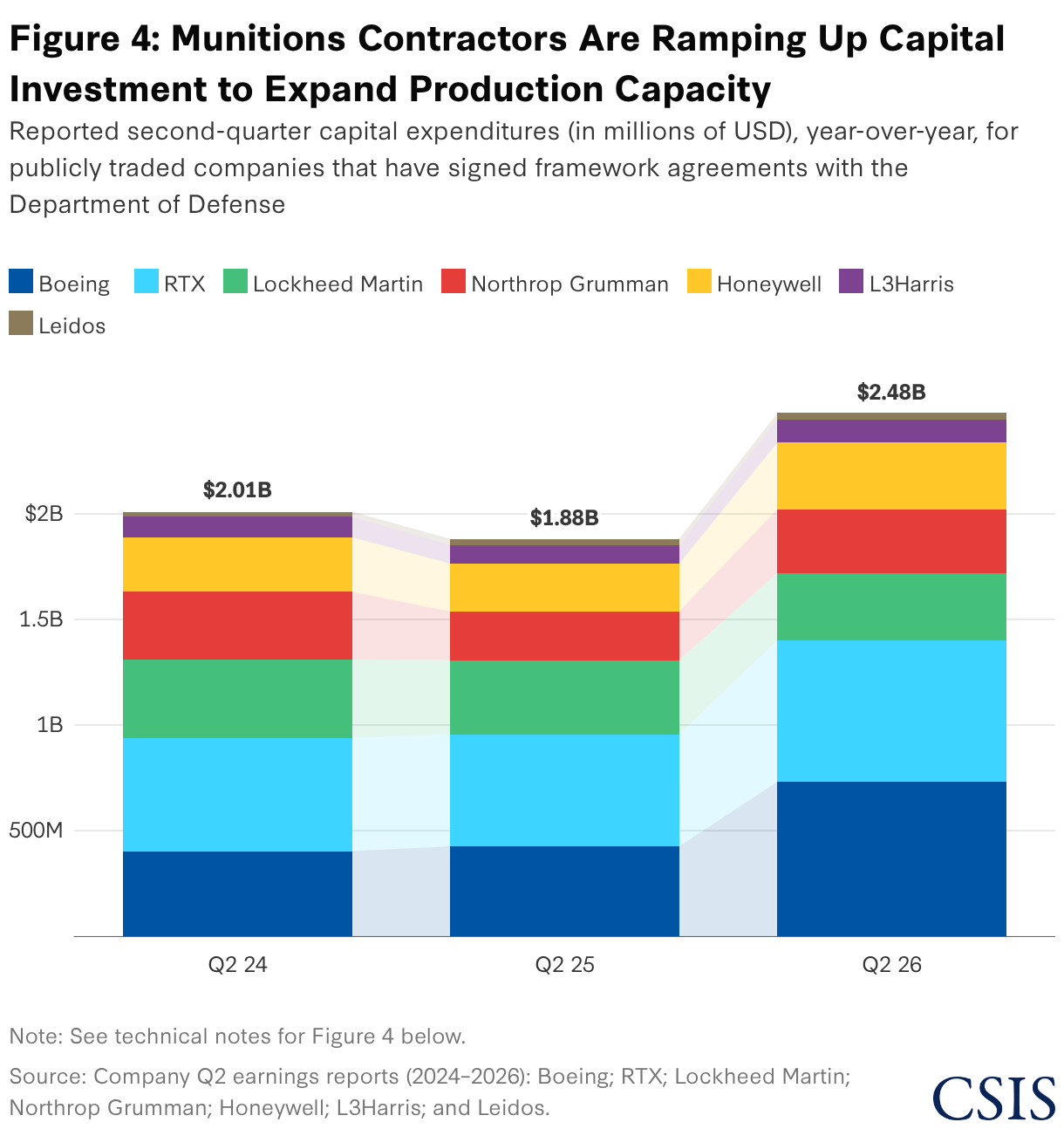
This chart illustrates the significant capital expenditures being made by contractors like Lockheed Martin to scale production.