SmartHomeScene evaluated twelve best-selling Zigbee temperature and humidity sensors purchased primarily from AliExpress, covering models from Aqara, Sonoff, Tuya, Thirdreality, Zemismart, and Moes. Each sensor was tested side‑by‑side against a calibrated reference sensor—a Xiaomi Miaomiaoce MHO‑C401 flashed with custom pvvx firmware and previously verified against a lab‑certified thermometer—to provide a consistent baseline for accuracy measurements. All devices were paired to a SMLight SLZB‑06MG24 PoE coordinator running Zigbee2MQTT 2.12.1‑dev and positioned roughly 3.5 meters from the coordinator in the tester’s office.
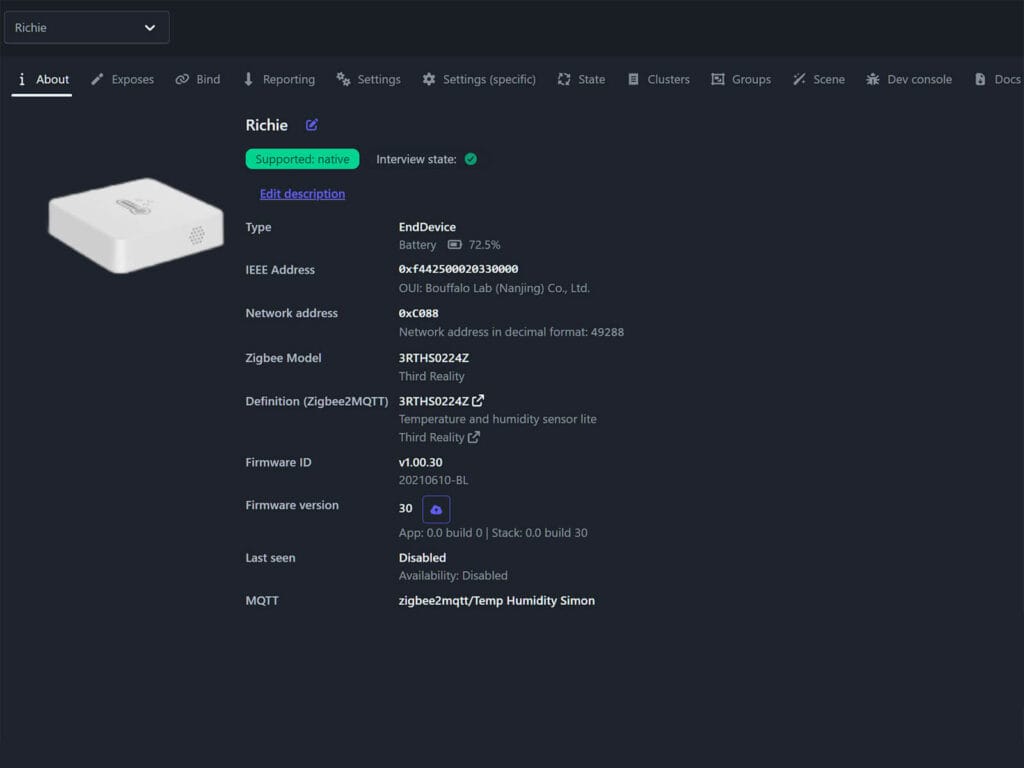
This photo of the Thirdreality Temperature Sensor Lite corresponds to its mention in the article’s list of tested brands, providing visual reference for that model in the sensor roundup.
Beyond basic temperature and humidity reporting, the sensors differ in the extra data they expose. The Aqara WSDCGQ11LM (coded “Tony”) is the only unit that reports atmospheric pressure, while the Sonoff SNZB‑02B (“Carmela”) uniquely provides dew point and vapor pressure deficit (VPD) readings. Battery status is usually given as a percentage, but the Tuya ZTH02 (“Livia”) uses a low‑medium‑high scale instead. Additionally, the Sonoff SNZB‑02P (“Paulie”) demonstrated over‑the‑air (OTA) firmware update capability through Zigbee2MQTT, a feature absent from the other eleven models.
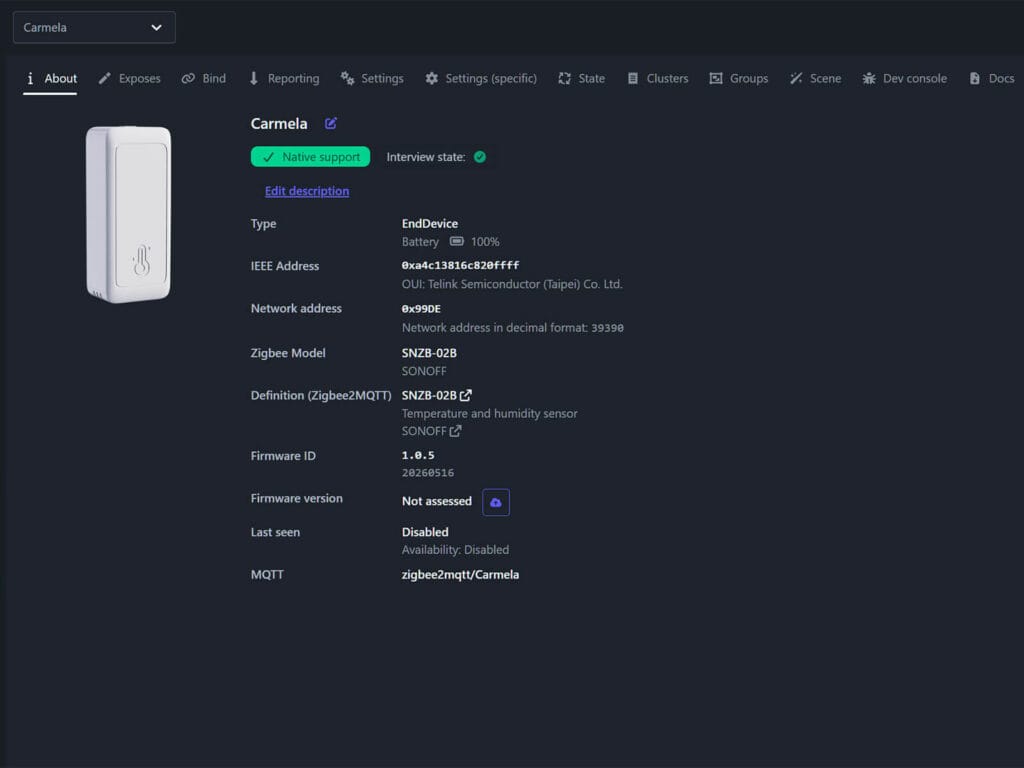
This image shows the Sonoff SNZB-02B Carmela sensor, which the article highlights for its exclusive dew point and VPD measurements, aiding readers in identifying the model discussed in the comparison.
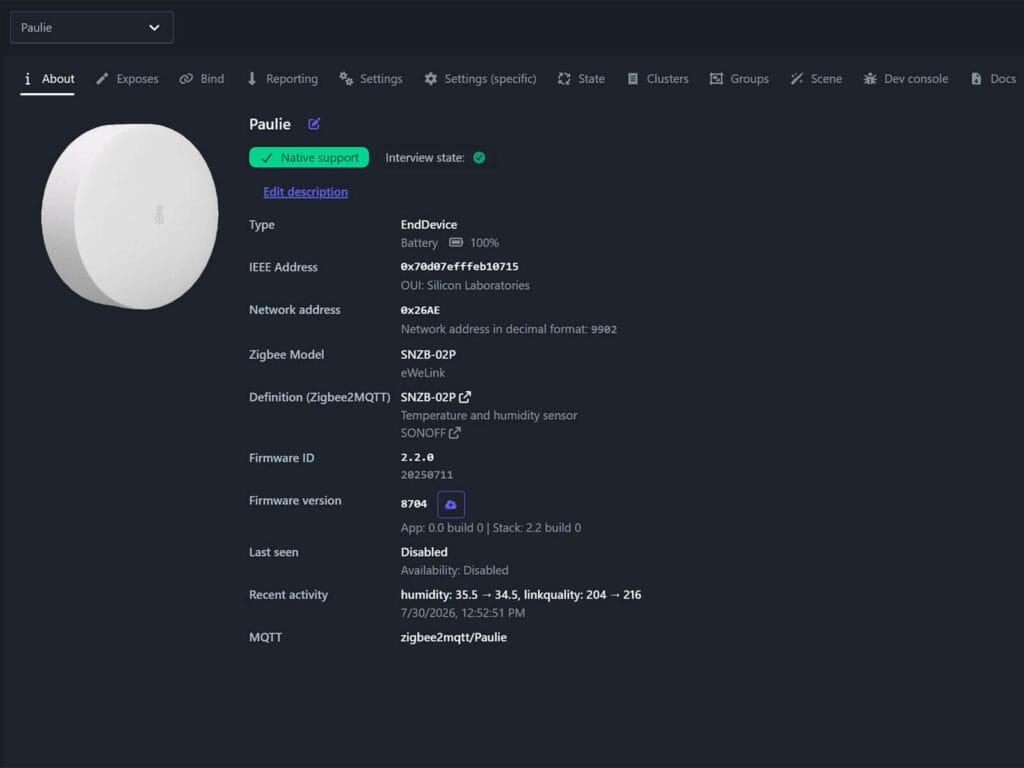
Depicts the Sonoff SNZB-02P Paulie sensor, noted in the article for its OTA update capability, a feature absent from the other eleven models, helping illustrate this distinction.
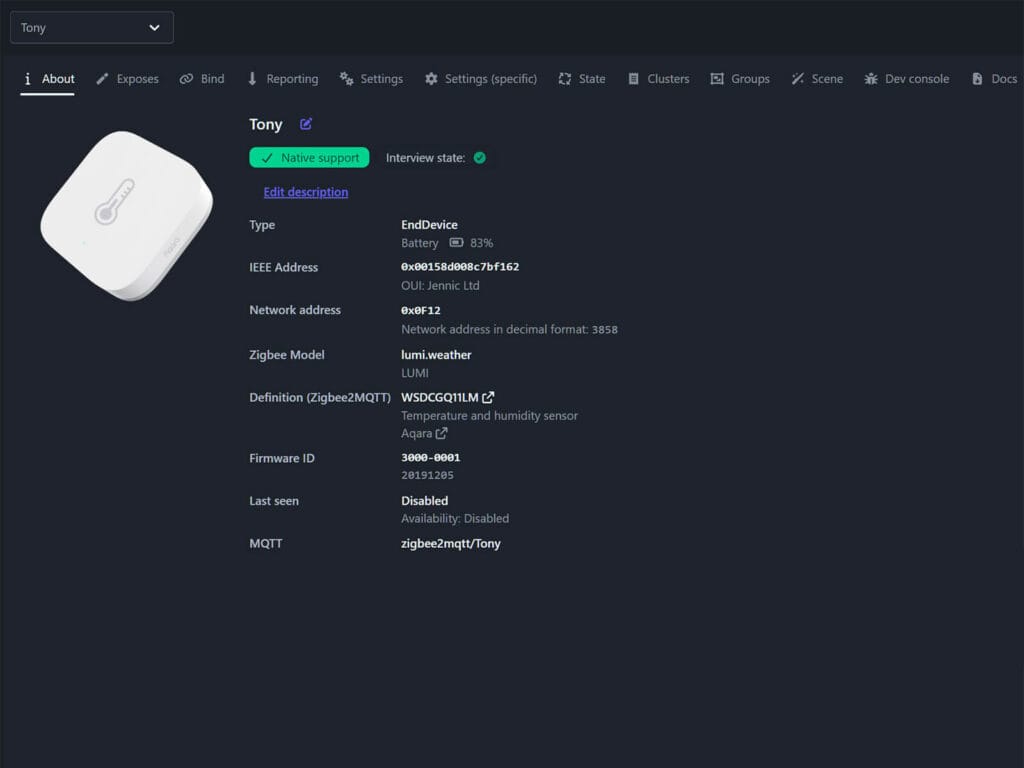
Shows the Aqara WSDCGQ11LM Tony sensor, which the article identifies as the only unit reporting atmospheric pressure, reinforcing its unique feature among the twelve tested.
The most significant practical difference concerns environmental suitability. Only the Tuya TH09Z (“Junior”) carries an IP65 rating, meaning it is protected against dust ingress and water jets, making it suitable for placement in bathrooms, greenhouses, or outdoor locations. All other tested sensors lack any IP rating and must be treated as indoor, dry‑location devices only. Consequently, users who need to monitor humidity or temperature in damp or exposed areas would have to either select the TH09Z or house the other sensors in protective enclosures, which could affect measurement accuracy if not done properly.