Kyushu University researchers have developed a virtual reality system that eliminates the need for head-mounted displays, allowing users to experience immersive VR simply by sitting in a specially designed chair. Led by Associate Professor Shogo Fukushima from the Faculty of Information Science and Electrical Engineering, the team’s work, published July 19, 2026 in the Proceedings of SIGGRAPH Emerging Technologies ’26, directly addresses complaints about bulky headsets causing discomfort during extended VR sessions.
The core of the system combines a micromirror array – many tiny mirrors that direct a distinct image to each eye – with aerial imaging optics, a technique that makes images appear to float in space rather than being confined to a nearby screen. Mounted on the chair, this optical module creates a stereoscopic virtual scene that extends beyond the physical enclosure. A built-in gyroscope measures the chair’s rotation in real time, so the visual perspective updates instantly as the user turns, enabling natural look‑around without wearing any headgear or requiring manual calibration.
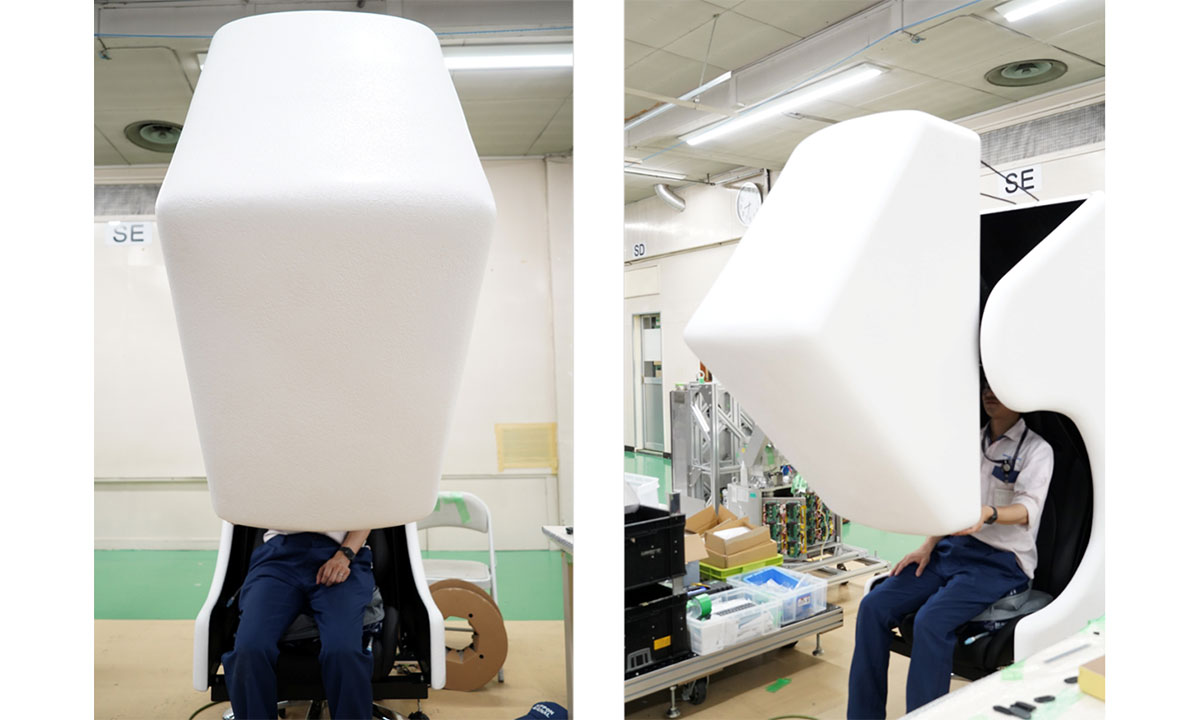
This image illustrates the optical setup integrated into the chair that enables helmet-free virtual reality by directing separate images to each eye and tracking head movement.
While the prototype shows promise for reducing VR sickness by freeing the design to incorporate larger optical components and moving mechanisms, the researchers envisage applications ranging from in‑car workspaces and interactive museum exhibits to remote‑controlled construction machinery and disaster‑response robots. Long‑term, Fukushima hopes to create something akin to Doraemon’s “Anywhere Door” that would let multiple people share the same immersive virtual scene. However, the technology remains a laboratory demonstration; the team is actively seeking industry partners to transition it to practical everyday use, acknowledging that uncertainties remain about scalability, cost, and performance outside controlled settings.