California is preparing to put a controversial Billionaire Wealth Tax (BWT) before voters this November. The proposed measure, which would impose a 5% one-time levy on the wealth of billionaires, aims to raise approximately $20 billion annually to fund healthcare, food assistance, and education following federal budget cuts. However, the proposal has drawn significant opposition, including from Governor Gavin Newsom, who argues that such taxes are better addressed at the federal level to prevent wealthy residents from simply relocating to states with more favorable tax environments. The core challenge facing the BWT is the mobility of the targeted wealth. Proponents of the tax initially estimated a $2 trillion taxable base, but recent data suggests this figure is significantly overstated. Several prominent billionaires, including Larry Page, Sergey Brin, and Travis Kalanick, established tax residency outside of California before the measure's retroactive cutoff date of January 1, 2026. Mark Zuckerberg, another major figure in the state's billionaire population, also relocated in early 2026, setting the stage for potential legal challenges regarding the tax's retroactive reach. Analysts at the Center for Land Economics argue that the state's focus on mobile wealth ignores a more stable and substantial tax base: the land itself. Their research estimates the total value of California's land at $8.14 trillion, a figure roughly eight times larger than the remaining taxable billionaire wealth. A land value tax (LVT) would apply only to the value of the land, excluding the buildings on it, and would be administered through existing property tax infrastructure. Because land cannot be moved, it remains a consistent target for taxation that grows alongside the state's economy. While the BWT requires the creation of a complex administrative apparatus to value illiquid assets like private equity and founder shares, an LVT could leverage existing systems, despite challenges posed by Proposition 13, which currently limits property tax assessments. By shifting the focus from mobile individuals to immobile land, proponents of the LVT argue that California could secure a more reliable revenue stream that avoids the pitfalls of wealth flight and the legal volatility associated with taxing intangible assets.
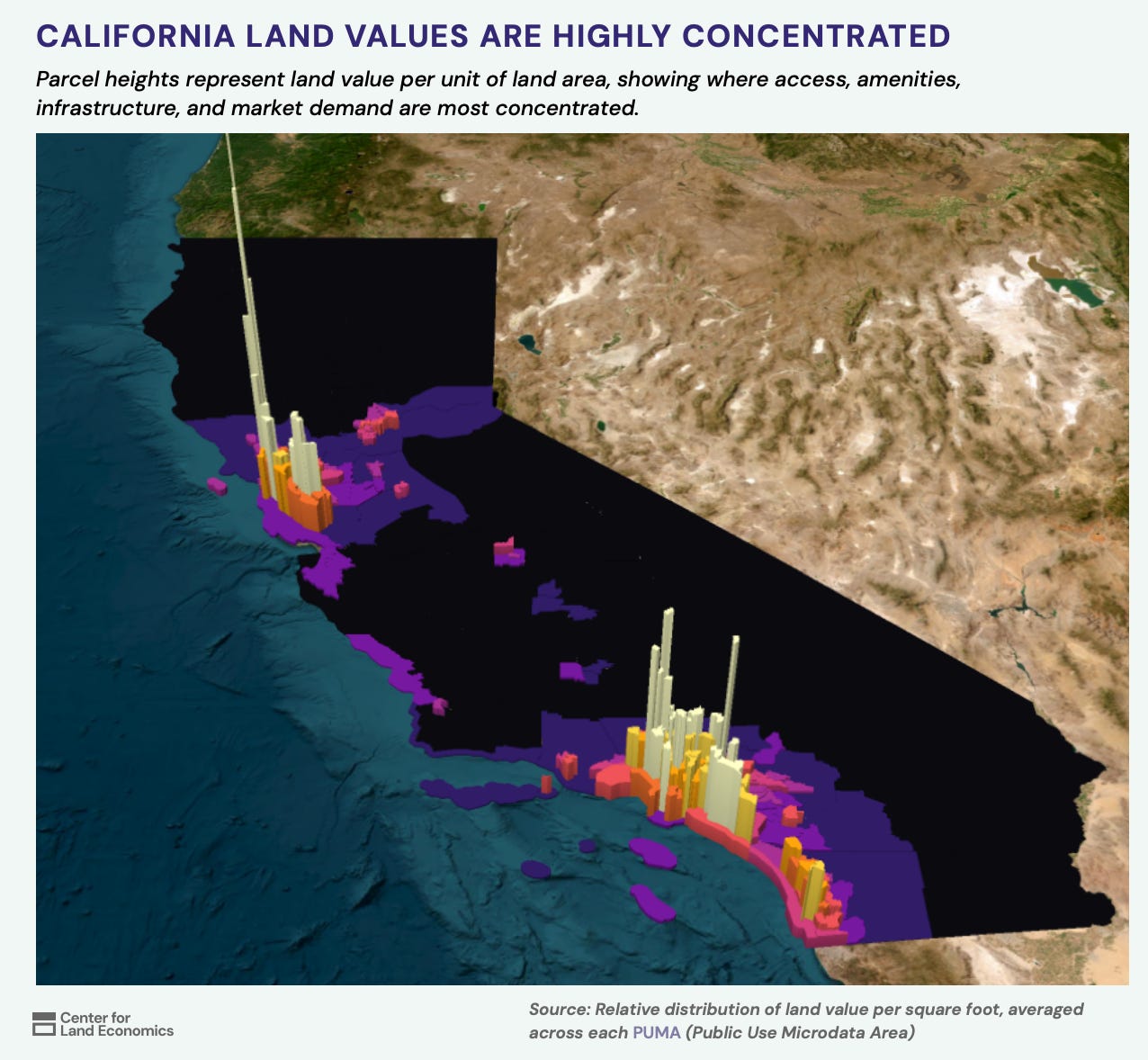
The article discusses how the state's focus on mobile billionaire wealth ignores a more stable and substantial tax base, which is illustrated by this comparison of total land value versus billionaire assets.
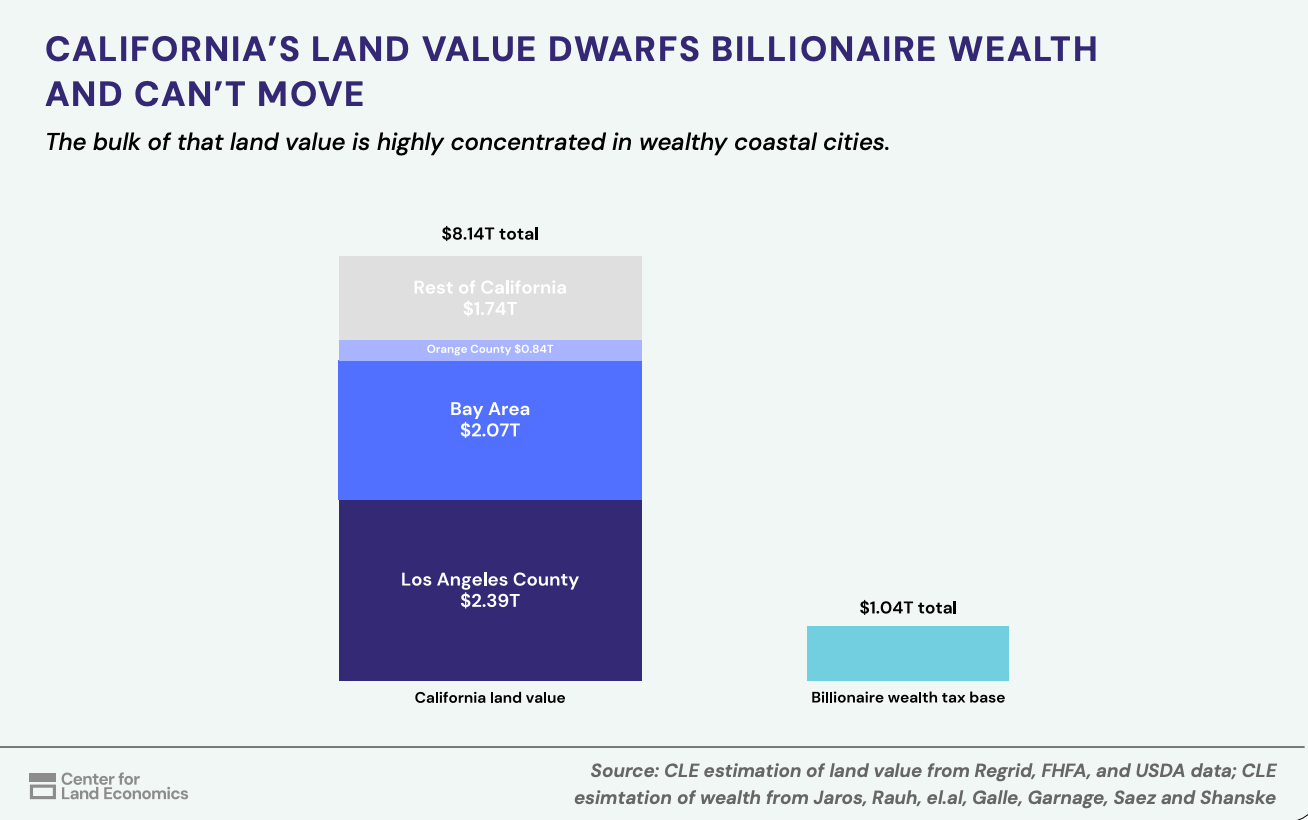
Proponents argue that shifting the focus from mobile individuals to immobile land provides a more reliable revenue stream, as depicted in this analysis of tax base stability.