California grape farmers are facing a severe downturn as they struggle to find buyers for their harvest, with many describing the situation as emotionally devastating after years of cultivation work. Third‑generation grower Bill Berryhill of Berryhill Family Vineyards near Lodi said he cannot find buyers for grapes grown on 200 of his 500 acres and plans to remove 50 acres of vineyards after the harvest season, calling the waste of healthy fruit 'sickening' and saying 'all your work is just down the toilet.'
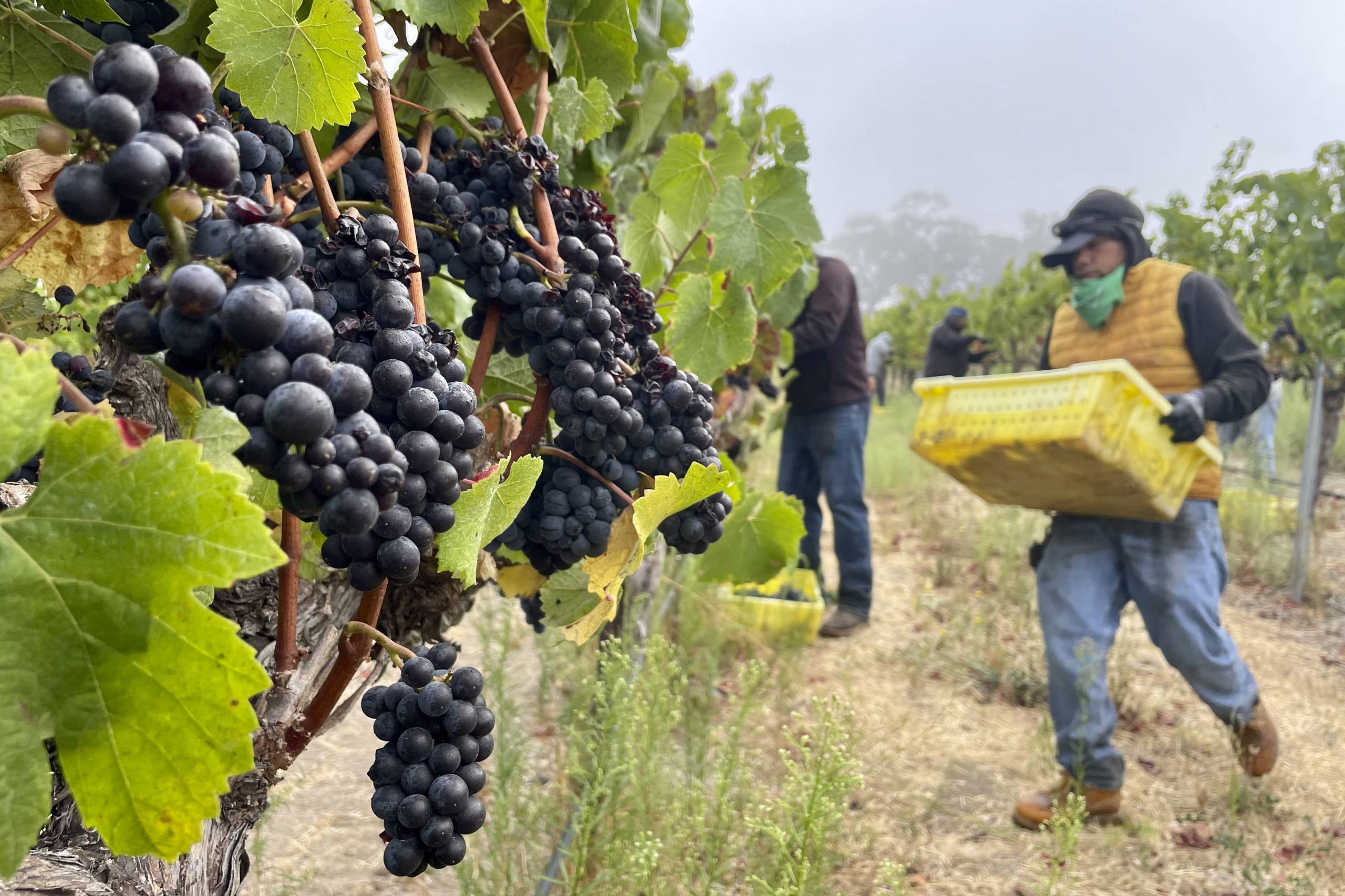
The image shows grape farmers working in a vineyard, illustrating the labor and challenges described by growers like Bill Berryhill who struggle to find buyers for their harvest.
The core of the problem is a sustained imbalance between production and market demand. Wine sales have fallen more than 20% over a five‑year period, driving down grape prices and prompting growers to take roughly a quarter of the state’s vineyards out of production. At its pandemic peak California had nearly 600,000 acres of vineyards, but farmers have since idled about 25% of that land. This year roughly half of the wine grape crop entered the harvest season without buyer contracts, compared with the typical 70‑80% under contract.
Beyond the fields, the slump has ripple effects through local economies, reducing income for farmworkers and hurting businesses that depend on wine‑related activity. Some growers can sell uncontracted grapes at a loss to makers of concentrated syrup, but many are weighing whether to harvest at a loss, leave fruit on the vine, or replace vineyards with higher‑demand crops such as almonds, walnuts, pistachios and olives. Despite the hardship, multi‑generational farmers like Berryhill express reluctance to abandon wine grapes entirely, citing family ties to the land and a determination to 'weather this' and 'fight through it' as long as possible.